
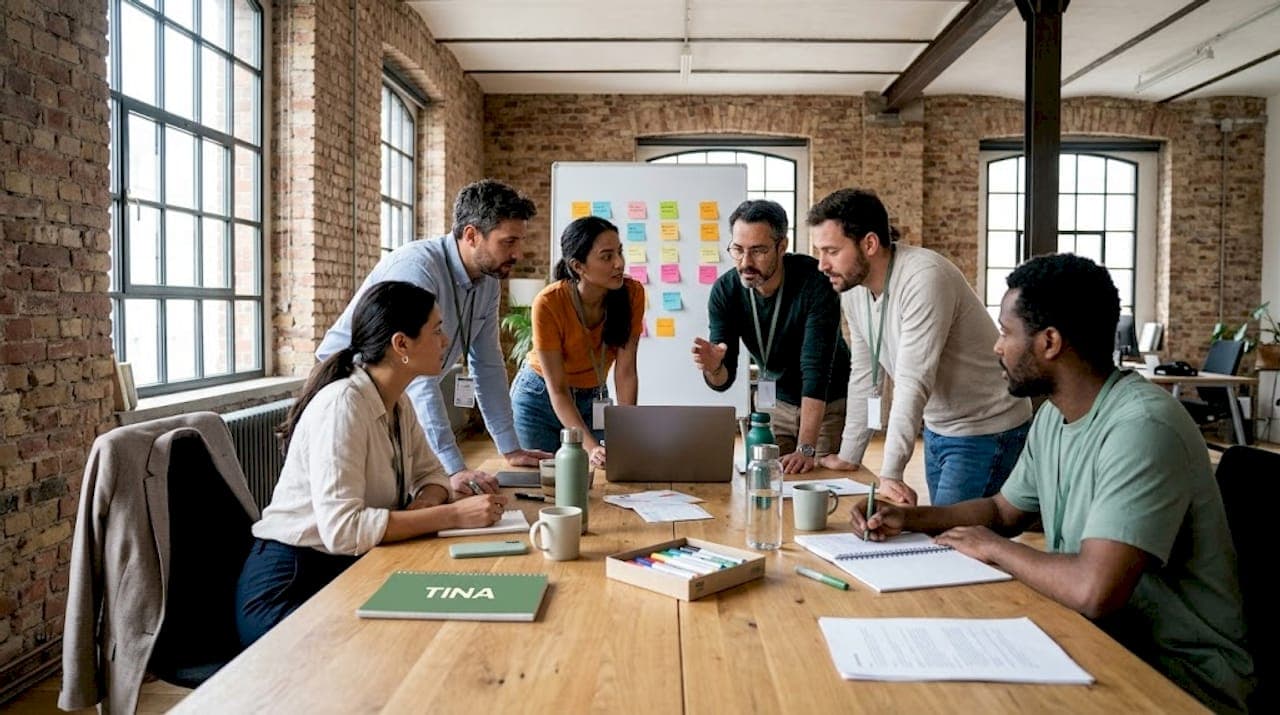
TL;DR:
- Collaborative workshops involve active, hands-on participation to build skills and foster team cohesion.
- In-person artistic workshops in Berlin are surging due to digital fatigue and demand for genuine connection.
- Effectiveness is measured by behavior change and business impact using frameworks like the Kirkpatrick Model.
Forget trust falls. Berlin corporate teams are leaving tired, passive team events behind, and the numbers back it up. In 2026, companies across the city are booking hands-on, creative workshops at a rate that would have seemed impossible just a few years ago. But not every "workshop" is created equal. There is a real difference between sitting through a presentation with your colleagues and actually making something together with your hands. This guide breaks down what a collaborative workshop truly is, why demand is surging right now, and how Berlin's vibrant artistic scene makes it one of the best cities in the world to try one.
Table of Contents
- Defining a collaborative workshop: More than team building
- Why collaborative workshops are surging in 2026
- What makes Berlin's artistic workshops unique for teams
- Designing and measuring effective collaborative workshops
- Why art-based collaboration beats competition for team growth
- Bring your Berlin team together with an artistic workshop
- Frequently asked questions
Key Takeaways
| Point | Details |
|---|---|
| Interactive team engagement | Collaborative workshops boost team alignment through hands-on, shared activities instead of passive learning. |
| Berlin’s creative edge | Unique art-based workshops foster both team bonding and cultural appreciation for local and global companies. |
| In-person learning resurgence | There is a significant shift back to in-person workshops, driven by digital fatigue and demand for real connection. |
| Measure for real impact | Frameworks like the Kirkpatrick Model ensure workshops achieve behavior changes, not just smiles. |
Defining a collaborative workshop: More than team building
Now that you know why collaborative workshops are gaining traction, it's vital to build a solid understanding of what distinguishes them from traditional formats.
A collaborative workshop is a structured, interactive session built around shared ownership and participation, not passive learning. Everyone in the room is a contributor. There is no audience. That single shift changes everything about how people interact, what they take away, and how they feel about the experience afterward.
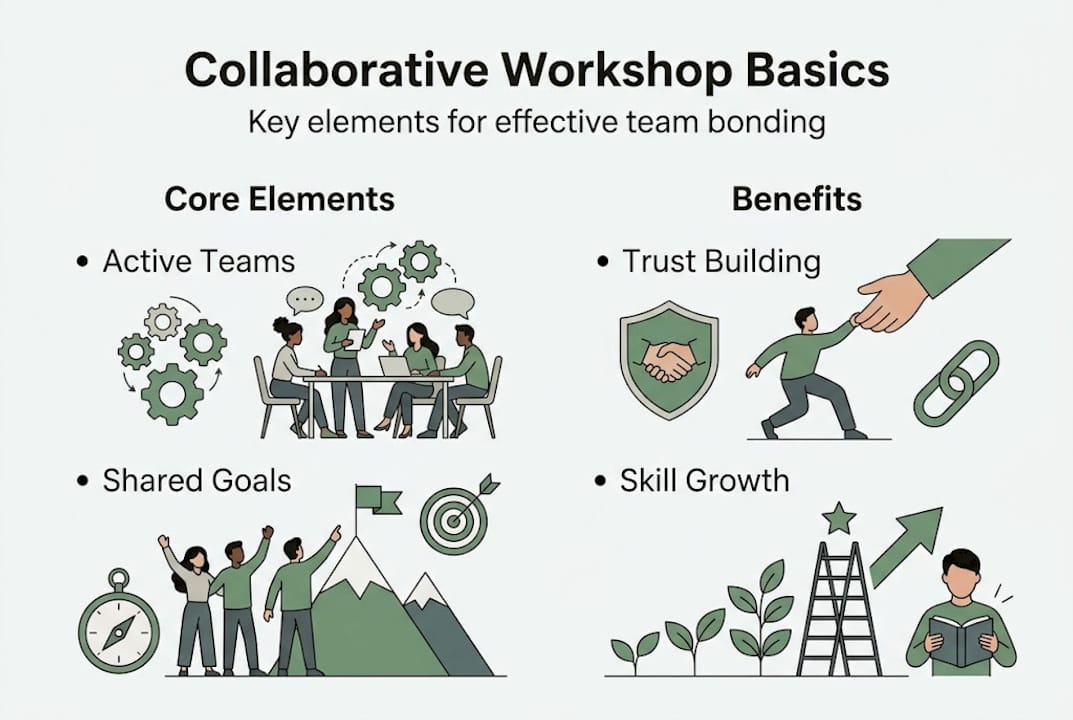
Most traditional team events put people in rows, hand them a schedule, and call it bonding. Collaborative workshops flip that model entirely. They are built around co-creation, hands-on activities, and shared decision-making. A good rule of thumb is the 60/40 rule: participants should be actively doing something for at least 60% of the session, while guidance and instruction take up no more than 40%.
Here is a quick comparison so you can spot the difference immediately:
| Feature | Collaborative workshop | Traditional team event |
|---|---|---|
| Participation style | Active, hands-on | Passive, observational |
| Outcome | Shared creation, behavior shift | Information delivery |
| Interaction mode | Co-creation, dialogue | Lecture, one-way |
| Hierarchy impact | Flattened, equal footing | Often reinforced |
| Memorable factor | High (you made something) | Low (you sat and watched) |
Three key roles make a collaborative workshop run smoothly:
- Facilitator: Guides the session, manages energy, and keeps the group on track
- Sponsor: The HR manager, team lead, or event planner who defines the goals
- Participant: Every team member, with an equal voice and active role
"Trust falls are less effective than structured collaborative workshops at building real team trust and improving long-term behavior."
For HR managers and event planners, this matters because you are not just looking for a fun afternoon. You want something that actually shifts how people work together. The workshop benefits for corporate teams go far beyond a good time. Done right, a collaborative workshop creates lasting behavioral change that you can see back at the office on Monday.
Why collaborative workshops are surging in 2026
Understanding these core differences, let's examine why companies are flocking back to collaborative workshops in Berlin now, after years of virtual overload.
The numbers are striking. There has been a 41% rise in in-person workshops in 2026, driven largely by digital fatigue after years of video calls and remote work. Teams are craving real, physical togetherness. They want to touch, build, and create something with their hands alongside their coworkers.
| Period | Workshop demand trend |
|---|---|
| Pre-2020 | Steady, mostly lecture-based formats |
| 2021 to 2023 | Shift to virtual, low engagement reported |
| 2024 to 2025 | Hybrid experiments, mixed results |
| 2026 | Sharp 41% increase in in-person, hands-on formats |
Three major forces are fueling this comeback:
- Human-AI synergy: As AI handles more routine tasks, uniquely human skills like creativity, empathy, and collaboration become premium. Workshops build exactly those skills.
- Reskilling urgency: Interactive training boosts retention far more than passive methods, and companies know it.
- Demand for meaningful connections: After years of Zoom fatigue, teams want moments that actually feel real.
It is worth noting that 85% of employers now prioritize reskilling as a core business strategy. Hands-on workshops are one of the most effective ways to deliver on that priority, because people learn by doing, not by watching slides.
The Kirkpatrick Model is a widely used framework for measuring how much a training event actually works. It looks at four levels: reaction (did people enjoy it?), learning (did they gain new skills?), behavior (are they applying those skills?), and results (did it affect business outcomes?). A good collaborative workshop should score well across all four levels, not just the first.
Pro Tip: Within two weeks of your workshop, send a simple three-question survey asking participants about one new behavior they have tried at work. That single data point tells you more about real impact than any happiness score collected on the day itself. For deeper context on building this into your planning process, explore team bonding through artisan workshops for a practical local perspective.
What makes Berlin's artistic workshops unique for teams
With the demand for collaborative workshops at an all-time high, Berlin's artistic scene offers a model for authentic creativity-driven events.
Berlin is not a generic city. Its creative culture runs deep, from the street art of Mauerpark to underground ceramics studios tucked behind Neukölln courtyards. That cultural richness translates directly into team experiences that feel genuinely different. Berlin's hands-on art workshops foster deep bonding and cultural appreciation in a way that generic corporate entertainment simply cannot replicate.
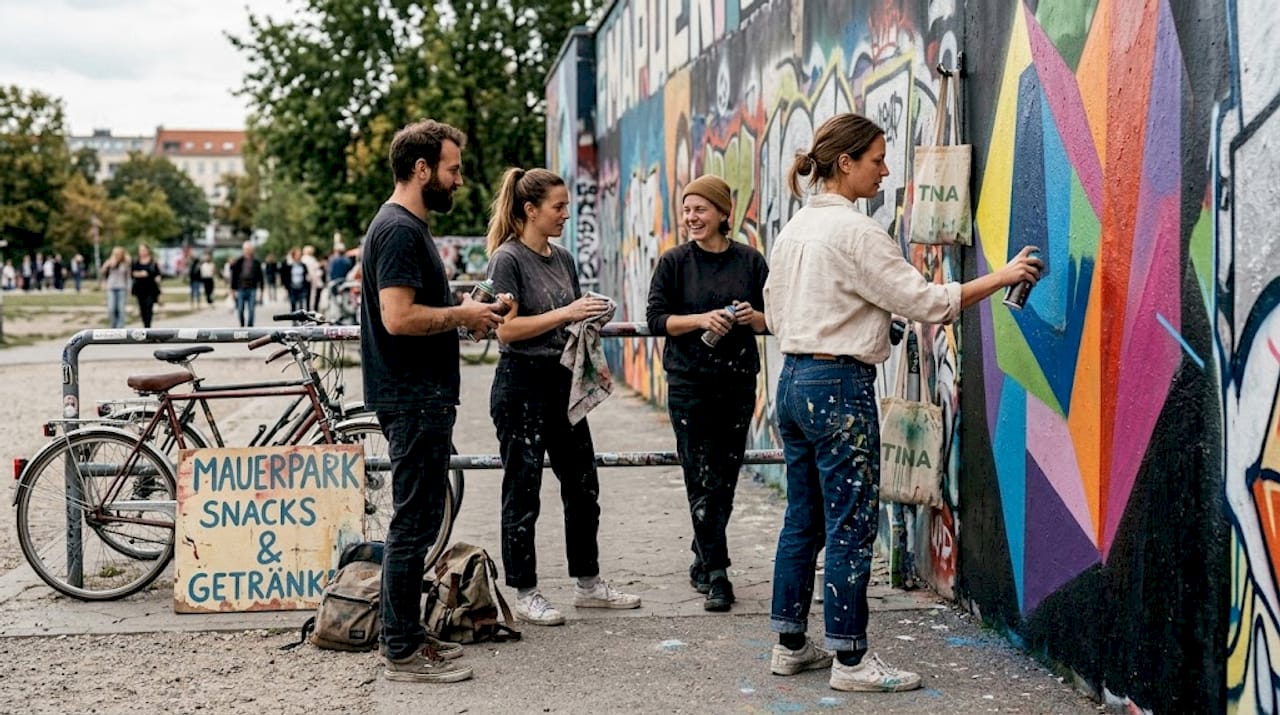
Consider what happens when your whole team stands in front of a blank wall at Mauerpark with spray cans for the first time. Nobody knows what they are doing. The head of finance is just as lost as the newest intern. That shared awkwardness is actually the magic ingredient. It dismantles hierarchy faster than any icebreaker ever could.
Here is a sample of what Berlin's artistic workshop scene looks like for corporate groups:
- 🎨 Graffiti at Mauerpark: Groups of 8 to 150+ can participate, with mobile setups for larger teams
- 📄 Papermaking: Tactile, meditative, and surprisingly complex
- 💍 Jewelry making: Precise, creative, and deeply personal
- 🏺 Ceramics and pottery: Perfect for slowing down and focusing together
- 🖌 Painting and wine nights: Social, relaxed, and genuinely fun
Pro Tip: Match the workshop type to your team's energy. A fast-paced sales team might love graffiti's bold immediacy. A detail-oriented engineering team might connect more with jewelry or ceramics. The activity itself matters less than how well it fits your group's personality.
Art-based workshops work as natural equalizers because no one walks in with a skill advantage. That levels the playing field in a way that competitive games never quite manage. It creates psychological safety, the kind where people feel comfortable being imperfect and trying new things. And that safety is exactly what good experiential team building in Berlin is built to create.
Designing and measuring effective collaborative workshops
Knowing what makes an artistic workshop meaningful sets the stage, but how can you ensure lasting impact and avoid common pitfalls?
Design matters enormously. A poorly structured session with no clear goals is just an afternoon off. A well-designed collaborative workshop changes how your team operates for months afterward. Here is how to build one that actually works:
- Set a clear goal first: What specific behavior or outcome do you want to improve? Better cross-team communication? More creative problem-solving? Start there.
- Work with a professional facilitator: A skilled facilitator is not just a host. They manage group dynamics, draw out quieter voices, and keep energy flowing.
- Prioritize hands-on elements: Remember the 60/40 rule. If people are listening for more than 40% of the session, redesign the program.
- Choose the right setting: Berlin has extraordinary venues, from artist ateliers to rooftop studios. The space itself sets the tone.
- Build in reflection time: A short debrief at the end connects the creative experience to real workplace themes.
To track whether any of this actually worked, use a mix of tools:
- Post-event feedback surveys (same day and two weeks later)
- Manager observations of behavior change
- Team KPIs tied to the workshop's goals
- Voluntary follow-up check-ins
"Measuring workshop success means going beyond happy faces and focusing on behavior change and actual business impact."
The Kirkpatrick Model is your best friend here. Most one-off events score well on Level 1 (people had fun) but fail at Levels 3 and 4 (behavior change and business results). That gap is where most corporate events lose their value. For a full breakdown of how to close that gap, the team event benefits resource offers practical frameworks worth bookmarking.
Why art-based collaboration beats competition for team growth
Here is something most team-building guides will not say directly: competitive formats hurt more teams than they help. Escape rooms, trivia battles, and challenge-based events create winners and losers. Some people thrive. Others quietly check out, smile politely, and feel a little worse about themselves by the end.
Art-based workshops do the opposite. Art-based workshops excel in building psychological safety, creating flow states, and generating genuine team connection, largely because they dismantle hierarchy instead of reinforcing it. When everyone is equally unsure of themselves in front of a lump of clay or a blank canvas, something honest happens. People drop their professional armor and actually talk to each other.
After years of digital fatigue and remote isolation, this matters more than ever. HR managers and event planners in Berlin have a genuine opportunity right now to choose creative collaboration over competition. The data supports it. The psychology supports it. And frankly, the city of Berlin, with its historic venues for team collaboration, is one of the best places on earth to make it happen.
Logistics matter. The right venue, the right facilitator, the right group size. But none of that creates culture change on its own. What drives real behavioral shifts is giving people a creative tool, removing the pressure to perform, and letting genuine human connection take over. That is what art-based workshops do so well.
Bring your Berlin team together with an artistic workshop
You now have the framework, the data, and the inspiration. The next step is finding the right experience for your team.
TINA connects Berlin corporate teams directly with real local artisans for hands-on, meaningful workshops that go far beyond the usual. Whether you want to try a ceramic sculpting workshop for a smaller group or plan a team offsite for your entire department, the booking process is simple and transparent. No guesswork, no generic packages. Just authentic, creative experiences built around your team's needs. Browse authentic artisan team experiences and find something your team will actually talk about on Monday morning.
Frequently asked questions
What is a collaborative workshop?
A collaborative workshop is an interactive, hands-on session where teams co-create solutions, build skills, and align on goals through structured activities, rather than passive observation.
How are Berlin's artistic workshops different from other team events?
Berlin workshops emphasize authentic, hands-on creativity such as graffiti, papermaking, and wine painting. They foster calm collaboration over competition, creating a genuinely level playing field for every participant.
Why are companies preferring in-person workshops in 2026?
A 41% increase in bookings shows that teams are choosing interactive, in-person workshops to counter digital fatigue and achieve stronger learning outcomes than virtual formats can deliver.
How do you measure the success of a collaborative workshop?
Use the Kirkpatrick Model to assess not just day-of satisfaction, but actual behavior change and business results in the weeks following the event.