

Most HR managers assume the newest, sleekest office space is the best place to build a team. But here's what the research actually says: historic environments evoke positive emotional responses, reduce stress, and strengthen team identity in ways that modern glass-and-steel rooms simply cannot replicate. Berlin is one of the most historically rich cities in Europe, and its ateliers, heritage halls, and century-old studios are sitting right there, waiting to be used. This article walks you through why historic venues work, what benefits they deliver for Berlin teams, how to choose the right one, and what real team-building experiences actually look like in these spaces.
Table of Contents
- Why historic venues transform team dynamics
- Key team-building benefits of Berlin's historic venues
- Choosing the right historic venue: What to consider
- From inspiration to action: Examples of Berlin team-building in historic spaces
- Our perspective: Why the best teams embrace Berlin's historic soul
- Bring your Berlin team together in history-rich venues
- Frequently asked questions
Key Takeaways
| Point | Details |
|---|---|
| Historic venues foster unity | Choosing culturally significant spaces boosts team belonging and emotional connection. |
| Enhanced collaboration | Berlin’s historic settings encourage more open communication and creative teamwork. |
| Intentional planning is crucial | Matching the right venue to your team’s needs maximizes the experience’s impact. |
| Real-world inspiration available | Practical Berlin examples showcase how diverse teams leverage unique venues for success. |
Why historic venues transform team dynamics
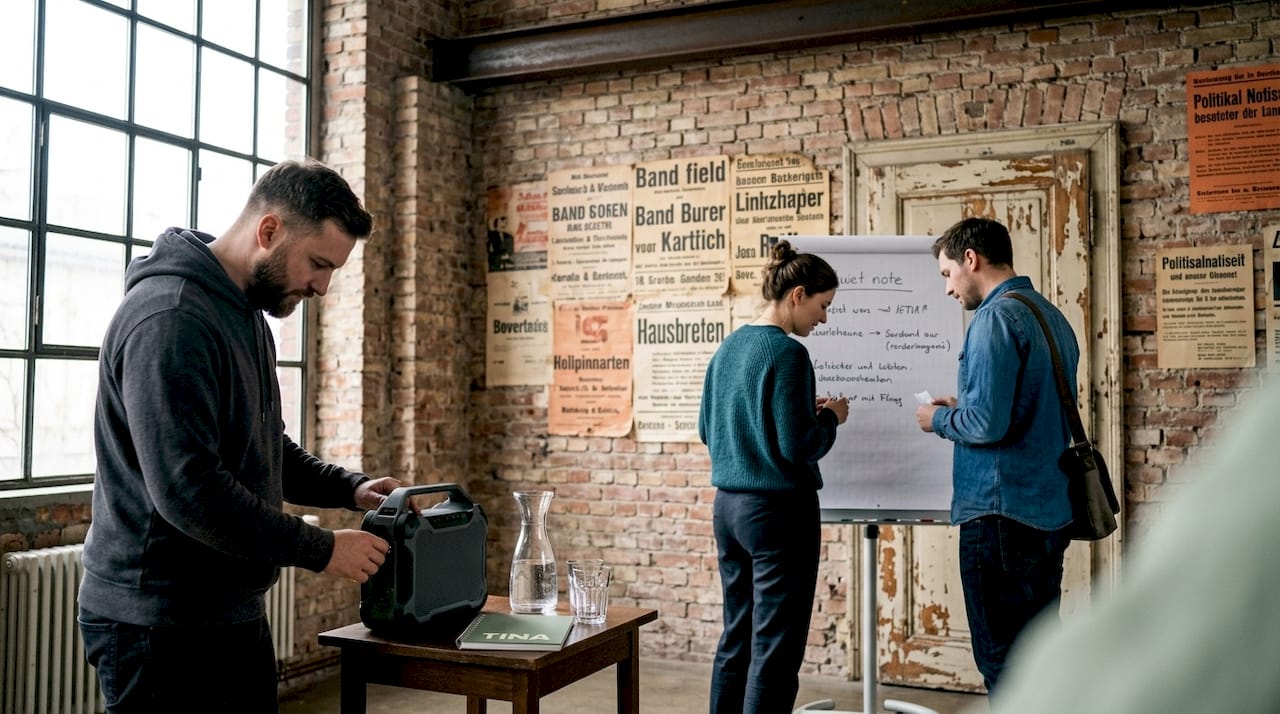
Walk your team into a polished corporate meeting room and everyone immediately knows their role. The manager sits at the head of the table. The intern sits near the door. The hierarchy is baked into the furniture. Now walk that same team into a 19th-century pottery studio or a heritage kitchen in Mitte, and something shifts. Nobody knows exactly where to stand. Everyone looks around. Suddenly, the team lead and the newest hire are equally curious, equally uncertain, and equally present.
That shift is not accidental. Historic venues foster belonging and reduce stress in ways that standardized spaces cannot. When people feel emotionally connected to a place, they open up. They communicate more honestly. They take creative risks they would never take in a room that feels like every other room.
Here is a simple comparison of how the two environments tend to affect teams:
| Factor | Modern office space | Historic venue |
|---|---|---|
| Stress levels | Often elevated | Typically lower |
| Hierarchy visibility | High | Reduced |
| Creative risk-taking | Limited | Encouraged |
| Emotional engagement | Neutral | Strong |
| Shared memory formation | Weak | Lasting |
The numbers tell a clear story. But beyond the data, there is something harder to quantify: the feeling of being somewhere that matters. Berlin's historic spaces carry stories in their walls. Teams absorb that atmosphere, even unconsciously.
"Place is not just a backdrop. It is an active participant in how people feel, connect, and perform together."
For artisan team experiences, the venue is never just a location. It is part of the experience itself. A ceramics workshop feels completely different in a working studio with decades of clay dust in the air than it does in a rented conference room. The authenticity of the space amplifies the authenticity of the activity.
This is also why generic team-building formats keep failing. Escape rooms, bowling alleys, and rooftop cocktail hours are fine for socializing. But they do not create the kind of emotional resonance that actually changes how a team works together on Monday morning. Historic venues do, because they trigger a genuine sense of place and shared experience that sticks.
For Berlin teams specifically, the city's layered history adds another dimension. Working in a space connected to real craft traditions or cultural heritage gives teams a shared reference point that goes beyond the company itself. That shared context becomes part of the team's identity. Explore unique team building options in Berlin to see how this plays out in practice.
Key team-building benefits of Berlin's historic venues
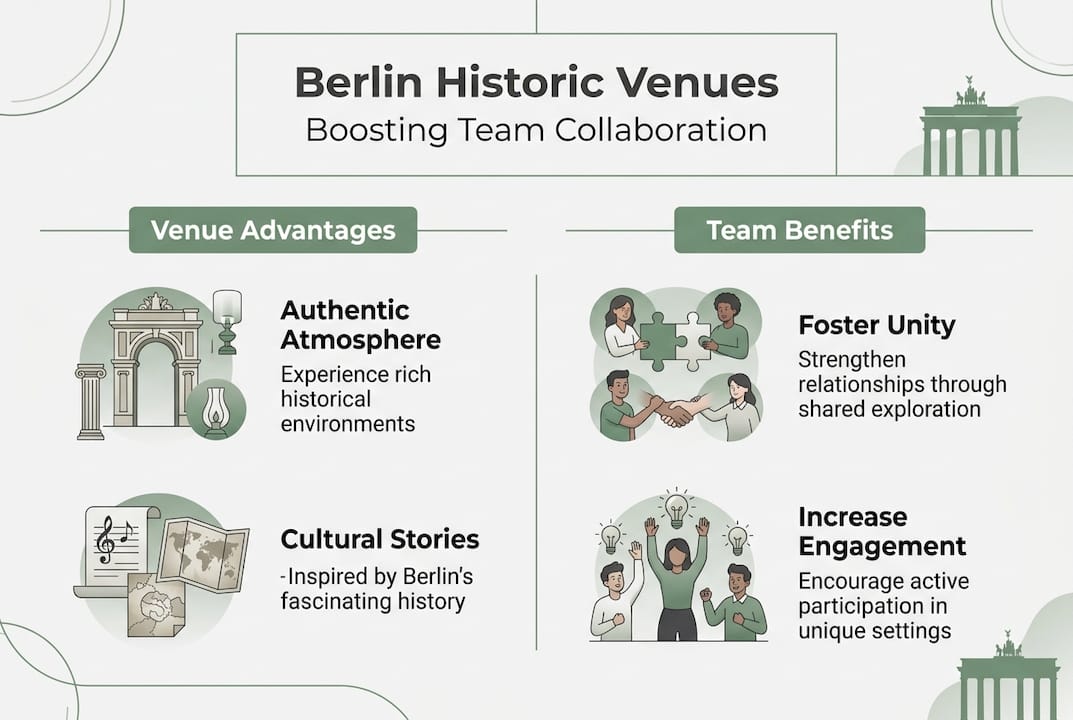
Understanding the psychology is one thing. Knowing exactly what your team gains is another. Here are the core benefits Berlin companies report when they move their team events into historically rich spaces.
- 🏛️ Higher engagement and participation. People pay attention when they are somewhere interesting. A venue with character naturally pulls people out of their phones and into the room. Participation rates go up because the environment itself is stimulating.
- 🗣️ Organic storytelling and knowledge sharing. Historic spaces spark conversation. Someone notices an old tool on the wall and asks about it. The artisan explains the craft's history. Suddenly the team is learning together, and that shared learning creates connection.
- 🎨 Creative problem-solving. Unusual environments break habitual thinking. When your team is standing in a century-old atelier instead of a boardroom, they approach challenges differently. The space gives them permission to think outside their usual patterns.
- 🤝 Stronger company culture. Team building in historic environments fosters emotional attachment that strengthens collaboration long after the event ends. Teams that share a meaningful experience together carry that bond back to the office.
- 🌍 Cultural appreciation and pride. Berlin's history is genuinely fascinating. Connecting your team to local craft traditions and heritage spaces builds a sense of pride in the city and in the work being done there.
Pro Tip: When booking a historic venue, ask the host or artisan to share a short story about the space at the start of the session. Even five minutes of context dramatically increases how emotionally connected participants feel to the experience.
The practical upside for HR managers is real too. Events held in memorable locations generate better post-event feedback, stronger word-of-mouth among employees, and higher likelihood that teams will request similar experiences again. You can get Berlin venue recommendations tailored to your team's size and goals, or go straight to quick team event booking if you already know what you want.
Choosing the right historic venue: What to consider
Not every old building is the right fit for every team. Choosing well makes the difference between a good event and a genuinely transformative one. Here is how to approach the decision.
1. Accessibility and location. Berlin is big. A venue that requires 45 minutes of public transit from your office will drain energy before the event even starts. Prioritize spaces that are reachable within 20 to 30 minutes from your team's base.
2. Atmosphere and historical relevance. The venue should feel authentic, not just old. Look for spaces with a real story: a working atelier, a preserved kitchen, a studio with genuine craft heritage. Superficial "vintage" aesthetics do not deliver the same emotional impact as genuine historic character.
3. Capacity and flexibility. A beautiful venue that cannot comfortably fit your team is a problem. Check that the space can accommodate your group size without feeling cramped, and confirm that the layout can be adapted for the specific activity you have planned.
4. Technical capabilities. Historic does not have to mean outdated. Many of Berlin's best venues have upgraded their facilities while preserving their character. Confirm Wi-Fi availability, audio-visual options if needed, and catering access.
5. Alignment with your company values. Selecting the right historic environment maximizes positive emotional and team outcomes. A sustainability-focused company will resonate more with a venue rooted in traditional craft or natural heritage. A creative agency might thrive in an artist's atelier. Match the venue's story to your team's identity.
Here is a quick comparison to help frame your decision:
| Venue type | Best for | Watch out for |
|---|---|---|
| Historic pottery studio | Hands-on craft teams | Limited capacity |
| Heritage culinary space | Food-loving, social teams | Booking lead time |
| Preserved natural site | Outdoor, active teams | Weather dependency |
| Cultural atelier | Creative, design-focused teams | Noise restrictions |
For teams interested in sustainable and creative outputs, custom workshop venues offer a great blend of historic atmosphere and modern relevance.
From inspiration to action: Examples of Berlin team-building in historic spaces
Theory is useful. Real examples are better. Here is what Berlin team building actually looks like when you put these principles into practice.
- 🏺 Ceramics in a historic pottery studio. Teams gather around a working wheel in a studio that has been producing clay pieces for decades. Nobody walks in knowing what they are doing. The intern and the director are equally lost, equally laughing, and equally proud when they finish their piece. Emotional connection to place boosts team collaboration in exactly this kind of setting. Book a clay workshop in history-rich studios to see this in action.
- 🍝 Culinary workshops in heritage kitchens. Pasta making or pizza workshops in a century-old kitchen setting turn colleagues into collaborators fast. There is something about cooking together in a space with real history that strips away professional distance. People talk differently when their hands are covered in flour.
- 🌊 Lake day retreats at preserved natural heritage sites. Berlin's surrounding lakes are part of the city's natural and cultural heritage. A structured lake day activities program combines outdoor team challenges with the emotional grounding of being in a genuinely beautiful, historically significant landscape.
- 🎨 Sustainable merchandise workshops in working ateliers. Teams create something real together: tote bags, printed textiles, or branded items made with genuine craft techniques. The finished product becomes a physical reminder of the shared experience, sitting on desks long after the event.
Pro Tip: Choose an activity where everyone starts from zero. The leveling effect is where the real team-building magic happens. When the team lead cannot do something any better than the newest hire, social barriers dissolve fast.
Each of these scenarios works because the venue and the activity reinforce each other. The historic space amplifies the hands-on experience, and the hands-on experience gives the historic space meaning. That combination is what creates memories that actually last.
Our perspective: Why the best teams embrace Berlin's historic soul
Here is our honest take: most team-building events fail not because the activity was wrong, but because the setting was forgettable. You can run a great icebreaker in a bland conference room and still have everyone forget it by Friday.
Berlin is one of the few cities in the world where history is not just a backdrop. It is a living, breathing part of daily life. When you bring your team into that history, something real happens. They stop being colleagues for an hour and start being people. That shift is worth more than any trust-fall exercise ever invented.
We have seen it consistently: teams that experience embracing historic venues in Berlin come back changed. Not dramatically, not overnight. But the conversations are easier. The collaboration feels more natural. The company culture gets a little more human.
The practical lesson is this: location is not just logistics. It is strategy. Choose it intentionally.
Bring your Berlin team together in history-rich venues
You now know why historic venues work, what to look for, and what real experiences look like. The next step is simple: find the right one for your team.
TINA curates authentic, hands-on team-building experiences across Berlin's most characterful venues, connecting your team directly with local artisans who know their craft and their city. Whether you want a ceramics session in a working studio, a culinary workshop in a heritage kitchen, or something completely tailored, we make it easy to find and book. Discover Berlin team building options, get tailored venue recommendations for your specific team, or browse more team activities to find your perfect fit.
Frequently asked questions
What makes historic venues more effective for team building than modern spaces?
Historic venues evoke emotional responses that reduce stress and strengthen team identity, creating conditions for genuine collaboration that neutral modern spaces rarely achieve.
How can I ensure a historic venue fits my team's specific needs?
Assess accessibility, technical requirements, venue atmosphere, and cultural relevance to your team's goals before booking, and confirm capacity for your group size.
Do Berlin historic venues support modern team activities?
Yes, many of Berlin's best historic venues have upgraded their amenities and layouts while preserving the authentic character that makes them special.
Are historic venues suitable for large corporate teams?
Many historic venues in Berlin offer flexible layouts and ample capacity, though it is worth confirming group size limits early in the planning process.
Can team-building activities enhance company culture long-term?
Engaging in culturally-rich historic environments helps teams form lasting emotional bonds that carry back to the workplace and positively shape company culture over time.
Recommended
- Creative Workshops Berlin | Ceramics, Pottery & Crafts for Teams | TINA
- Team Event Berlin | Book in 5 Minutes | TINA Experiences
- Team Building Berlin | Authentic Artisan Experiences | TINA
- Team Building Berlin | Unique Experiences | TINA Experiences
- Why event organisers choose glass towers for displays