
TL;DR:
- Experiential artisanal workshops in Berlin foster lasting team connections through hands-on learning. They improve trust, collaboration, and cultural relevance more effectively than traditional activities. These workshops are adaptable for hybrid teams and provide measurable post-event benefits.
Most team-building events feel like something you survive rather than enjoy. The trust falls, the icebreaker bingo, the escape rooms that everyone secretly dreads. Berlin's corporate teams deserve better, and a growing number of HR managers and team leads are finding it in an unexpected place: local artisanal workshops. Hands-on, creative, and genuinely fun, these experiences tap into a proven learning framework that turns a few hours of craft into real team transformation. This article breaks down what experiential team building actually is, why it works, and how Berlin-based teams can put it into practice today.
Table of Contents
- Understanding experiential team building
- Core benefits for Berlin-based corporate teams
- Popular artisanal workshop formats in Berlin
- Best practices for planning your experiential team event
- Our perspective: Why Berlin's artisanal workshops go beyond cliché team building
- Elevate your Berlin team with authentic experiential events
- Frequently asked questions
Key Takeaways
| Point | Details |
|---|---|
| Hands-on team learning | Experiential team building engages teams with local artisans for practical, lasting results. |
| Proven business outcomes | Activities improve trust, collaboration scores, and deliver high participant satisfaction (NPS >70). |
| Flexible for all teams | Hybrid and virtual workshop options ensure every team member can participate. |
| Berlin's unique edge | Local artisans offer culture-rich activities you won’t find elsewhere, making each event truly memorable. |
Understanding experiential team building
With an appetite for more effective solutions, let's clarify what truly defines experiential team building.
Experiential team building is not about watching a presentation or following a script. It is about learning by doing. You pick up a tool, try something new, make mistakes, and figure it out together. That process, repeated across a team, creates shared understanding and genuine connection.
The theoretical backbone here is well established. Experiential team building is structured around Kolb's Experiential Learning Theory, a four-stage cycle that explains how real learning sticks:
- 🎯 Concrete Experience: You actually do the thing. Roll the clay, knead the dough, melt the chocolate.
- 🔍 Reflective Observation: You notice what happened. What worked? What surprised you?
- 💡 Abstract Conceptualization: You draw a broader lesson. Maybe you realize you communicate differently under pressure.
- 🔄 Active Experimentation: You apply that lesson next time, in the workshop and back at the office.
Artisanal workshops are a near-perfect fit for this cycle. Every session moves through all four stages naturally, without a facilitator forcing the process.
Here is how experiential workshops compare to traditional team-building approaches:
| Factor | Traditional approach | Experiential artisanal workshop |
|---|---|---|
| Learning style | Passive, lecture-based | Active, hands-on |
| Engagement | Often low | Consistently high |
| Memory retention | Short-term | Long-term, tied to emotion |
| Social barriers | Reinforced by hierarchy | Dissolved by shared struggle |
| Takeaway | A certificate or a photo | A real object you made together |
That last row matters more than it looks. When your team leaves with something they actually built, the memory is physical. It sits on a desk or hangs on a wall, and it keeps telling the story.
"The best team-building experiences are the ones where nobody is an expert. When the intern and the VP are equally lost in front of a lump of clay, something real happens."
This leveling effect is one of the most underrated benefits of craft-based workshops. Hierarchy fades. Creativity takes over. And people who rarely talk at work suddenly find themselves laughing and problem-solving side by side.
Core benefits for Berlin-based corporate teams
Understanding the foundation, let's turn to the specific strengths these experiences unlock for Berlin teams.
Berlin is a city that values authenticity. Its culture is built on creativity, craft, and community. When you choose an artisanal workshop for your team, you are not just booking an activity. You are tapping into something that resonates with the city's identity.
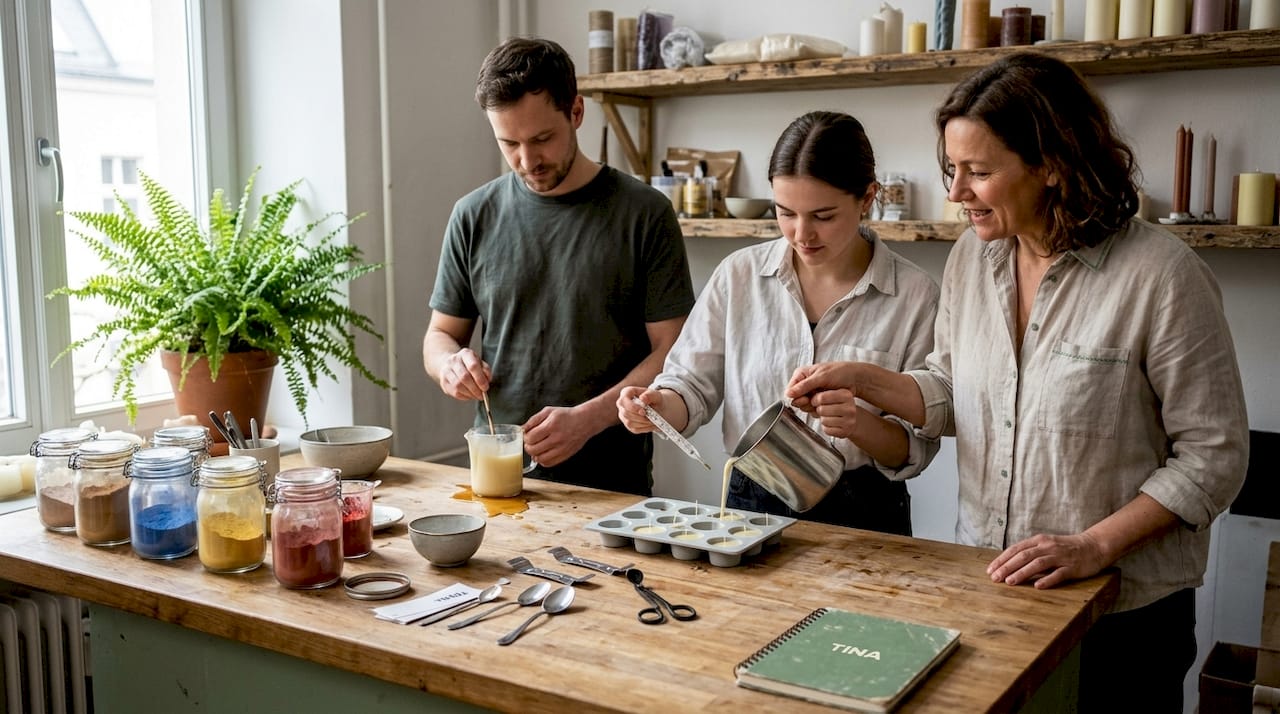
Here is what the data says about outcomes. NPS scores above 70 and measurable improvements in pre and post collaboration scores have been recorded for teams that participate in experiential events. That is not a soft, feel-good metric. That is a real signal that something changed.
Top benefits for Berlin corporate teams:
- Boosted trust and engagement: Hands-on activities strip away professional masks. People show up as themselves.
- Improved collaboration scores: Teams that create together communicate better afterward.
- Cultural relevance: Supporting Berlin's local artisans adds meaning to the experience. You are not just spending a budget line. You are investing in the city.
- Inclusivity for hybrid teams: Many workshops offer virtual preview options, so remote colleagues are not left out.
Pro Tip: If your team includes both Berlin-based and remote employees, look for workshops that offer a hybrid element. A playful clay workshop or a pasta-making workshop can be structured so remote participants join the planning and debrief phases, keeping everyone connected.
Here is a quick comparison of experiential versus generic team events on key HR metrics:
| Metric | Generic team event | Artisanal experiential workshop |
|---|---|---|
| Employee satisfaction | Moderate | High |
| Reported bonding | Low to moderate | High |
| Post-event collaboration | Minimal change | Measurable improvement |
| Cultural alignment | Weak | Strong (especially in Berlin) |
| Repeat booking rate | Low | High |
The numbers point in one direction. Experiential workshops are not a trend. They are a smarter investment in your team's long-term performance.
Popular artisanal workshop formats in Berlin
With the benefits clear, let's explore what these experiences actually look like in practice, right here in Berlin.
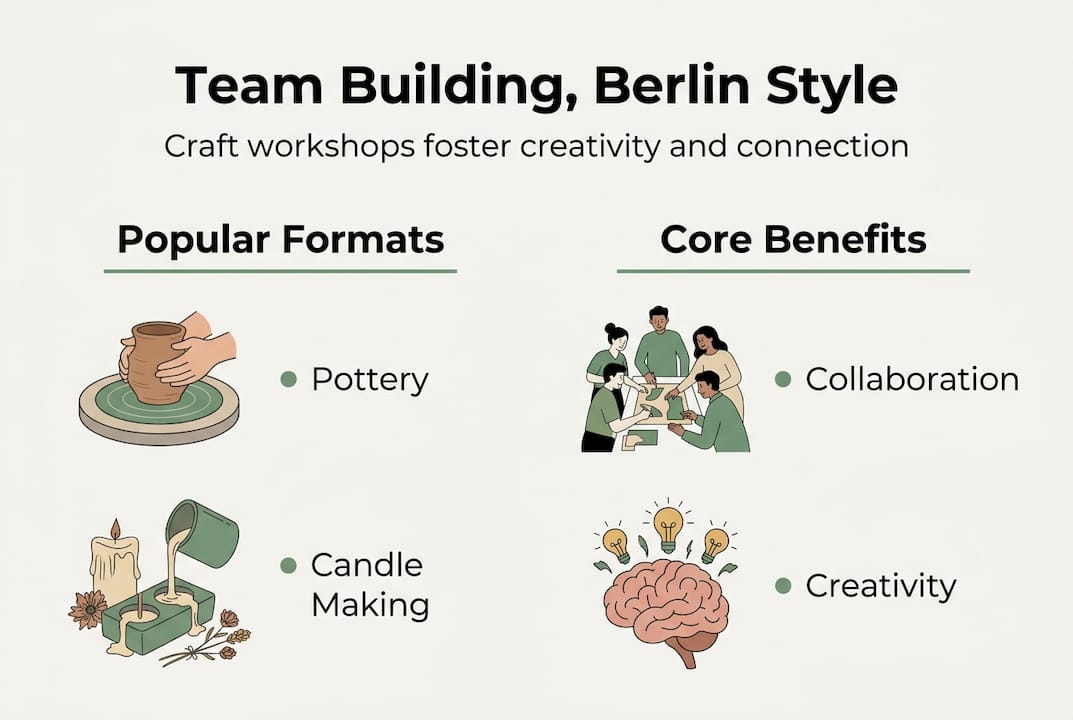
Berlin has a rich artisan community, and the variety of workshops available reflects that. Whether your team loves food, design, or hands-on making, there is something that fits.
Workshop formats your team will actually enjoy:
- 🍫 Chocolate making: A bean-to-bar chocolate making experience takes your team from raw cacao to finished bars. It is sensory, surprising, and deeply satisfying.
- 💍 Jewelry crafting: In a handcraft your own jewelry ring session, each person creates something they actually wear. Personal and memorable.
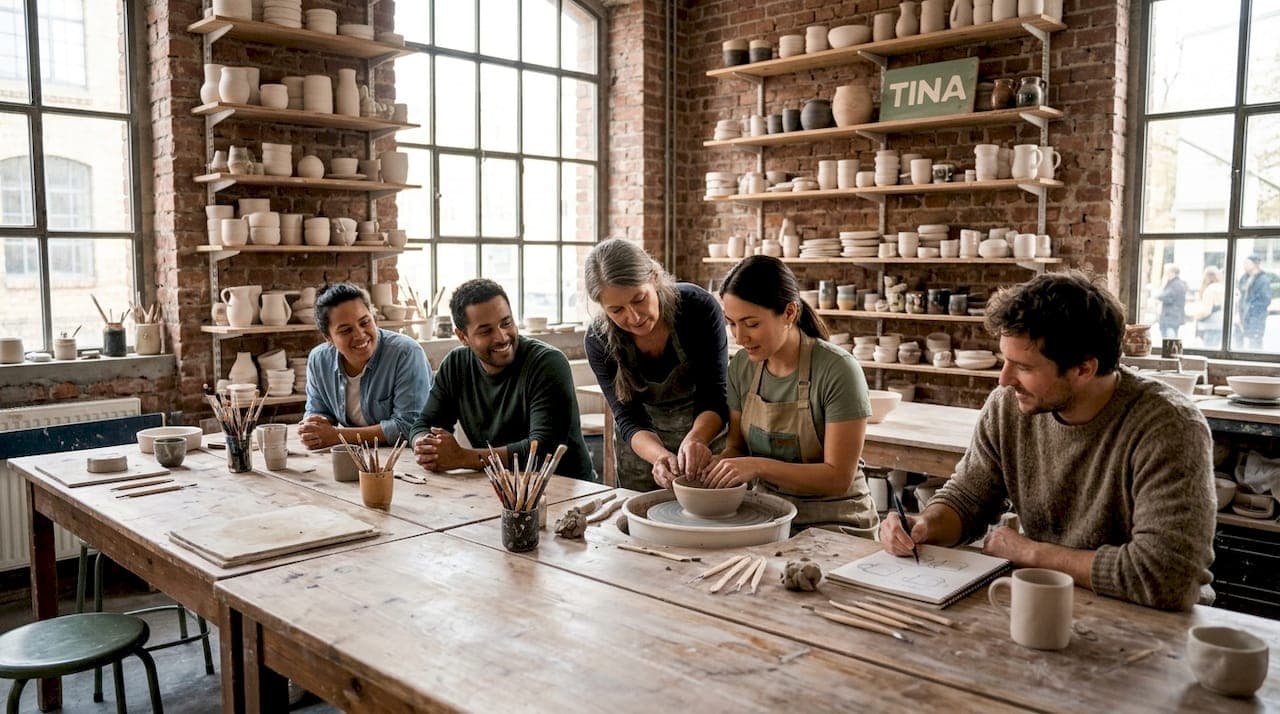
- 🏺 Ceramic sculpting: A team ceramic sculpting workshop puts everyone at the same table with the same lump of clay. Nobody is an expert. Everyone figures it out.
- 🎨 Mosaic art: An upcycled mosaic art workshop combines creativity with sustainability, a combination that resonates strongly with Berlin's values.
What these formats share is equal participation. Nobody can coast. Nobody can dominate. The craft demands presence from everyone, and that is exactly what makes it work.
Hands-on workshops drive lasting behavioral change and team cohesion, not just a good afternoon. The effects carry back into the office in the form of better communication, more creative problem-solving, and a team that actually knows each other.
"When you make something with your hands alongside a colleague, you see a side of them you never see in a meeting. That is the version of them that shows up when collaboration really matters."
For distributed or hybrid teams, many Berlin workshops can be structured with a shared virtual component. Remote participants can join a live-streamed introduction, receive a materials kit at home, and participate in the reflection debrief together. The artifact they create becomes a shared reference point, even across time zones.
Best practices for planning your experiential team event
Ready to bring this learning style to your team? Here is how to design an engaging, effective session.
Planning a great experiential event is less complicated than it sounds, but a few smart choices make a big difference in outcomes.
Step-by-step planning guide:
- Set clear objectives first. What do you want your team to walk away with? Better trust? More creative confidence? Clearer communication? Your goal shapes your workshop choice.
- Match the workshop to your team. Consider size, physical accessibility, dietary needs for food workshops, and whether your team leans more creative or analytical. There is a format for every group.
- Brief the artisan in advance. Share context about your team's dynamics. A good artisan facilitator will adapt the session to your needs.
- Build in reflection time. This is the step most teams skip, and it is the one that boosts event ROI most significantly. A short debrief after the workshop closes the ELT cycle and locks in the learning.
- Measure outcomes. Send a short survey before and after the event. Track NPS and ask specific questions about collaboration and trust. You will have real data to justify the next booking.
- Plan for hybrid participants. If any team members are remote, coordinate their involvement early. Do not leave it as an afterthought.
Pro Tip: Use team event recommendations to get matched with the right workshop based on your team's size and goals. If you want to browse options first, creative workshops for teams in Berlin gives you a curated starting point.
The most common mistake HR managers make is treating the event as the finish line. It is not. The event is the starting point. What happens in the days after, when people reference the experience in meetings or laugh about the clay disaster, is where the real value lives.
Our perspective: Why Berlin's artisanal workshops go beyond cliché team building
After these practical steps, it is worth considering how these workshops redefine success for forward-thinking Berlin teams.
Here is something most team-building guides will not tell you: entertaining your team is not the same as connecting them. A fun afternoon is easy to forget. A shared moment of creative vulnerability is not.
When a team lead sits next to an intern, both equally confused about how to shape a piece of clay, something shifts. The usual social architecture of the office dissolves. What replaces it is something more honest and more useful: two people figuring something out together.
That is what Berlin's artisan community makes possible. These are not actors running a corporate game. They are real makers with real skills, and their craft demands real attention. When your team shows up to that, they bring their whole selves, not their job titles.
We believe authentic team building experiences are not a nice-to-have. They are a direct investment in retention, innovation, and the kind of trust that makes teams resilient when things get hard. The companies that understand this are already seeing it in their culture. The ones that keep booking escape rooms are still wondering why nothing sticks.
Elevate your Berlin team with authentic experiential events
Armed with insights and best practices, here is how to elevate your next team experience in Berlin.
If you are ready to move past the usual and try something that actually works, TINA makes it easy. We connect Berlin-based corporate teams with local artisans who lead genuinely hands-on, memorable workshops, from chocolate making to jewelry crafting to ceramic sculpting.
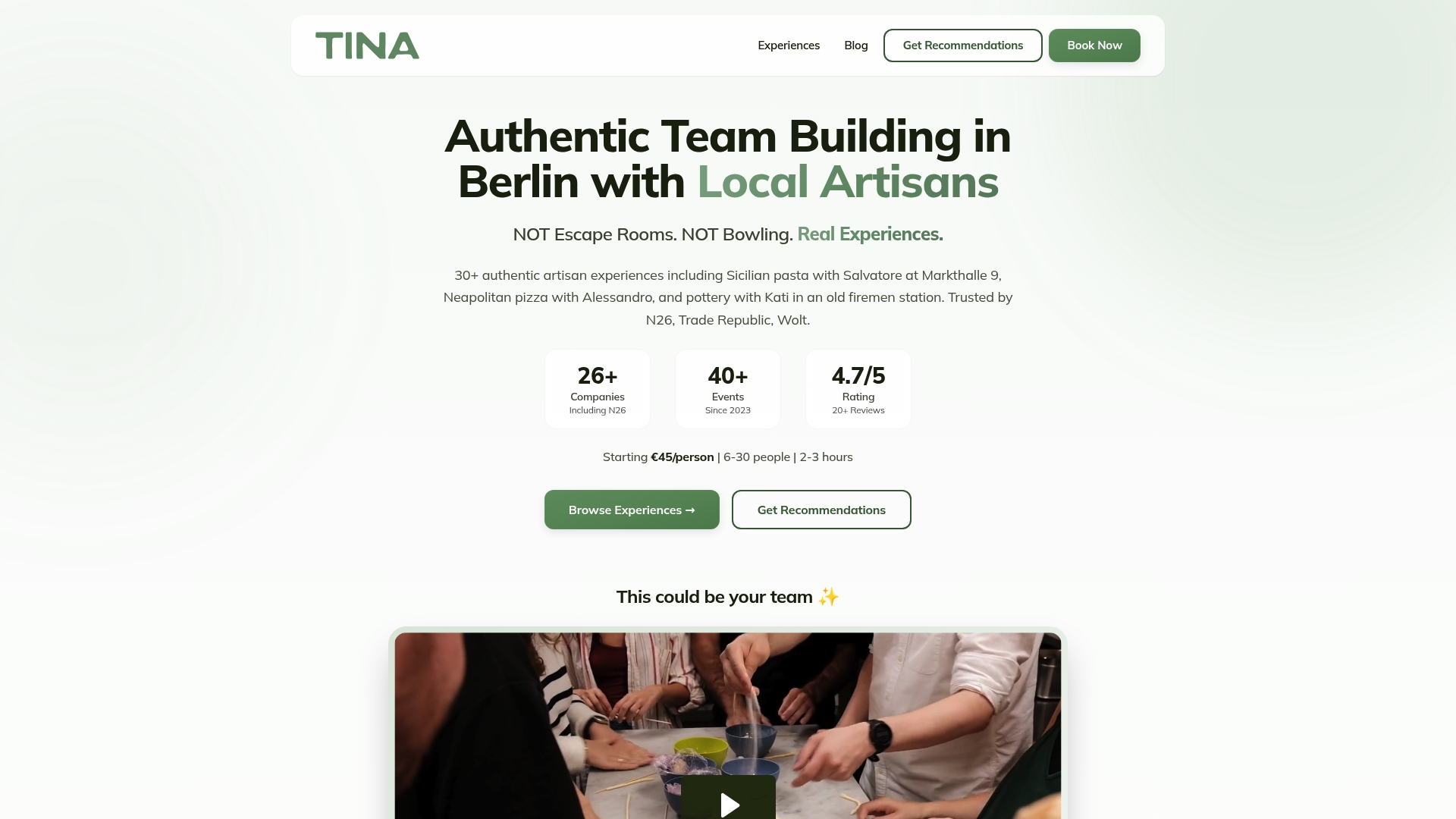
Browse unique team building in Berlin and find the right fit for your group's size, interests, and goals. Not sure where to start? Get custom team event recommendations and we will match you with the ideal experience. Whether your team wants to craft jewelry ring workshops or explore another artisan format, TINA handles the details so you can focus on your people.
Frequently asked questions
What makes experiential team building more effective than traditional events?
Experiential activities transform experience into lasting knowledge and behavioral change, while traditional events rely on passive participation that fades quickly. Hands-on workshops create emotional memory, which means the lessons actually stick.
Are these artisanal workshops suitable for hybrid or remote teams?
Yes, many Berlin workshops offer virtual previews and hybrid experiences that keep remote participants genuinely involved. Remote teams benefit from structured hybrid formats that include shared materials and live debrief sessions.
How can we measure success after an experiential team event?
Use pre and post event surveys alongside NPS scores above 70 and collaboration metrics to track real outcomes. These numbers give you concrete evidence to share with leadership and justify future investment.
What are some unique Berlin-specific workshop opportunities?
Berlin teams can choose from pottery, chocolate making, jewelry crafting, mosaic art, pasta making, and more, all led by real local artisans who bring genuine craft knowledge to every session.
Recommended
- Team Building Berlin | Authentic Artisan Experiences | TINA
- Creative Workshops Berlin | Ceramics, Pottery & Crafts for Teams | TINA
- Custom Company Merchandise Workshop | Team Building Berlin | TINA
- Team Ceramic Sculpting Workshop | Team Building Berlin | TINA
- Work stays that deliver: reliable solutions for corporate teams - Guestly Homes