
TL;DR:
- Engaging in art-based activities can increase team satisfaction by 25% and productivity by up to 30%.
- Creative workshops build trust, improve communication, and foster emotional connections beyond traditional training.
- Embedding regular arts practices with leadership support creates lasting cultural change in team collaboration.
Teams that skip art-based activities are quietly leaving performance gains on the table. Empirical research shows that artistic engagement can boost team satisfaction by 25% and productivity by up to 30%. That's not a small number. Yet most Berlin HR managers and team leads still treat creative workshops as a "nice to have" rather than a strategic investment. This guide breaks down why art genuinely transforms teamwork, how to pick the right activities, and how to move from a single fun event to a lasting culture of creativity and collaboration.
Table of Contents
- Why art matters for teamwork: Evidence and misconceptions
- How artistic activities boost collaboration and innovation
- From activity to culture: Embedding art for lasting impact
- Making it real: Planning an art-driven team workshop in Berlin
- Perspective: Why most teams underestimate art's power—and how to fix it
- Ready to transform your Berlin team with art?
- Frequently asked questions
Key Takeaways
| Point | Details |
|---|---|
| Art boosts teamwork | Hands-on art activities measurably improve trust, communication, and satisfaction among team members. |
| Creativity fuels innovation | Theatrical, visual, and craft arts help teams develop dynamic capabilities for sensing and seizing opportunities. |
| Sustainable change needs culture | Lasting impact comes from embedding art into corporate routines, not just one-off events. |
| Berlin teams can start now | Carefully planned workshops and authentic local facilitators make creative team building accessible and effective. |
Why art matters for teamwork: Evidence and misconceptions
Let's get one thing straight: art in the workplace is not about finger painting or forced fun. It's a proven mechanism for building the kind of trust and communication that no PowerPoint training can replicate.
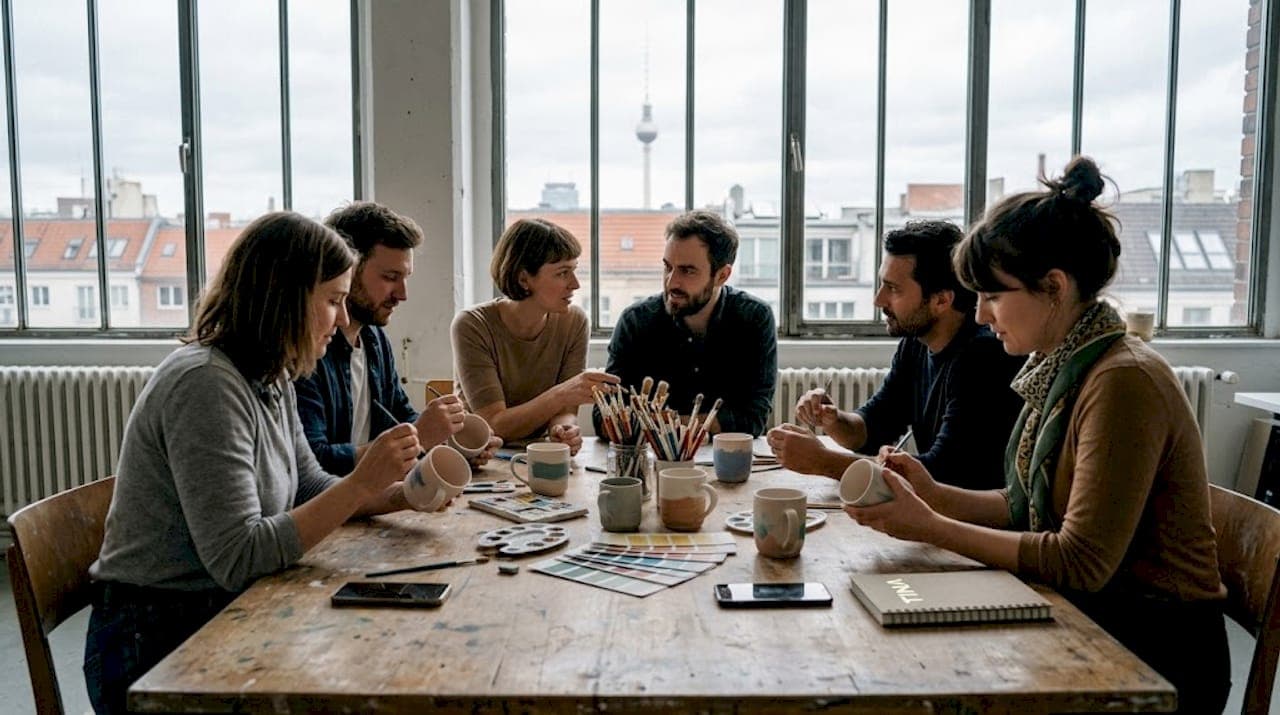
Arts-based interventions (ABIs) are structured activities that use creative practices to develop team cohesion and emotional connection. Think pottery, collaborative mural painting, improvisation theater, or even a shared pasta-making session with a local Berlin artisan. The magic is in the doing together, not in the output.
Here's what the evidence actually shows:
- 🎨 Team satisfaction rises by 25% when artistic activities are introduced into team routines
- 🚀 Productivity gains of up to 30% are linked to regular creative engagement
- 🤝 ABIs foster genuine emotional connection, not just surface-level bonding
- 💡 Creative experiences reduce social barriers between seniority levels
"Anyone is equally lost in front of a craft they've never tried before. Suddenly, the intern and the team lead are on the same level. That's where real bonds form."
Now, let's address the myths. Many managers assume art workshops are only for "creative types" or that they're a distraction from real work. Both ideas are wrong. Creative teamwork workshops are most effective precisely because they pull people out of their usual roles. A developer who never speaks up in meetings might shine while shaping clay. A manager who dominates discussions might struggle with a new craft, leveling the playing field in a healthy way.
Another common myth: art activities don't connect to business outcomes. But cultural workshops for teams consistently show measurable improvements in communication quality, psychological safety, and cross-functional collaboration. Berlin's corporate scene is catching on fast, with more companies choosing artisan experiences over generic team outings.
The shift is real. And the data backs it up.
How artistic activities boost collaboration and innovation
With a clear understanding of the value of art in teams, let's look at how specific artistic activities fuel both collaboration and innovation.
Different art forms work through different mechanisms. Visual arts like painting or ceramics slow people down, encouraging patience and attention to detail. Performance-based activities like theatrical improvisation force real-time listening and adaptive thinking. Handcrafts like bread baking or chocolate making create shared sensory experiences that spark conversation and laughter.
Research on ABIs and innovation shows that these activities build three critical organizational capabilities: sensing new opportunities, seizing available resources, and transforming existing routines. In plain terms, art trains teams to think differently, act faster, and adapt better.
Here's a quick comparison of activity types and their primary team benefits:
| Activity type | Primary benefit | Best for |
|---|---|---|
| Ceramics / pottery | Patience, focus, leveling hierarchy | Mixed seniority teams |
| Theatrical improvisation | Listening, adaptability, trust | Communication-heavy teams |
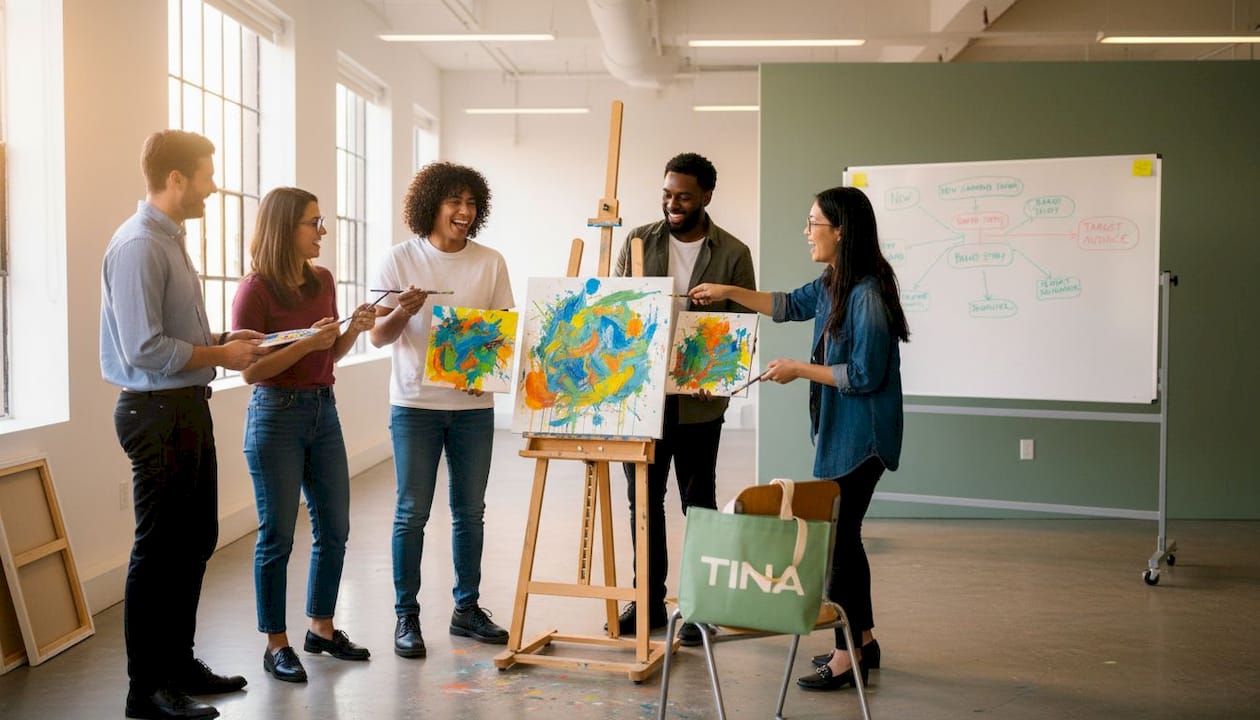
| Collaborative painting | Shared vision, creative risk-taking | Innovation-focused teams |
| Food crafts (pasta, pizza) | Sensory bonding, relaxed conversation | New or cross-functional teams |
| Sustainable crafts | Purpose alignment, creativity | Values-driven organizations |
For Berlin teams, workshop-based team events with local artisans add an extra layer: cultural authenticity. When your team learns to make pasta from a real Italian artisan in a Berlin atelier, the experience carries a story. People remember it. They talk about it. That shared memory becomes social glue.
Experiential team building works because it creates genuine shared challenges, not simulated ones. Nobody on your team has a competitive advantage when they're learning to throw clay for the first time.
Pro Tip: Try a quick "yes, and" improvisation exercise at your next team meeting. One person makes a statement, the next builds on it with "yes, and..." rather than correcting or redirecting. Theatrical improvisation research shows this simple habit measurably improves team communication within weeks.
Here's a practical sequence for planning your first art-based team session:
- Identify your team's biggest friction point (communication gaps, siloed thinking, low trust)
- Match an art form to that friction (improvisation for communication, crafts for hierarchy issues)
- Choose a local Berlin artisan with experience facilitating groups
- Set a relaxed tone before the session so people feel safe making mistakes
- Debrief together for 15 minutes afterward to connect the experience to work
From activity to culture: Embedding art for lasting impact
Having seen what art can accomplish in the moment, let's examine how to move from isolated activities to deep, cultural transformation within teams.
One pottery session is memorable. But one pottery session won't change how your team communicates on a Tuesday morning six months later. Research on ABIs is clear: the value of creative interventions is short-lived without systemic embedding. You need a broader strategy.
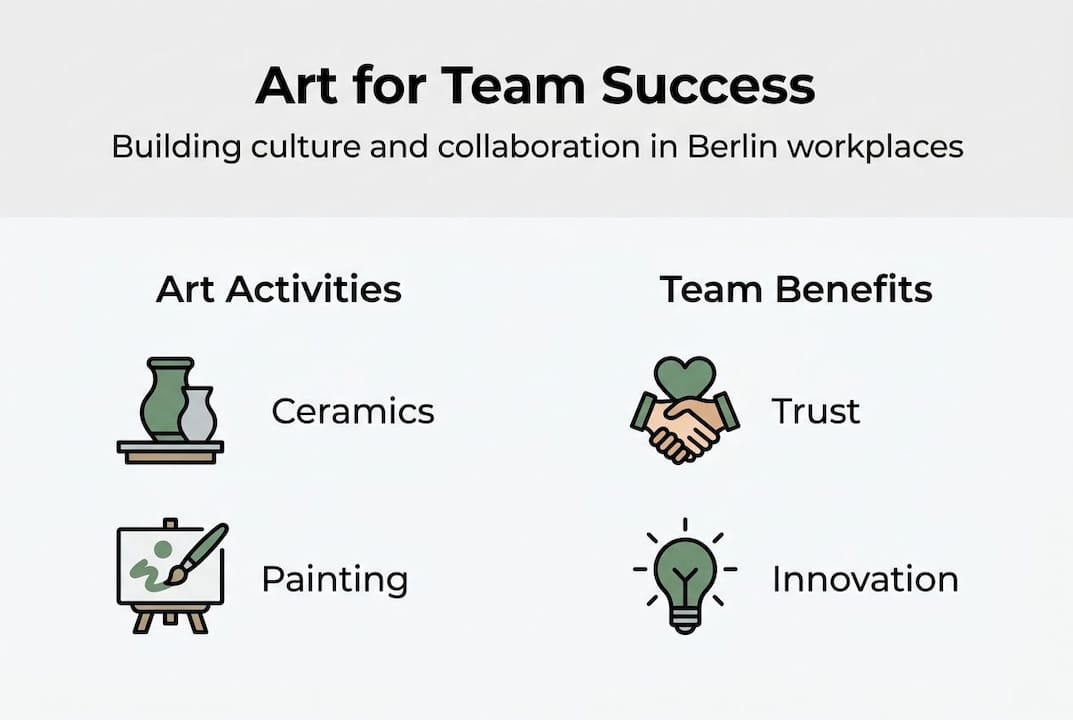
Here's the difference between a one-off event and an embedded creative culture:
| One-off workshop | Embedded creative culture |
|---|---|
| Single event, no follow-up | Regular creative touchpoints throughout the year |
| Fun but disconnected from work goals | Activities tied to team challenges and values |
| No leadership involvement | Leaders participate and champion creativity |
| Hard to measure impact | Progress tracked through team feedback and performance data |
| Fades from memory quickly | Builds shared language and ongoing rituals |
So what does embedding actually look like? It starts with leadership. If managers treat the workshop as a checkbox, the team will too. But when a team lead joins the ceramics session, struggles alongside everyone else, and references the experience in a later meeting, it signals that creativity is valued here.
Key practices for building a lasting creative culture:
- Schedule quarterly creative sessions, not just annual ones
- Rotate activity types to keep things fresh and reach different learning styles
- Connect each session to a real team goal so it feels purposeful, not random
- Celebrate small creative wins in regular meetings, not just big breakthroughs
- Invite team members to suggest activities, building ownership and excitement
Pro Tip: After each creative session, ask your team one question: "What did you notice about how we worked together today?" This 5-minute debrief builds self-awareness and links the experience to everyday collaboration. Check out the team bonding workflow approach for a structured way to do this.
The pitfalls to avoid? Poor alignment with team goals, lack of follow-through, and skipping measurement. If you can't point to a change in how your team communicates or collaborates, it's hard to justify the next session. Track it simply: a short survey before and after works fine. Authentic team building activities should always connect back to real outcomes.
Making it real: Planning an art-driven team workshop in Berlin
Now that you understand the strategic benefits of embedding art in teamwork, let's get practical on how to design an effective workshop in Berlin.
Artistic activities measurably boost team satisfaction and performance, but only when they're well-planned. A rushed, poorly matched activity can feel awkward and reinforce the myth that art isn't for everyone. Here's how to get it right.
-
Define your goal first. Are you trying to break down silos? Improve communication? Welcome new hires? Your goal shapes your activity choice. Don't pick a workshop because it sounds cool. Pick it because it solves a real team problem.
-
Choose an activity that fits your group size and energy. Pottery works beautifully for groups of 8 to 20. Larger groups might prefer a food craft workshop where subgroups can work simultaneously. Think about your team's energy level too: a high-pressure quarter calls for something relaxing, not competitive.
-
Source authentic Berlin artisans. Generic team events feel generic. When your facilitator is a real craftsperson with a genuine story, the experience carries weight. Look for artisans who have experience working with corporate groups and can adapt their teaching style to non-experts.
-
Build inclusivity into the design. Not everyone is comfortable with creative activities right away. Choose workshops with no "wrong" outcomes, where every result is valid. Frame the session around curiosity, not performance. This is especially important for teams with diverse cultural backgrounds, which is very common in Berlin.
-
Plan a simple post-event touchpoint. Send a follow-up message within 48 hours referencing something specific from the session. Share a photo. Ask one reflection question. This small step dramatically extends the impact of the experience.
Pro Tip: Ask your artisan facilitator to share a brief personal story about their craft at the start of the session. It sets an authentic tone, makes the experience feel real, and immediately puts your team at ease. Check the corporate team bonding guide for more planning frameworks.
Perspective: Why most teams underestimate art's power—and how to fix it
With the how-to in place, let's pause to reflect on the bigger lesson that many corporate teams in Berlin tend to miss.
Most teams focus on logistics: the venue, the catering, the schedule. They treat the creative activity as the entertainment portion of the day. That's the wrong frame entirely. Art isn't the dessert. It's the main course.
The deepest shifts we see happen not because a workshop was well-organized, but because someone in leadership was willing to look a little lost in front of their team. Vulnerability is the actual mechanism. When a senior manager struggles to center a piece of clay and laughs about it, something shifts in the room. Hierarchy softens. People start talking differently.
But here's the uncomfortable truth: most organizations aren't willing to sustain that discomfort. They do one workshop, feel good about it, and move on. Innovation doesn't come from a single moment of creative comfort. It comes from building a habit of creative risk-taking, celebrating small experiments, and staying curious. Why team building matters is really a question about what kind of culture you want to build, not just what activity to book next.
Ready to transform your Berlin team with art?
You now have the evidence, the frameworks, and the practical steps to make art a real driver of teamwork in your organization. The next move is simple: find the right experience and book it.
TINA connects Berlin corporate teams with real local artisans for hands-on workshops that are easy to book and genuinely memorable. From pottery and pasta making to chocolate crafting and sustainable merchandise, every experience is designed to break down barriers and build real connections. Browse creative workshops for Berlin teams or explore unique team experiences that go beyond the typical. No art background needed. No escape rooms. Just real people, real craft, and real teamwork.
Frequently asked questions
What types of art activities work best for team building?
Hands-on workshops like ceramics, painting, theatrical improvisation, and collaborative crafts are proven to boost team cohesion and creativity, as ABIs foster genuine emotional connection across all skill levels.
Is there evidence that art activities improve team performance?
Yes. Studies show artistic team activities can increase satisfaction by 25% and productivity by as much as 30%, making them one of the more measurable team-building investments available.
How can companies make art-driven workshops impactful long term?
Sustained impact comes from embedding arts practices into regular team routines. Short-lived creative interventions need systemic support and leadership buy-in to create lasting organizational change.
Are art-based workshops inclusive for all team members?
Well-designed art workshops welcome all skill levels and creative backgrounds. Because ABIs foster connection through shared challenge rather than existing ability, they naturally level the playing field for diverse teams.