
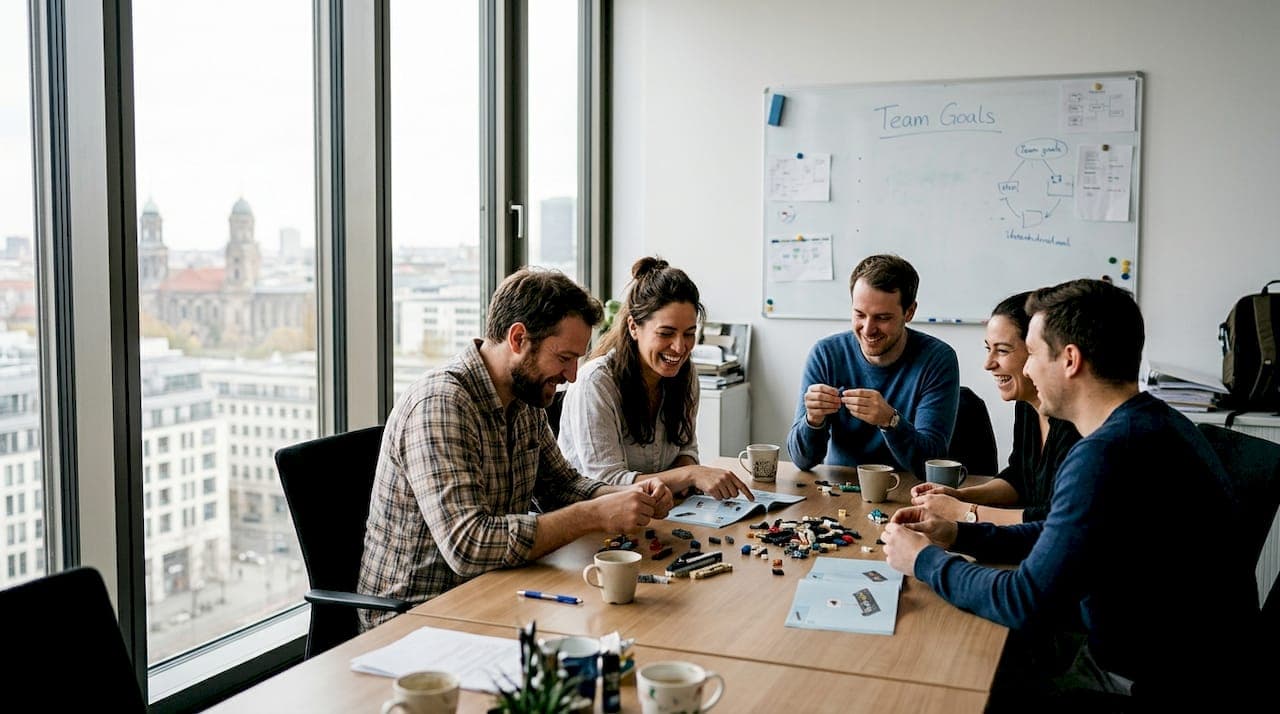
Many HR managers treat team bonding as optional socializing, a nice perk for morale but not essential for business outcomes. This misconception overlooks the strategic value of structured team bonding activities designed to improve collaboration, trust, and innovation. Corporate team bonding goes far beyond casual happy hours or generic icebreakers. In Berlin, immersive artisan-led workshops offer a unique approach, blending cultural richness with hands-on skill building to create memorable experiences that genuinely strengthen team dynamics and drive measurable performance gains.
Table of Contents
- What Is Corporate Team Bonding And Why It Matters
- Key Mechanics And Methodologies Behind Effective Team Bonding
- Balancing Benefits And Challenges: A Nuanced View
- Incorporating Berlin's Artisan Culture Into Team Bonding Activities
- Explore Artisan Team Building Experiences In Berlin With TINA
- Frequently Asked Questions About Corporate Team Bonding
Key takeaways
| Point | Details |
|---|---|
| Definition and purpose | Corporate team bonding uses structured activities to build trust, collaboration, and performance among team members. |
| Key methodologies | Activities include icebreakers, communication exercises, problem-solving challenges, and trust-building tasks aligned to team development stages. |
| Benefits and challenges | Effective bonding accelerates team dynamics and innovation, but requires alignment with business goals and measurement to avoid wasted investment. |
| Artisan workshops advantage | Berlin's craft culture offers unique, immersive experiences that foster creativity and connection through authentic artisan-led activities. |
| Best practices | Tailor activities to team needs, measure outcomes with clear metrics, and prioritize culturally rich experiences for lasting impact. |
What is corporate team bonding and why it matters
Corporate team bonding refers to structured activities or processes designed to build connections, trust, and collaboration among team members, improving teamwork and performance. Unlike casual social events where colleagues simply hang out, team bonding follows intentional frameworks to address specific business challenges like communication breakdowns, siloed departments, or low psychological safety. These activities create shared experiences that translate into stronger working relationships and better collaboration back in the office.
The business value is clear. Teams with strong bonds communicate more openly, resolve conflicts faster, and innovate more effectively. HR managers invest in structured bonding because it directly impacts productivity and retention. When team members trust each other, they share ideas freely, take calculated risks, and support one another through challenges. This foundation becomes critical during high-pressure projects or organizational changes.
Typical activities range from problem-solving challenges and trust exercises to communication workshops and creative projects. The key differentiator is intentionality. A team dinner might be enjoyable, but it lacks the structured reflection and skill-building that make bonding activities effective. Debriefs after activities help teams connect their experiences to workplace behaviors, ensuring learning transfers to daily operations.
Berlin's corporate landscape increasingly recognizes this distinction. Forward-thinking companies seek authentic artisan experiences that combine cultural immersion with team development. These experiences go beyond surface-level entertainment, offering genuine skill acquisition and meaningful connection through shared creative challenges.
"Effective team bonding creates psychological safety where members feel comfortable taking interpersonal risks, sharing vulnerabilities, and challenging ideas constructively without fear of embarrassment or punishment."
Why does this matter for Berlin teams specifically? The city's diverse workforce and startup culture demand innovative approaches to team building. Generic corporate exercises feel inauthentic and fail to engage teams seeking meaningful experiences. Artisan-led workshops tap into Berlin's rich craft heritage, offering activities that feel culturally relevant and genuinely interesting rather than forced or superficial.
Key mechanics and methodologies behind effective team bonding
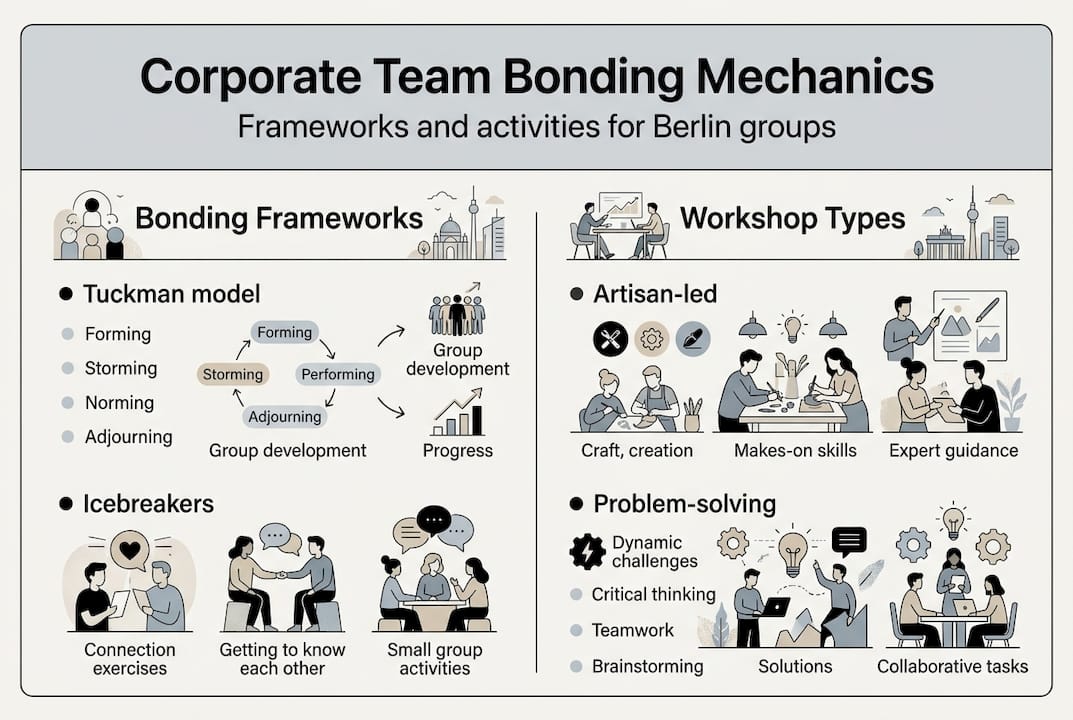
Understanding how team bonding works requires examining the frameworks that guide activity design. Tuckman's stages of team development (forming, storming, norming, performing, adjourning) provide a roadmap for matching activities to team needs. New teams in the forming stage benefit from icebreakers that build familiarity and establish psychological safety. Teams in the storming phase, experiencing conflict or competition, need structured communication exercises and conflict resolution activities.
Key mechanics include icebreakers for familiarity, communication exercises, problem-solving challenges, trust-building activities, and debriefs linking behaviors to work outcomes. Each activity type serves specific purposes. Icebreakers reduce social anxiety and create initial connections. Communication exercises reveal how teams share information and identify gaps in clarity or listening. Problem-solving challenges test collaboration under pressure, exposing how teams make decisions and allocate resources.
Trust-building activities push teams outside comfort zones in controlled ways. Activities requiring physical or emotional vulnerability (like partner trust falls or sharing personal stories) create bonds that transfer to workplace trust. The debrief is crucial. Without structured reflection connecting the activity to work behaviors, teams miss the learning opportunity. Facilitators ask questions like "How did you handle disagreement during the challenge?" or "What communication patterns emerged that you also see at work?"
Here's how different activity types map to team development needs:
- Forming stage activities focus on introductions, sharing backgrounds, and establishing group norms through low-risk social interactions.
- Storming stage activities address conflict directly, teaching constructive disagreement and perspective-taking through structured debates or role reversals.
- Norming stage activities reinforce collaboration patterns and celebrate progress through creative projects requiring coordinated effort.
- Performing stage activities challenge high-functioning teams with complex problems requiring innovation and adaptive thinking.
| Activity Type | Primary Goal | Example Application | Typical Duration |
|---|---|---|---|
| Icebreakers | Build familiarity and reduce social anxiety | Two truths and a lie, speed networking | 15-30 minutes |
| Communication exercises | Improve information sharing and active listening | Blind drawing, telephone pictionary | 30-45 minutes |
| Problem-solving challenges | Test collaboration and decision-making | Escape rooms, build challenges | 60-90 minutes |
| Trust-building activities | Create vulnerability and deepen connections | Partner trust exercises, personal storytelling | 45-60 minutes |
| Creative projects | Foster innovation and celebrate collaboration | Artisan workshops, design thinking | 2-3 hours |
Pro Tip: Match activity intensity to team readiness. Pushing a newly formed team into high-vulnerability trust exercises before establishing basic comfort can backfire, creating anxiety instead of connection.
Best practices for designing effective programs include assessing team dynamics before selecting activities, setting clear objectives tied to business outcomes, choosing facilitators who can adapt to group energy, and building in reflection time. Berlin's creative workshops exemplify this approach by combining skill-building with team challenges, ensuring activities feel purposeful rather than forced. Teams leave with both tangible creations and strengthened relationships.
The methodology matters as much as the activity itself. A pottery workshop becomes a team bonding experience when facilitators structure it to require collaboration, communication, and mutual support. Without this intentional design, it's simply a fun outing with limited impact on team dynamics. Getting team building recommendations from experts ensures activities align with your team's specific development stage and business goals.
Balancing benefits and challenges: a nuanced view
Team bonding's effectiveness varies dramatically based on execution quality and organizational context. Structured experiences accelerate team dynamics by creating shared challenges that reveal individual strengths and communication patterns. Teams that bond effectively show measurable improvements in project completion speed, innovation output, and employee satisfaction. These benefits compound over time as stronger relationships reduce friction in daily interactions.
However, skepticism exists for good reason. Poorly designed bonding activities waste time and budget without delivering results. When activities feel disconnected from work realities or lack measurement frameworks, ROI becomes impossible to demonstrate. Some team members view bonding as forced fun that interrupts productive work time. This resistance often signals misalignment between activity choice and team needs rather than inherent problems with bonding itself.
Common challenges include free-riding, where some members coast on others' efforts during activities, mirroring problematic workplace behaviors without addressing them. Another pitfall is the "retreat effect," where positive feelings from bonding events fade quickly without follow-up reinforcement. Teams return to old patterns within days if organizational systems don't support new behaviors practiced during bonding.
Generational diversity presents both challenges and opportunities. Younger team members often seek authentic, purpose-driven experiences over traditional corporate entertainment. Older colleagues may initially resist activities perceived as too casual or unconventional. However, conflicts from diverse perspectives boost innovation when teams practice shared leadership and inclusive decision-making during bonding activities.
"The key to ROI is measurement. Track specific metrics like email response times, meeting efficiency, or cross-functional project success rates before and after bonding interventions to demonstrate business impact."
Successful programs address these challenges through careful planning. Activities must connect clearly to business objectives. If your team struggles with communication, choose exercises that highlight and improve information sharing. If trust is low, select vulnerability-building experiences appropriate to your team's readiness level. Measurement matters. Define success metrics upfront, whether qualitative (team member feedback) or quantitative (collaboration tool usage, project velocity).
Berlin's clay based problem solving workshop demonstrates how to balance fun with purpose. Teams work with clay to prototype solutions to real business challenges, making the creative process directly relevant to work while building collaborative skills. This approach satisfies skeptics by delivering tangible business value alongside relationship building.
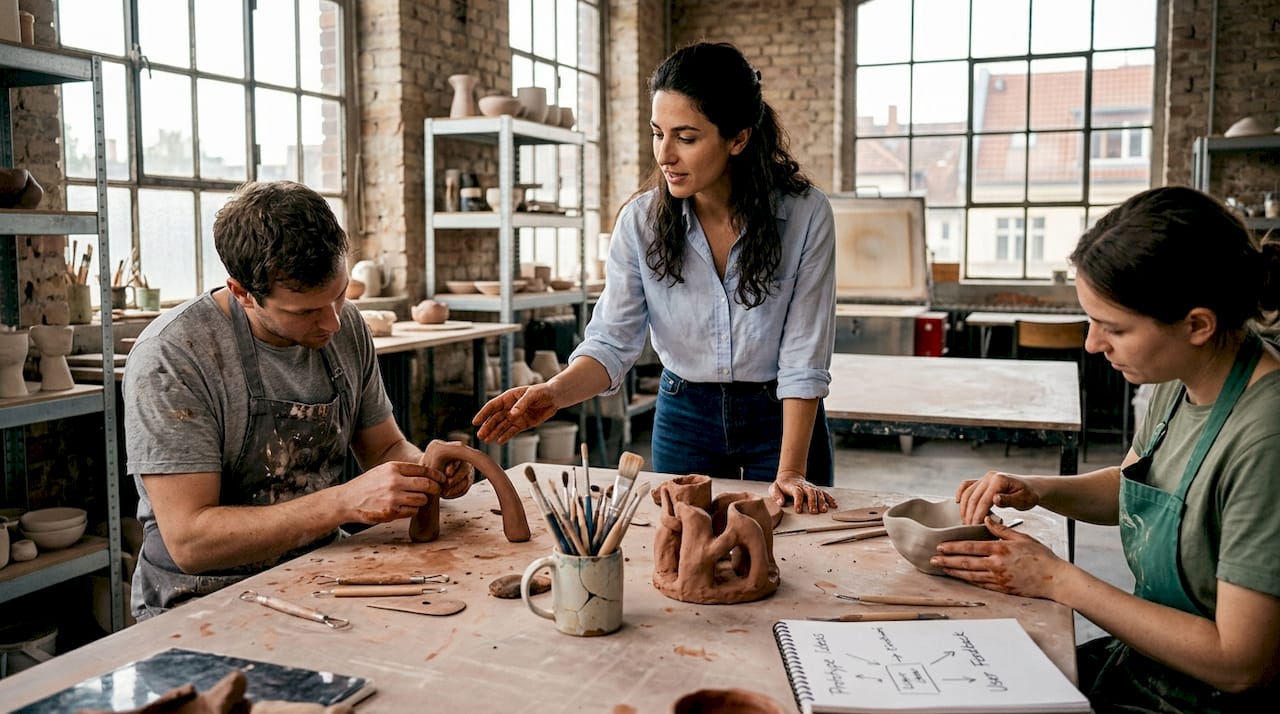
The most effective bonding programs treat activities as starting points, not endpoints. They include pre-work to set context, structured debriefs to extract learning, and follow-up sessions to reinforce new behaviors. Without this continuum, even excellent activities produce temporary boosts rather than lasting change. HR managers who invest in comprehensive programs see sustained improvements in team performance and cohesion.
Incorporating Berlin's artisan culture into team bonding activities
Berlin's thriving craft scene offers unique opportunities for corporate team bonding that generic exercises cannot match. Artisan-led workshops provide authentic cultural immersion while building collaboration skills through hands-on creation. Unlike manufactured team building games, these experiences feel genuine and memorable because teams learn real skills from passionate experts while producing tangible results.
Why artisan-led activities matter comes down to engagement and meaning. Teams respond more positively to experiences that respect their intelligence and offer genuine value. Learning to craft jewelry, sculpt ceramics, or create mosaic art from a skilled artisan feels substantive compared to contrived trust falls or corporate speak-heavy seminars. The cultural richness of Berlin's maker community adds depth that resonates with diverse teams seeking authentic experiences.
Business-aligned activities with metrics and consistent practice create compounding effects, especially when tailored to Berlin's craft scene for unique, artisan-led immersion fostering creativity and trust. Pottery workshops require patience, communication, and support as team members guide each other through techniques. Jewelry making demands precision and collaborative problem-solving when designs don't work as planned. These challenges mirror workplace dynamics while feeling fresh and engaging.
Berlin's craft culture enriches bonding by connecting teams to the city's creative identity. Workshops often take place in historic buildings, artist studios, or vibrant markets, adding environmental interest beyond typical conference rooms. Teams experience Berlin's maker ethos firsthand, often discovering neighborhoods and communities they wouldn't encounter otherwise. This cultural dimension creates stronger memories and deeper team connections.
Examples of effective artisan workshops include:
- Ceramic sculpting where teams create collaborative pieces requiring design consensus and coordinated execution
- Jewelry crafting that teaches precision while allowing individual expression within team projects
- Mosaic art using upcycled materials, combining sustainability themes with creative problem-solving
- Culinary workshops where teams prepare meals together, practicing delegation and quality control
Pro Tip: Choose workshops that balance individual contribution with team interdependence. The best activities let each person showcase unique skills while requiring collaboration for overall success.
| Activity Type | Collaboration Level | Skill Difficulty | Cultural Immersion | Best For |
|---|---|---|---|---|
| Generic corporate games | Medium | Low | None | Quick icebreakers |
| Escape rooms | High | Medium | Low | Problem-solving focus |
| Artisan workshops | High | Medium-High | High | Meaningful bonding |
| Sports activities | Medium | Varies | Low | Energetic teams |
| Cultural tours | Low | Low | High | Knowledge sharing |
Comparative advantages over traditional exercises become clear in team feedback. Artisan workshops generate higher engagement scores and more positive post-event discussions. Teams reference shared workshop experiences months later when collaborating on projects, indicating deeper memory formation. The skills learned (patience, attention to detail, giving constructive feedback) transfer directly to workplace behaviors.
Integrating artisan experiences successfully requires matching workshop type to team composition and goals. Creative teams appreciate advanced techniques and artistic freedom. Analytical teams enjoy workshops with clear processes and measurable outcomes. Consider physical requirements, ensuring activities accommodate all team members. Berlin's unique team building options span accessibility levels from seated crafts to more active experiences.
Specific workshop recommendations include the handcraft jewelry workshop for teams seeking individual expression within collaborative projects, the team ceramic sculpting workshop for groups wanting tactile, meditative creation experiences, and the upcycled mosaic workshop for sustainability-focused organizations. Each offers distinct benefits while delivering core team bonding outcomes through authentic artisan guidance and cultural connection.
Explore artisan team building experiences in Berlin with TINA
Ready to move beyond generic corporate bonding? Berlin's artisan community offers your team authentic, immersive experiences that build genuine connections while honoring the city's creative culture. TINA specializes in connecting corporate teams with skilled local artisans for workshops that combine cultural richness with meaningful team development.
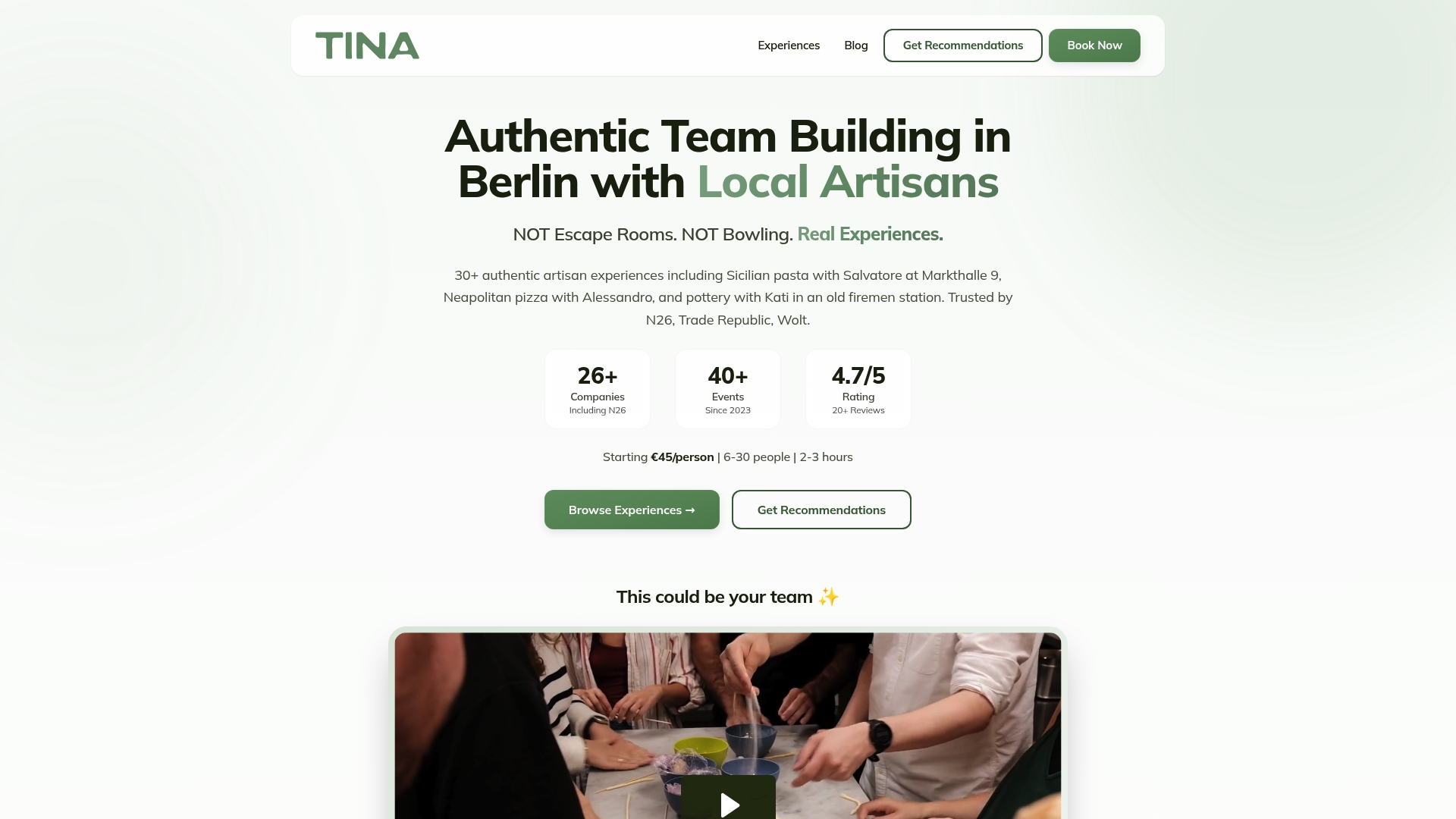
Discover unique experiences in Berlin that transform team bonding from obligation to opportunity. Whether your team needs trust-building through collaborative ceramic projects, creative problem-solving via jewelry design, or innovation practice through sustainable art creation, TINA curates workshops matching your specific goals. Get personalized team building recommendations from experts who understand Berlin's craft scene and corporate team dynamics. Start with accessible experiences like the handcraft your own jewelry ring workshop and watch your team's collaboration strengthen through authentic artisan-led creation.
Frequently asked questions about corporate team bonding
What makes team bonding effective?
Effective team bonding aligns activities with specific business objectives and team development stages. Activities must challenge teams appropriately, include structured debriefs connecting experiences to work behaviors, and follow up with reinforcement. Measurement through pre and post metrics (collaboration scores, project velocity, satisfaction surveys) demonstrates ROI and guides program refinement.
How do you measure team bonding success?
Track both qualitative and quantitative indicators. Qualitative measures include team member feedback, observed behavior changes, and manager assessments of collaboration quality. Quantitative metrics might include project completion rates, cross-functional email volumes, meeting efficiency scores, or retention rates. Establish baselines before bonding activities and measure consistently at 30, 60, and 90 day intervals to capture sustained impact versus temporary boosts.
How do artisan workshops improve team dynamics?
Artisan workshops require authentic collaboration, communication, and mutual support while creating tangible results. Learning new skills together builds psychological safety as team members share vulnerability and celebrate progress. The hands-on nature reveals individual strengths and working styles in fresh contexts. Cultural immersion through Berlin's craft scene creates memorable shared experiences that strengthen team identity and provide reference points for future collaboration.
Can virtual teams benefit from team bonding?
Virtual teams benefit significantly from bonding but require adapted approaches. Hybrid formats work well, combining occasional in-person intensive experiences with regular virtual check-ins and smaller online activities. When in-person gatherings happen, maximize impact through multi-day programs with varied activities. Berlin-based teams with remote members can use local workshops as anchor events, with virtual team members joining via video for debriefs and participating in parallel online creative activities.
How do you choose the right activity for Berlin teams?
Assess your team's current dynamics, development stage, and specific challenges first. New teams need familiarity-building activities while established teams benefit from complex collaborative challenges. Consider team composition including physical abilities, cultural backgrounds, and personality types. Berlin's diverse creative workshops offer options across intensity levels and skill requirements. Match workshop themes to your organizational values (sustainability, innovation, craftsmanship) for deeper resonance and authentic engagement.