
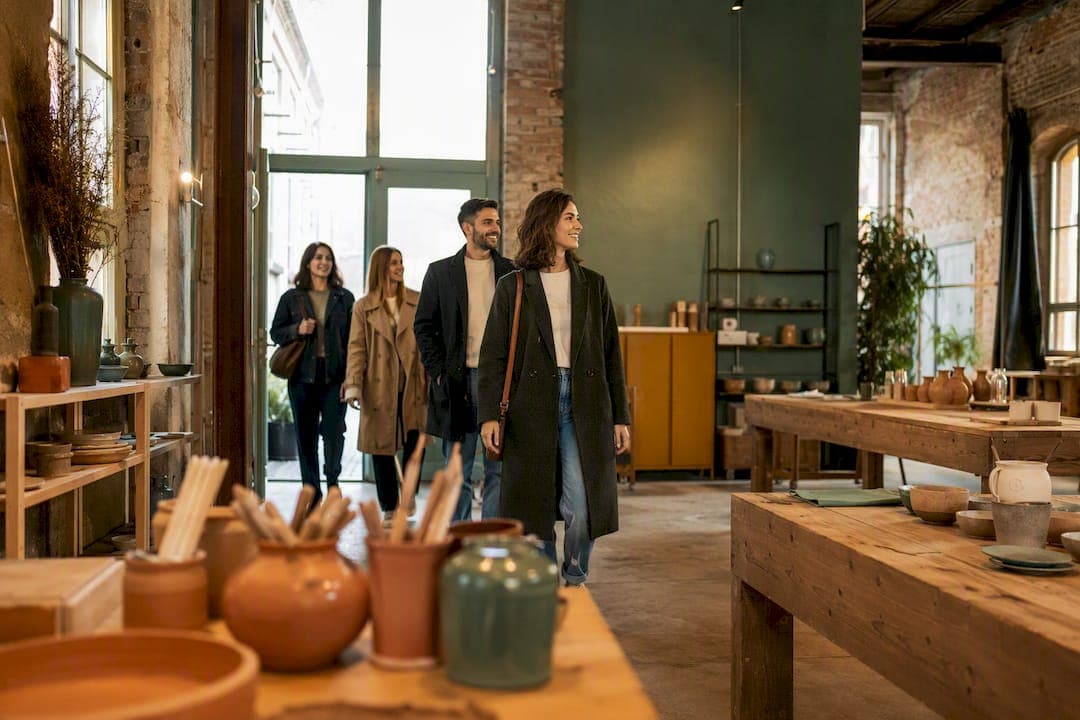
The best workshop locations Berlin has to offer for corporate team building fall into four categories: artist ateliers, market halls, restaurants with private rooms, and your own office. Each works because the format, not the address, does the heavy lifting: everyone starts as a beginner, which quietly dissolves the usual office pecking order. Tinaexperiences sources and books all four types across the city, so the fastest next step is simply requesting a shortlist matched to your team size and goals.
TL;DR:
- Booking at least three to four weeks in advance is necessary, with six to eight weeks recommended for larger groups or during peak seasons.
- Short, 90-minute sessions suit quick bonding during lunch hours, while half or full-day formats are better for longer offsites with multiple activities.
- Confirm venue accessibility, dietary needs, transportation, and kiln firing timelines early to avoid logistical issues during the workshop.
- Artisan-led workshops emphasize beginner-friendly formats that foster team trust and vulnerability more effectively than traditional team-building activities.
- Tinaexperiences offers a vetted network of over 20 artisans and venues in Berlin, simplifying the booking process with transparent pricing and automated invoicing.
Table of Contents
- What Are the Best Workshop Räume Berlin Has for Artisan Team Events?
- What Workshop Formats Work Best for Corporate Teams?
- How Far in Advance Should You Book Berlin Workshop Spaces?
- What Should You Confirm Before Workshop Day?
- How Tinaexperiences Sources and Matches Berlin Workshop Locations
- Why Artisan-Led Formats Beat the Usual Team Building Playbook
- Ready to Book a Berlin Workshop for Your Team?
- Sources
What Are the Best Workshop Räume Berlin Has for Artisan Team Events?
Picking a venue for an artisan-led session is not the same exercise as picking a conference room. You are choosing a setting that has to hold real tools, real materials, and a group of adults who have never touched a pottery wheel before. Get the venue wrong and the craft element feels like an afterthought bolted onto a rented room.
Ateliers and artist studios deliver the most authentic experience because the tools are already there. A working ceramics studio has kilns, wheels, and workbenches built for exactly this purpose, and the artisan running the session is standing in their own space. Capacity tends to run smaller, usually 8 to 20 people, which makes ateliers a strong fit for tighter teams or department-level offsites rather than a 60-person all-hands.
Market halls and food hall venues, like the kind of setup you find around Markthalle Neun, suit pasta, pizza, and chocolate sessions especially well because they already have commercial kitchens, long communal tables, and a built-in social buzz. Groups can run medium to large-sized teams comfortably, and the venue itself does some of the entertaining before the workshop even starts.
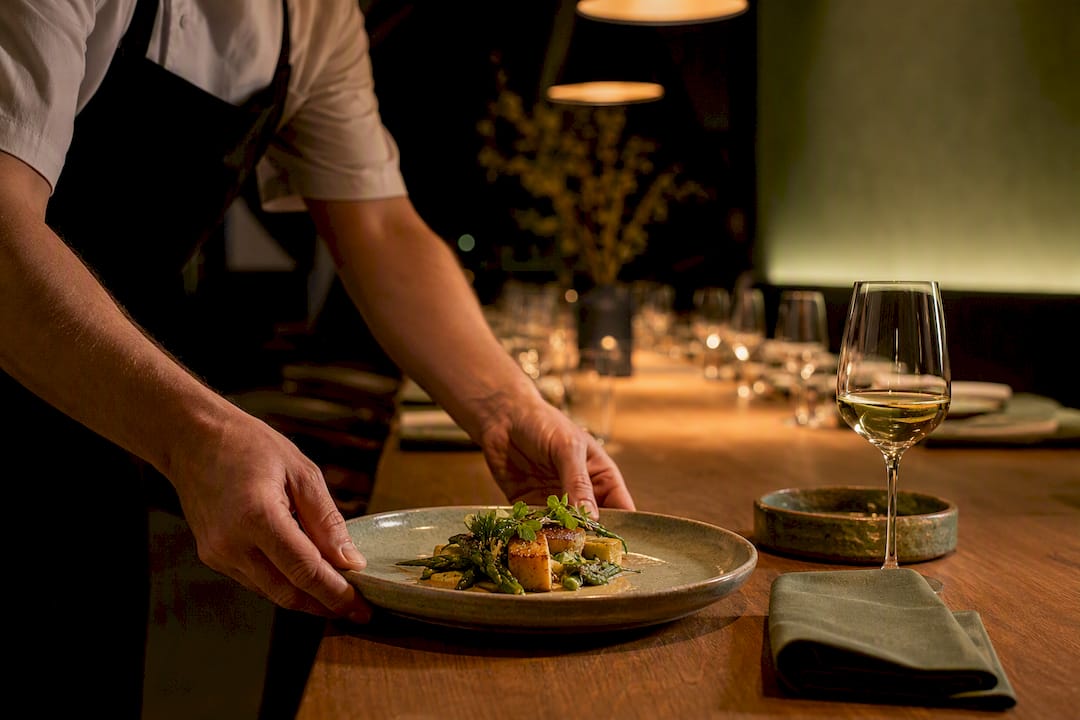
Restaurants with private rooms work best when the craft element pairs with an actual meal, such as a wine tasting followed by a chef-led course or a foraging session that ends in a shared dinner. You get service staff on hand, which takes pressure off the logistics side.
On-site office workshops trade atmosphere for convenience. An artisan travels to you, sets up in a meeting room or break area, and runs a shorter session, usually 90 minutes. This is the right call when travel time is the enemy, or when half the team is remote and only in the office on a specific day.
Outdoor and secret garden venues add a seasonal option, particularly for foraging walks or summer socials, and double as a practical alternative when a group prefers more open air.
Most artisan hosts supply the materials, tools, and instruction. Planners typically need to confirm headcount, dietary needs, and transport for the group, since venues rarely handle guest logistics beyond their own walls.
What Workshop Formats Work Best for Corporate Teams?
Format matters more than most planners assume. A rushed 90 minute pottery session and a relaxed full-day foraging-to-table experience both build connection, but they do it differently, and picking the wrong length for your goal wastes both budget and energy.
- Short sessions (90 minutes): wine or chocolate tastings, pasta rolling, quick pottery pinch-pot builds. These work well for lunch breaks or as an add-on to a larger meeting day, delivering fast, high-energy bonding without eating the whole afternoon.
- Standard sessions (2.5 hours): pottery handbuilding, pizza making, tufting a small rug. A 2.5-hour window is the common standard across Berlin's corporate craft market because it gives enough time for real instruction plus loose, unstructured play once the technique clicks.
- Extended formats (half or full day): foraging in the morning followed by a cooking session, or a fine dining experience layered with an artisan demo. These suit offsites where the workshop is one piece of a bigger day.
The flow inside nearly every session follows the same shape: a welcome and quick intro, a demo from the artisan, the hands-on portion, then a group share where everyone compares their tufted rug or misshapen pasta. That final ten minutes matters more than it looks. It is where people laugh at their own mistakes in front of colleagues, which is exactly the kind of low-stakes vulnerability that supports psychological safety on a team.
How Far in Advance Should You Book Berlin Workshop Spaces?
Booking logistics in Berlin follow a fairly predictable rhythm, and knowing the numbers ahead of time saves you from a rushed, worse option later.
- Lead time: book 3 to 4 weeks out at minimum; 6 to 8 weeks is preferred for groups over 30 people or for popular artisans during autumn and December, when corporate calendars fill up fast.
- Per-person pricing: expect a range that typically covers materials, instruction, and venue fee, with crafts that require firing or shipping (like ceramics) sitting at the higher end because of that extra step.
- Group size tiers: smaller groups get more one-on-one instruction time; larger groups usually mean splitting into stations or running multiple artisans in parallel.
- Deposits: most venues and artisans ask for a deposit to hold the date, with the remainder invoiced closer to or after the event. Tinaexperiences handles this with automated invoicing, so finance teams get a clean paper trail without chasing paperwork.
- Cancellation terms: confirm the rescheduling window in writing before you sign, since artisan availability is tighter than a generic conference room.
Pro Tip: Lock your date first and finalize headcount later. Berlin's artisan calendars fill up faster than the guest list does, and most hosts will let you adjust numbers within a set window before the event.
Booking through a structured platform instead of chasing individual artisans also pays off in retention terms. A randomized field experiment across 100 offices found that subsidized, organized social events strengthened workplace friendships and lowered short-run turnover, even when they did not move individual productivity numbers.
What Should You Confirm Before Workshop Day?
A handful of details separate a smooth session from a stressful one, and none of them are complicated to check ahead of time.
- Confirm public transport access or parking near the venue, especially for ateliers tucked into courtyards.
- Flag dietary restrictions and allergens early for any culinary workshop; venues with a professional kitchen handle this far more smoothly than a makeshift setup.
- Ask about physical accessibility for anyone who may need adjustments at a pottery wheel or standing workstation.
- Check whether the artisan or the venue carries liability insurance for hands-on activities.
- For ceramics, ask about kiln firing timelines. Finished pieces often need one to two weeks before pickup or shipping, and planners frequently forget to build that into the timeline.
How Tinaexperiences Sources and Matches Berlin Workshop Locations
Tinaexperiences vets every artisan and venue on craft quality, capacity, and whether the setting actually feels authentic, not staged. The network covers more than 20 artisan partners across pottery, tufting, pasta making, foraging, pizza, wine tasting, and fine dining, in real venues from Markthalle Neun to private ateliers and secret gardens.
Companies including N26, Figma, and Wolt have booked through the platform, which has completed many events and redistributed a significant amount of revenue directly to local Berlin artisans. Booking runs on transparent pricing, automated invoicing, and concierge support, so office managers get a matched shortlist instead of a spreadsheet of cold-calls.
Why Artisan-Led Formats Beat the Usual Team Building Playbook
Most team building advice still points toward escape rooms or trivia nights, and the research on why that misses the mark is clearer than people expect. Team outcomes respond less to clever seating charts or personality quizzes and more to whether people genuinely believe the team can perform well together, a finding that shows up as strongly as team composition itself in controlled comparisons.
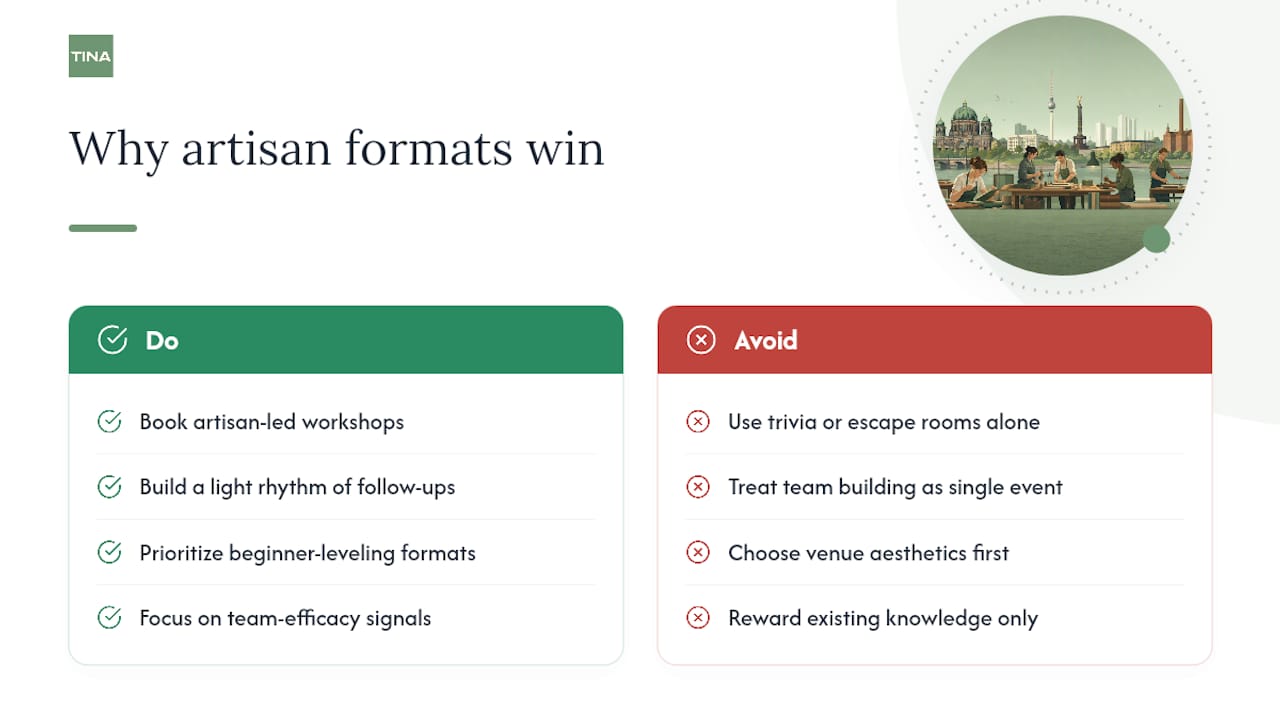
That is the real case for clay over trivia. A quiz rewards whoever already knows the answers. A pottery wheel or a tufting gun rewards nobody on day one, which is precisely why it works. The CEO's rug looks as lumpy as the intern's.
Where conventional advice falls short is treating team building as a single event rather than a pattern. The strongest signal from the research is that repeated or follow-up social events outperform one-off outings for actual retention. Book one great workshop, then build a light rhythm around it. Prioritize the format's beginner-leveling effect first; the venue's aesthetics come second.
— Tina
Ready to Book a Berlin Workshop for Your Team?
Tinaexperiences replaces the usual scramble through venue listings and cold emails with one shortlist, matched to your team size, budget, and preferred craft, from a vetted network of 20-plus Berlin artisans. That means no chasing kiln schedules yourself and no guessing whether a "private room" actually fits 40 people.
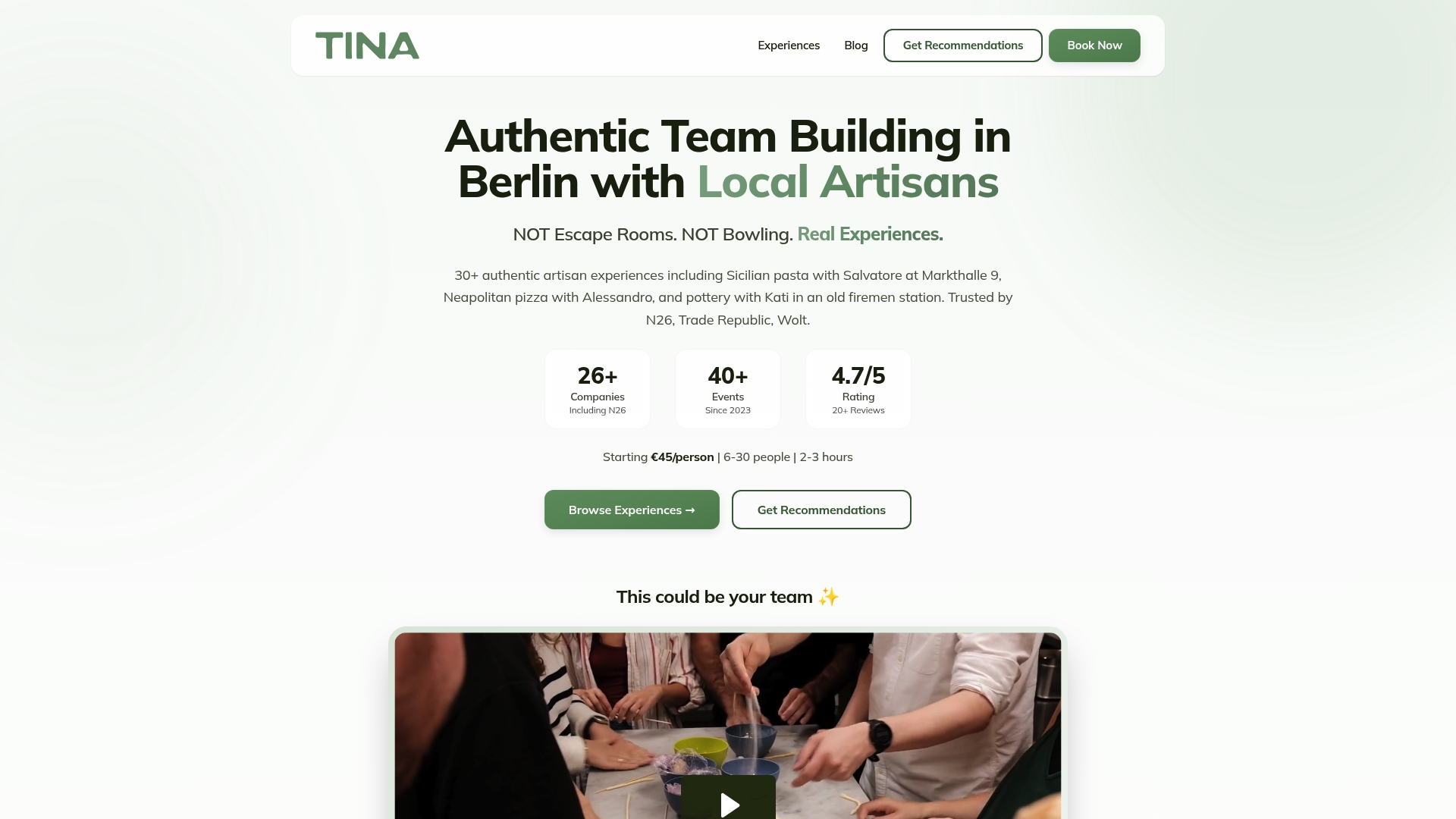
Getting started takes three steps: request a quote through Tinaexperiences with your headcount and date range, review a shortlist of matched artisans and venues, then confirm with a deposit and automated invoicing handled for you. Planning a bigger offsite instead of a single session? The offsite planning page covers venue sourcing for multi-part days, and teams weighing a workshop paired with an overnight stay can see how lodging and dining combine on Wild Foodz's gastronomy guide. Check current pricing tiers and get a date on the calendar before your preferred artisan books up.
Sources
Academic findings on team building and psychological safety, field evidence on workplace bonding, and TINA's own creative workshops page support the guidance above.
- Frontiers in Psychology article (2026) on artisan and group activity effects
- The Value of Bonding at Work: Evidence from a Field Experiment (IZA DP17987)
- Does team building work? (SAGE review)