

TL;DR:
- Effective team building delivers a $4 return for every $1 spent.
- Creative activities enhance engagement, trust, and cultural bonds, reducing turnover and increasing productivity.
- Purpose-driven, local artisan workshops in Berlin create lasting impact and genuine team connections.
Companies that treat team building as a budget line to cut are leaving real money on the table. Research shows that effective team investment delivers $4 back for every $1 spent, with turnover dropping by as much as 36% and productivity climbing by up to 23%. Those are not soft, feel-good numbers. They are business outcomes. If you are an HR manager or team lead in Berlin wondering whether a creative workshop is worth the spend, this article will show you exactly why the answer is yes, and how to make it count.
Table of Contents
- The ROI of investing in team activities
- Why unique activities outperform traditional team building
- How unique team activities transform company culture
- How to implement unique team activities in Berlin
- A contrarian perspective on team activities
- Elevate your Berlin team's success with unique experiences
- Frequently asked questions
Key Takeaways
| Point | Details |
|---|---|
| High ROI | Investing in unique team activities leads to measurable gains in retention, productivity, and profit. |
| Creativity matters | Creative, tailored activities spark higher engagement and team bonding than generic events. |
| Culture boost | Berlin's cultural diversity offers meaningful ways for teams to build trust and inclusion. |
| Strategic alignment | Team activities deliver real results when matched to company goals and employee needs. |
The ROI of investing in team activities
Let's start with the numbers, because they are hard to ignore.
Team building statistics show companies reporting $4 in return for every $1 invested, turnover reductions of up to 36%, and productivity and profitability gains between 14% and 23%. That is not a rounding error. That is a measurable shift in how a company performs.
"Investing in team building yields high ROI, with companies reporting $4 return for every $1 spent, reduced turnover by up to 36%, and 14–23% increases in productivity and profitability."
For Berlin-based companies specifically, this matters even more. Berlin's corporate landscape is competitive, diverse, and fast-moving. Retaining good talent is genuinely hard. A team that feels connected, seen, and engaged is far less likely to walk out the door. And companies that 23% more profit in Berlin attribute that edge directly to stronger internal culture and collaboration.
Here is a quick snapshot of what quality team building actually delivers:
| Benefit | Measurable outcome |
|---|---|
| Reduced employee turnover | Up to 36% decrease |
| Productivity improvement | 14–23% increase |
| Profitability boost | Up to 23% gain |
| ROI on investment | $4 returned per $1 spent |
| Employee engagement | Significantly improved |
The key takeaway? Team activities are not a perk. They are a performance strategy.
- Retention: Happy, connected teams stay longer, saving you significant hiring and onboarding costs
- Productivity: Employees who trust each other work faster and smarter
- Culture: A strong team culture attracts talent even before you post the job listing
- Innovation: Diverse, bonded teams generate better ideas more consistently
With your interest piqued by the financial impact, let's look at what makes unique activities especially effective.
Why unique activities outperform traditional team building
You have probably sat through a trust fall exercise or a generic icebreaker that made everyone cringe a little. Traditional formats like those can feel predictable, uncomfortable, and honestly a bit boring. They check a box but rarely spark anything real.
Creative team-building activities outperform traditional ones by boosting engagement, fostering deeper bonds, and unlocking creativity in ways that structured activities simply cannot. The reason is simple: when people are doing something genuinely interesting, they forget to be guarded. They laugh, they struggle, they help each other. That is where real connection happens.
Here is how the two approaches compare:
| Factor | Creative activities | Traditional activities |
|---|---|---|
| Engagement level | High, immersive | Moderate, often passive |
| Team bonding depth | Genuine, lasting | Surface-level |
| Innovation stimulation | Strong | Limited |
| Memorability | Very high | Often forgettable |
| Measurability | Harder to quantify | More structured metrics |
The tradeoff is real. Behavioral science research shows mixed results for generic fun activities with no clear goal alignment. Meta-analyses have found that "fun for fun's sake" does not reliably move the needle. But when creative activities are tied to a real purpose, like building cross-department trust or breaking down hierarchy, the results are consistently strong.
Creative activities also boost teamwork and innovation in a very specific way: they put everyone on equal footing. When your CFO and your newest intern are both struggling to shape a clay bowl or roll fresh pasta, the social hierarchy disappears. Nobody has an advantage. That shared vulnerability is powerful.
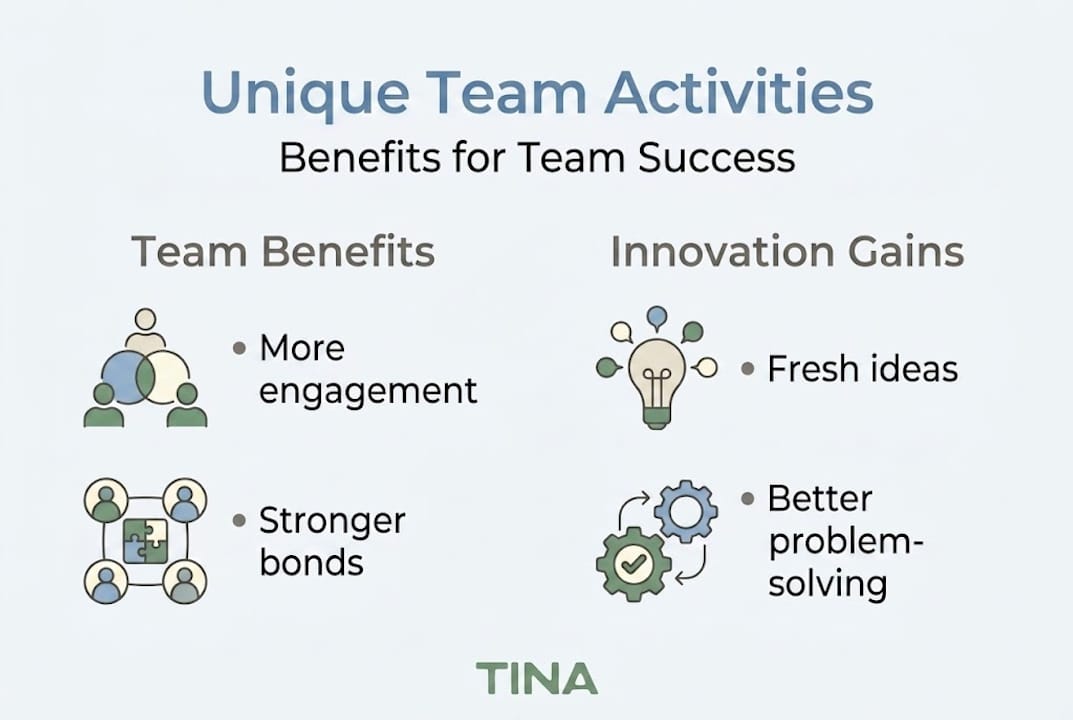
Pro Tip: Before booking any activity, write down one clear goal for the session. Is it cross-team bonding? Breaking communication silos? Onboarding new hires? Matching the activity to that goal is what separates a memorable experience from a forgettable afternoon.
Understanding the difference, let's explore the tangible benefits to your team culture and collaboration.
How unique team activities transform company culture
Berlin is one of Europe's most culturally rich cities. That diversity is a genuine asset when it comes to building team culture, if you use it intentionally.
Cultural workshops for teams that tap into local artisan traditions, Berlin's creative history, or multicultural food experiences do something generic activities cannot: they give people a shared story. When your team makes chocolate together with a Berlin chocolatier, or learns traditional Italian pasta techniques in a local atelier, they are not just having fun. They are creating a memory that belongs to the group.
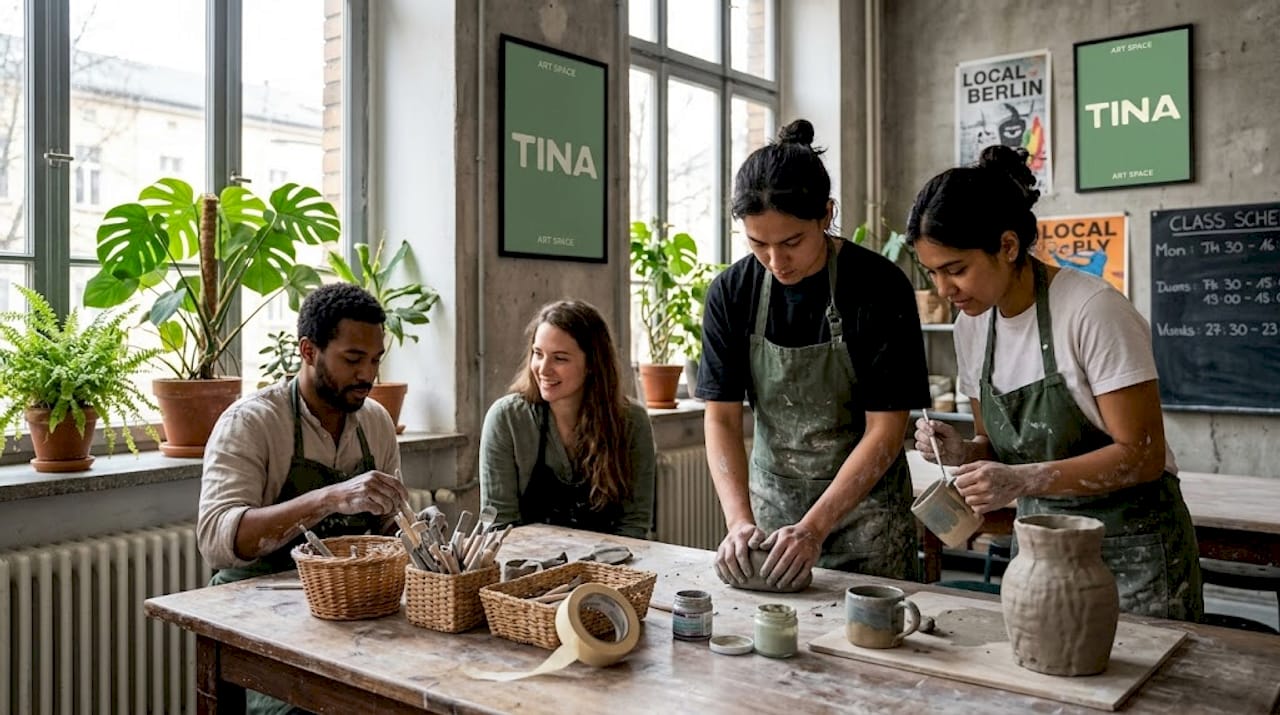
Authentic team building also addresses one of the most underestimated problems in company culture: invisible social barriers. Junior employees often feel intimidated around senior leaders. Remote or international teammates can feel like outsiders. A hands-on craft activity levels all of that. Nobody has an advantage when they are learning a new skill from scratch.
Creative activities consistently show stronger results for building deeper bonds and real engagement, especially in diverse teams where a shared cultural touchpoint creates instant common ground.
Here are the core cultural and relational benefits your team gains:
- Trust: Working together on something real builds genuine trust faster than any icebreaker
- Inclusivity: Everyone starts as a beginner, so nobody feels left out or judged
- Communication: Creative tasks require constant collaboration and problem-solving
- Pride: Teams take real pride in something they made with their hands
- Cross-department bonds: People connect with colleagues they rarely interact with at work
- Reduced hierarchy anxiety: The intern and the team lead are suddenly on the same level
Pro Tip: For teams with diverse cultural backgrounds, choose activities that draw on multiple traditions, like a global street food cooking session or a multicultural craft workshop. It sends a clear message that every background is valued.
With these cultural benefits in mind, let's move to how you can implement unique team activities effectively in Berlin.
How to implement unique team activities in Berlin
Knowing the value is one thing. Actually pulling it off takes a bit of planning. Here is a practical step-by-step approach:
-
Define your objective. What specific outcome do you need? Better cross-team communication, stronger onboarding experiences, or rebuilding morale after a tough quarter? Your goal shapes everything else.
-
Choose the right activity format. Workshop-based team events consistently outperform passive entertainment because participants are doing, not just watching. Think pottery, pasta making, pizza workshops, or chocolate crafting.
-
Secure team buy-in early. Share a teaser with your team before the event. Excitement builds faster when people know what to expect, and attendance is stronger.
-
Sort the logistics. Berlin offers incredible venues, from Mitte ateliers to Prenzlauer Berg restaurants. Many providers, including TINA, also come directly to your office, which removes the travel friction entirely.
-
Measure the results. Use a simple post-event survey. Ask about connection, enjoyment, and whether people feel closer to their colleagues. Track changes in engagement scores and turnover over the following months using your existing HR tools.
"Companies investing in team building report up to 36% reduced turnover and 14–23% productivity gains, making measurement straightforward when you know what to track."
Following a team bonding workflow designed for Berlin's artisan workshop scene makes the whole process smoother, from selecting the right experience to capturing impact afterward. Berlin has a genuinely unique ecosystem of local artisans, creative venues, and culinary talent. Use it. Experiences sourced locally feel more authentic and land better with teams than imported, off-the-shelf formats.
Now that you know how to execute, let's share a perspective on what often gets missed when choosing team activities.
A contrarian perspective on team activities
Here is something most team-building providers will not tell you: novelty alone is not enough.
Behavioral science research shows that generic fun, when disconnected from real team goals, produces mixed results at best. Some meta-analyses find little lasting effect from activities that prioritize entertainment over purpose. So yes, even creative workshops can fall flat if they are chosen just because they sound cool.
What works is purpose-driven design. When you pick an experience that reflects your company's values, addresses a real cultural gap, or celebrates something meaningful to your team, the impact sticks. Berlin's cultural richness gives you a genuine head start. A corporate team bonding guide built for this city's unique context matters far more than a generic template. Design for impact, not just Instagram moments.
Elevate your Berlin team's success with unique experiences
Ready to move from theory to action? TINA connects Berlin-based corporate teams with real local artisans for hands-on, culturally rich workshops, from pasta making and pottery to chocolate crafting and sustainable merchandise. Every experience is designed to break social barriers, spark genuine connection, and deliver the kind of ROI your leadership team will notice.
Plan a Berlin team offsite or browse creative workshops in Berlin to find the perfect fit for your team. Booking is straightforward, pricing is transparent, and the artisans are the real deal.
Frequently asked questions
What makes an activity "unique" for team building?
Unique activities are tailored to your team's interests, company culture, or local Berlin context, breaking the mold of standard icebreakers. Think hands-on artisan workshops, multicultural cooking classes, or creative craft sessions with a real local maker.
How do we measure the success of team activities?
Success shows up in employee feedback surveys, productivity metrics, engagement scores, and retention data. Research confirms team-building programs drive up to 36% turnover reduction and 14–23% productivity gains when tracked consistently.
Are creative activities suitable for every team?
They work best when aligned with team goals and designed with inclusivity in mind. Behavioral science supports creative formats strongly when purpose is clear, but teams should also consider cultural backgrounds and personal comfort levels.
Can unique activities really reduce employee turnover?
Yes. Companies consistently report up to 36% in reduced turnover when they invest in effective, well-designed team-building programs over time.
What are popular unique activities for Berlin teams?
Artisan workshops like pasta making, pottery, and chocolate crafting are favorites. Historic venue experiences, multicultural cooking classes, and sustainable merchandise creation are also highly popular among Berlin corporate teams.