

TL;DR:
- A clear, goal-oriented process is essential to avoid surprises, budget overruns, and mismatched venues in corporate event planning. Preparing detailed RFPs, carefully negotiating contracts, and locking in logistics early help ensure smooth execution and stakeholder satisfaction. Focusing on craft-based experiences with artisans enhances team bonding while simplifying experience design and reducing social barriers.
Booking a corporate event without a clear process is how you end up with a signed contract full of surprises, a venue that doesn't fit your team, and a budget that evaporated before the event even started. The process for corporate event booking is more layered than most planners expect, especially when you're organizing hands-on, artisan-style team experiences instead of a generic conference. Get the steps right and everything flows. Miss one and you're renegotiating at the worst possible time. This guide covers everything from initial goal setting to post-event review, so you don't have to learn it the hard way.
Table of Contents
- Key Takeaways
- The process for corporate event booking starts here
- How to write and use an RFP effectively
- Venue selection and contract negotiation
- Executing the booking and locking in logistics
- Handling common challenges after booking
- My take on what most planners get wrong
- Book your next team event with Tinaexperiences
- FAQ
Key Takeaways
| Point | Details |
|---|---|
| Start with goals, not venues | Aligning your event purpose with business objectives before booking prevents costly mismatches. |
| Build a thorough RFP | A structured Request for Proposal gets you comparable, useful vendor responses instead of vague quotes. |
| Review every contract clause | Attrition clauses and cancellation tiers can cost you thousands if you overlook them before signing. |
| Match timeline to event size | Small events need 4 to 6 weeks; larger gatherings require 6 to 12 months of lead time. |
| Evaluate vendors objectively | Use a weighted scoring rubric to compare artisans and venues fairly and avoid decision fatigue. |
The process for corporate event booking starts here
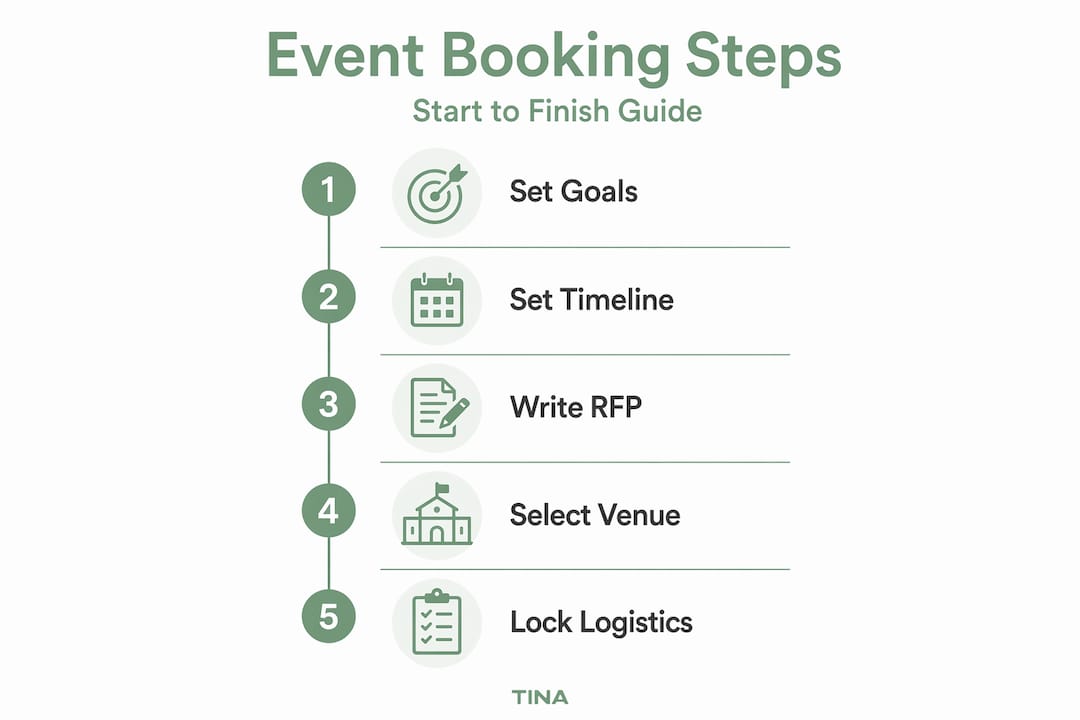
Before you open a single venue website or contact an artisan, you need a clear picture of what success looks like. Strategy-first corporate event planning produces better outcomes and makes every downstream decision easier. That means writing down your actual business goal, whether it's improving cross-team collaboration, welcoming new hires, or rewarding a department that hit a big target.
Once you have a goal, set a realistic budget that includes a buffer of at least 10 to 15 percent for costs you did not anticipate. Hidden costs show up everywhere: staffing, materials, gratuities, setup fees, and last-minute additions. If you skip the buffer, you will use it anyway and just feel worse about it.
Next, define your event parameters before talking to anyone:
- Attendance size and composition: Is this 15 people from one team or 80 people across departments?
- Event type: Workshop, offsite, celebration, or onboarding experience?
- Location preference: In-office, external venue, or a mix?
- Non-negotiables: Dietary restrictions, accessibility requirements, or time constraints?
Finally, set your timeline based on complexity. Booking timelines vary significantly depending on scale: small events under 50 people need 4 to 6 weeks, mid-size events between 50 and 250 attendees require 3 to 6 months, and large conferences need 6 to 12 months. If you're planning a multi-day company offsite across Europe, plan for at least 12 months.
Pro Tip: Write your event goal in one sentence before doing anything else. If you can not articulate the purpose clearly, your vendors will not be able to serve it either.
How to write and use an RFP effectively
A Request for Proposal is the most underused tool in corporate event management. It forces you to define your needs clearly and gives vendors the information they need to respond with real, comparable proposals instead of generic pricing decks.
A strong event RFP includes six core components:
- Event overview: What the event is, who it is for, and what you want attendees to walk away with.
- Scope of work: What services or experiences you need the vendor to provide, including setup and teardown.
- Budget range: Being transparent here saves everyone time and filters out vendors who are not the right fit.
- Timeline: Submission deadline, decision date, and the event date itself.
- Evaluation criteria: How you will score proposals (experience, creativity, cost, logistics).
- Submission guidelines: Format, length, and contact details for questions.
Send your RFP to three to five shortlisted vendors. For artisan-based experiences, look for providers who can demonstrate real craft knowledge and tell you about the specific artisan leading your event. Vague bios are a warning sign.
Give vendors at least five business days to respond, and be available for clarifying questions. When proposals arrive, use a weighted scoring rubric that accounts for experience, cost alignment, creativity, and logistical fit. This keeps your evaluation objective and defensible if you need to explain your choice to stakeholders.
Venue selection and contract negotiation
Choosing a venue for a team-building experience is different from booking a conference room. Ambiance matters. So does whether the space can actually accommodate hands-on activity, whether that's a pottery wheel, a pasta-making station, or a jewelry-crafting table.
Venue tours should assess capacity, acoustics, and technical readiness beyond surface-level aesthetics. Take notes. Ask about power access, ventilation for food or craft workshops, and whether outside vendors are permitted. Vendors and venues often impose restrictions on who you can bring in, so verify early.
When it comes to contracts, these are the clauses that bite planners the hardest:
- Attrition clauses: These hold you financially responsible if your attendance drops below a guaranteed minimum. Most planners overlook this until the invoice arrives. Negotiating sliding scale attrition terms significantly reduces your exposure.
- Food and beverage minimums: A stated minimum sounds fine until you realize it does not include service charges, taxes, or gratuity. Read the full picture.
- Cancellation tiers: Cancellation policies are typically tiered by notice period: 90-plus days out usually means a full refund or credit, 60 to 90 days means partial, and under 30 days typically means full forfeiture.
- Force majeure language: Generic force majeure clauses may not cover scenarios you would expect. Ask for specifics.
| Clause | What to watch for | How to negotiate |
|---|---|---|
| Attrition | Guaranteed minimum attendance | Request a sliding scale or cap |
| Cancellation | Under 30 days forfeits all deposits | Push for tiered refund structure |
| F&B minimums | Pre-tax, pre-tip figures mislead | Ask for the all-in total |
| Force majeure | Vague definitions | Request specific covered events |
Never sign on the spot. Professional venues offer a 48 to 72 hour review window before you sign, and that is industry standard. Use it to review with a legal colleague or an experienced planner. If a venue pressures you to sign immediately, walk away.
Pro Tip: For large deposits or multi-day events, early expert contract review is not optional. One bad clause can cost more than the review ever would.
Executing the booking and locking in logistics
Once you have selected your venue and vendor, the real coordination begins. Here is what to lock down immediately after signing:
- Confirm deposit payment and keep receipts with timestamps
- Share a detailed event brief with every vendor and artisan involved
- Agree on a setup and teardown schedule with specific windows, not just "morning of"
- Get contingency plans in writing, especially for outdoor or equipment-dependent events
- Schedule a pre-event check-in call with all parties two weeks out
Communication is where most events quietly fall apart. Use a shared project folder or simple tracking sheet so every party has the same information. When you are working with local artisans and real craftspeople, like those available through team building events in Berlin, they often need specific prep time and material orders. Confirm quantities and logistics early.
Handling common challenges after booking

Guest count changes are the most frequent post-booking headache. A headcount that drops from 40 to 28 three weeks before an event can trigger attrition penalties or change the cost per person dramatically. Monitor your RSVP list actively and communicate changes to vendors as early as possible.
If you need to reschedule, contact your vendor before canceling. Many artisan-based experience providers will work with you on a date change, especially with reasonable notice. Outright cancellation is almost always more expensive.
In the lead-up to your event, check in on three things: contract milestones (any final payments due?), vendor confirmations (everyone knows where to show up and when?), and guest communications (attendees have what they need to participate?).
After the event, measure against your original goals. Did attendance hit your target? Did participants report stronger team connection? These metrics are what justify the next event budget.
Pro Tip: Send a two-question post-event survey within 24 hours while the experience is still fresh. Ask what they liked most and what they would change. You will get honest, useful answers.
My take on what most planners get wrong
I have seen event planners spend hours comparing venues on aesthetics while never writing down what the event is actually supposed to accomplish. That backward approach is the root of most booking regrets.
In my experience, the goal-setting step is treated like a formality, but it is the decision filter for everything else. When you know your event exists to break down hierarchy and get people creating something together, you stop looking at hotel ballrooms and start looking at real ateliers with local artisans. The planning questions change completely.
On contracts: the clauses that seem like standard language are the ones that hurt you. I have watched planners lose thousands to attrition charges they did not read carefully because a venue felt "safe" and "professional." Safe venues still have aggressive contracts.
What I find genuinely different about planning artisan-based team experiences compared to generic corporate gatherings is that the experience design does much of the work for you. When everyone is equally new to hand-rolling pasta or shaping clay, the social barriers disappear without any facilitation. The craft levels the playing field. That is not something you can manufacture with a trust fall.
— Tina
Book your next team event with Tinaexperiences
If you have made it through this guide, you know the steps. Now the question is what experience is actually worth booking.
Tinaexperiences connects Berlin-based teams with real local artisans for hands-on workshops that people actually talk about afterward. Pasta making, pottery, chocolate crafting, tufting, and more, all with named artisans in real venues or right in your office. The booking process is transparent: browse, select, and confirm with clear pricing and automated invoicing. No mystery fees, no generic packages. If you want something tailored, use the custom recommendations tool to get matched with the right experience for your team size and goals. Or go straight to the full event catalog and see what your team could be making next.
FAQ
How far in advance should you book a corporate event?
Small events under 50 people need 4 to 6 weeks of lead time, while mid-size events of 50 to 250 attendees require 3 to 6 months. Large conferences and destination events need 6 to 18 months.
What should an event RFP include?
An effective RFP covers your event overview, scope of work, budget range, timeline, evaluation criteria, and submission guidelines. These elements give vendors enough context to send you genuinely useful proposals.
What contract clauses should corporate planners watch most closely?
Attrition clauses, cancellation tiers, food and beverage minimums, and force majeure language carry the highest financial risk. Always use the 48 to 72 hour review window before signing.
How do artisan team-building events differ in planning from standard corporate events?
Artisan events require confirming material quantities, prep schedules, and artisan availability well in advance. The experience itself tends to need less structured facilitation because the hands-on activity naturally breaks down team hierarchy.
What happens if your guest count drops after booking?
Attrition clauses may charge you for the guaranteed minimum regardless of actual attendance. Communicate headcount changes to vendors as early as possible and negotiate sliding-scale terms during the contract phase to protect yourself.