
TL;DR:
- Artisan-led workshops like pottery and pasta classes break workplace hierarchy and foster genuine team connections. Outdoor scavenger hunts and virtual activities with real participation offer scalable, engaging alternatives to escape rooms. Structured debriefs and recurring low-stakes challenges cultivate lasting trust, psychological safety, and measurable workplace improvements.
Artisan-led collaborative workshops are the top alternative to escape rooms for team building, offering hands-on cultural experiences that break workplace hierarchy and create genuine team bonds. Activities like pottery, pasta making, and foraging with local artisans do what escape rooms cannot: they put the CEO and the intern on exactly the same level. Nobody walks into a tufting workshop knowing what they are doing. That equal learning curve is where real connection happens. If you are an HR manager or team leader tired of booking the same locked-room puzzle for the third year running, this guide covers every format worth your budget.
1. What hands-on artisan workshops offer beyond escape rooms
Artisan-led workshops are the most effective alternative because they remove social hierarchy through manual craft. When everyone is equally bad at throwing clay or rolling pasta dough, office titles stop mattering. The result is authentic conversation and collaboration that no puzzle timer can manufacture.
The cultural dimension adds a layer escape rooms simply lack. Working with a real Berlin artisan at an atelier or at Markthalle Neun gives your team a story to share long after the event. You are not just completing a task. You are learning a genuine craft from someone who has practiced it for years.
Popular formats that consistently work for corporate groups include:
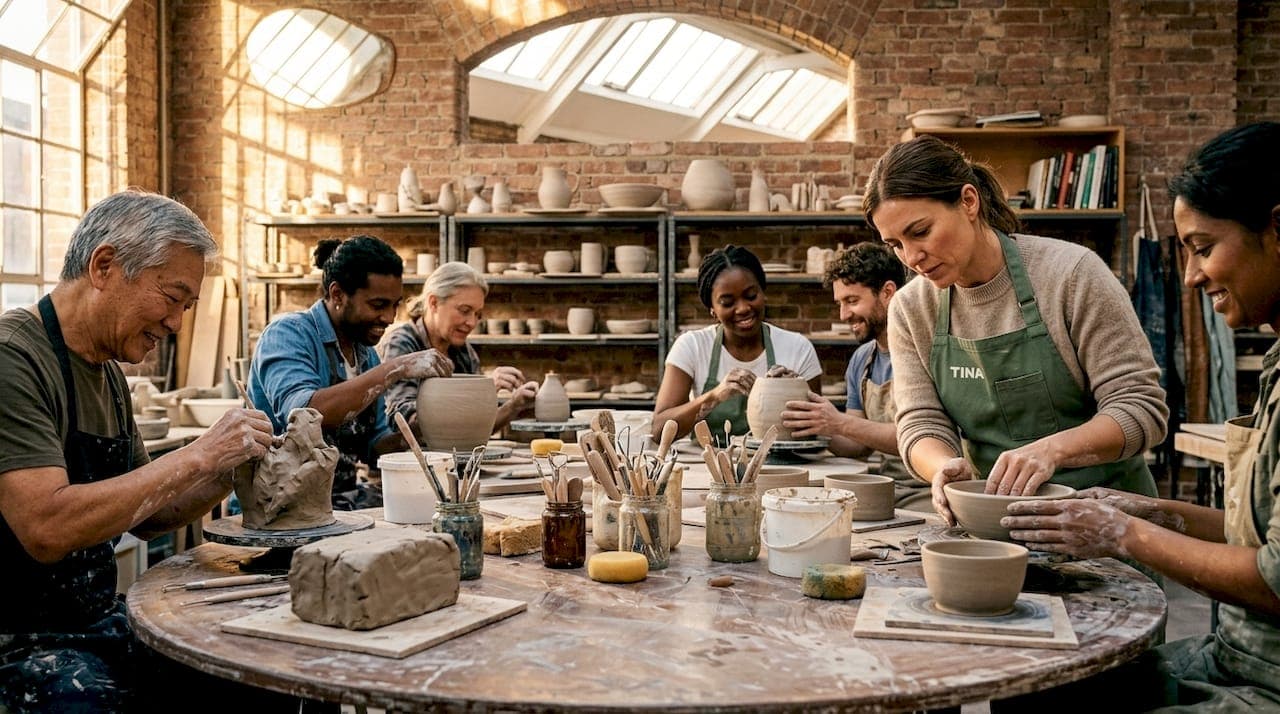
- Pottery making with a local ceramicist, where every piece comes out differently and nobody can cheat
- Pasta or pizza workshops led by real cooks, combining food, laughter, and a shared meal at the end
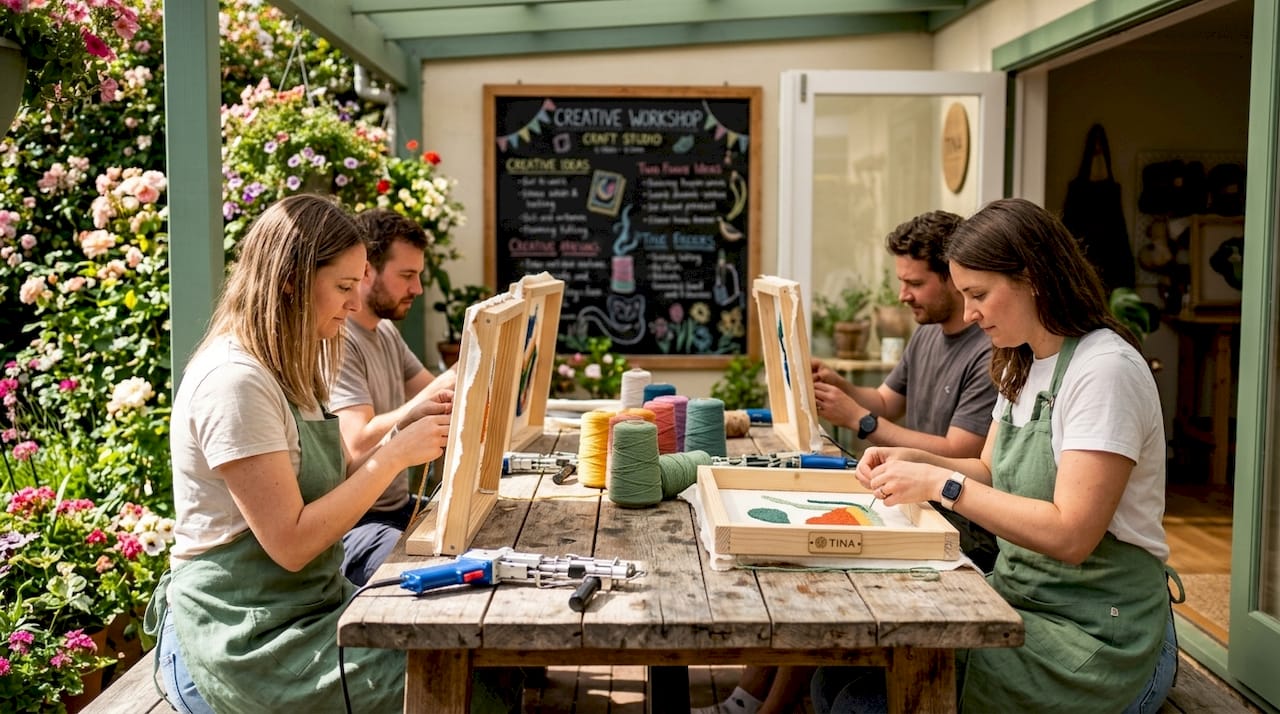
- Tufting and textile crafts, where teams create something physical they can hang in the office
- Chocolate crafting and foraging walks, which add sensory novelty that digital activities never match
Pro Tip: Choose activities where nobody on your team has prior experience. The equal learning curve is the mechanism that breaks social barriers. Pottery and tufting work especially well because professional skill is genuinely impossible to fake.
2. Immersive scavenger hunts and outdoor adventures as escape room alternatives
City-wide scavenger hunts and outdoor adventure formats are a strong alternative for teams that want physical movement paired with puzzle-solving. These formats take the core appeal of escape rooms, urgency, clues, and teamwork under pressure, and move them into real public spaces. Analog social experiences in physical environments are the growing preference for Millennial and Gen Z employees over screen-heavy activities.
Scalability is a genuine advantage here. Train-based immersive experiences, for example, can accommodate 12 teams simultaneously within 45 minutes, making them viable for large departments that escape rooms cannot serve. Story-driven formats with theatrical elements add narrative depth that keeps participants engaged beyond a single puzzle.
| Format | Best for | Limitation |
|---|---|---|
| City scavenger hunt | Large groups, urban exploration | Weather dependent |
| Nature trail challenge | Outdoor-focused teams | Requires travel time |
| Train-based immersive event | High scalability, drama | Limited availability |
| Campus sleuthing adventure | Universities, large campuses | Needs physical space |
The main trade-off compared to escape rooms is less controlled intensity. Outdoor formats are harder to time precisely and depend on weather. That said, low-tech group puzzles that emphasize communication consistently outperform digital-heavy games in creating shared team experiences.
3. Collaborative workflow workshops for real team improvement
Structured team collaboration workshops based on Agile, Lean, or Kanban frameworks are the right choice when you want measurable outcomes, not just a fun afternoon. These are not lectures. They are hands-on sessions where teams co-create value stream maps, identify bottlenecks, and leave with shared ownership of a process improvement.
Agile collaboration workshops delivered in one to two days produce measurable improvements in teamwork and workflows. That timeline fits neatly into a team offsite or a dedicated Friday session without disrupting the work week.
The best formats blend learning with application:
- Value stream mapping sessions where the team visualizes their actual workflow together
- Sprint retrospective workshops that surface real friction points in a structured, safe format
- Kanban board design exercises that produce a tool the team uses the following Monday
- Hybrid formats that open with a creative warm-up activity before moving into process work
Pro Tip: Pair any workflow workshop with a structured debrief. The ORCA framework (Observe, Reflect, Connect, Act) transforms what teams learned during the session into concrete workplace changes. Without a debrief, most insights evaporate within 48 hours.
4. Creative team activities that build psychological safety
Creative team activities work best when the stakes are genuinely low. Recurring low-stakes challenges build psychological safety and improve communication more effectively than rare, high-pressure events. A single escape room once a year does not compound. Weekly or monthly creative challenges do.
The most effective formats for building trust through play include:
- Wrong-idea brainstorming: teams compete to generate the worst possible solution to a real problem, which removes fear of failure and unlocks genuine creativity
- Photo challenges: each team documents something specific in the office or neighborhood, requiring observation and collaboration with almost zero prep
- Trivia contests with rotating question categories, where different team members lead each round based on their knowledge
- Recurring creative contests like a monthly desk-plant competition or a team recipe challenge, which build ongoing culture rather than a one-off memory
The compounding effect is the real insight here. Bad-idea brainstorming sessions reduce fear of failure and increase creative participation over time. Teams that laugh together regularly communicate more openly during actual work. The format does not need to be elaborate. It needs to be consistent.
5. Virtual team building ideas that actually work
Virtual formats deserve a place on this list because distributed teams are a permanent reality, not a temporary workaround. The challenge is that most virtual team building activities feel like a Zoom call with extra steps. The ones that work share one trait: they require genuine participation, not passive watching.
Formats with real engagement records include online cooking classes where ingredient kits are mailed in advance, virtual escape room platforms like Teambuilding.com or Weve, and live-streamed craft workshops where a Berlin artisan guides remote participants through a hands-on project. The experiential travel model is also expanding into virtual formats, with curated cultural experiences delivered remotely for global teams.
The key distinction is synchronous versus asynchronous. Synchronous virtual activities, where everyone participates at the same time, generate far more connection than asynchronous challenges. If your team is spread across time zones, a shared cooking or craft session scheduled once a quarter outperforms any async challenge board.
6. Competitive team games that replace escape room urgency
The urgency and competitive energy of escape rooms is genuinely valuable. Escape rooms pressure-test communication and teamwork under time constraints that replicate real project demands. The goal is not to eliminate that dynamic but to find formats that deliver it without the locked-room formula.
Formats that replicate escape room energy in fresh contexts include cooking competitions structured like MasterChef challenges, build-a-bridge engineering contests using limited materials, and improv theater workshops where teams must respond and adapt in real time. These formats act as what Afterburner describes as flight simulators for high-pressure decision-making, training teams to communicate under stress without the artificial setting.
The corporate team challenge format works best when the competition is between sub-teams rather than individuals. Inter-team competition builds internal cohesion while keeping the energy high.
Key takeaways
The most effective alternative to escape rooms for team building combines equal participation, tactile engagement, and a structured debrief that connects the activity to real workplace behavior.
| Point | Details |
|---|---|
| Artisan workshops break hierarchy | Manual crafts equalize all participants, removing office titles from the dynamic. |
| Outdoor formats scale better | Train-based and city scavenger formats handle large groups escape rooms cannot. |
| Workflow workshops deliver measurable results | Agile and Lean sessions produce tools teams use the following week. |
| Low-stakes recurring activities compound | Weekly creative challenges build psychological safety more than one annual event. |
| Debriefs are non-negotiable | The ORCA framework converts activity insights into lasting workplace improvements. |
Why artisan workshops changed how I think about team building
I have watched dozens of corporate groups walk into artisan workshops with the usual skepticism. The senior manager who checks his phone during icebreakers. The engineer who says she is "not creative." Within twenty minutes of working with clay or pulling a tufting needle through fabric, both of them are fully present and asking the artisan for help. That shift is not magic. It is the equal learning curve doing exactly what it is supposed to do.
What strikes me most is how durable the effect is. Teams that cook together or make something with their hands do not just have a good afternoon. They have a reference point. Six months later, when a difficult conversation comes up in a meeting, someone says "remember when we were all terrible at making pasta?" That shared memory of mutual vulnerability is worth more than any trust-fall exercise ever invented.
The experiential workshop model also redistributes value in a way that feels genuinely good. When your team books with a local artisan, a real person benefits directly. That is a story worth telling internally, and it adds a layer of meaning that a generic corporate event agency cannot replicate.
My honest recommendation: stop treating team building as a checkbox. Book something your team will talk about at the next all-hands. Artisan workshops are the format most likely to earn that conversation.
— Tina
Book a real team experience with Tinaexperiences
Tinaexperiences connects Berlin-based corporate teams with local artisans for hands-on workshops that are the opposite of a generic escape room. Companies like N26, Figma, and Wolt have used TINA to run pottery sessions, pasta workshops, tufting events, and foraging experiences with real Berlin artisans at real venues.
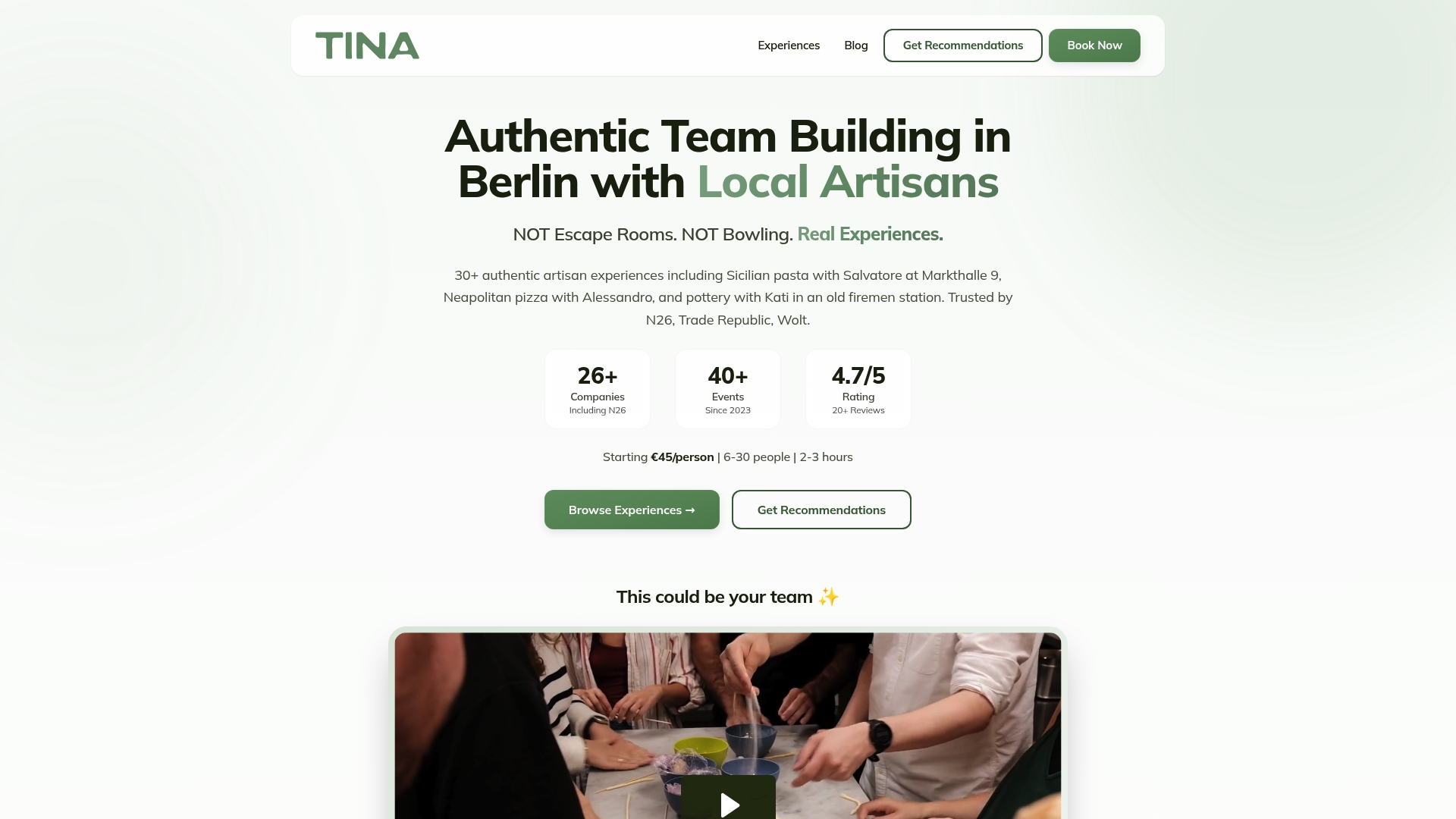
Every experience on the platform is led by a named artisan with a verified profile. Pricing is transparent, invoicing is automated, and the booking process takes minutes. Whether you need an event for 10 people or 80, TINA has a format that fits. Browse authentic artisan experiences or explore options for your next team offsite directly on the platform.
FAQ
What is the best alternative to escape rooms for team building?
Artisan-led hands-on workshops, such as pottery, pasta making, or tufting, are the most effective alternative because they equalize all participants through a shared learning curve and produce lasting team bonds.
How do artisan workshops compare to escape rooms for large groups?
Artisan workshops and outdoor formats like city scavenger hunts scale more easily than escape rooms, which typically cap at 6 to 10 participants per room. Train-based immersive events can run 12 teams simultaneously.
Do virtual team building activities actually work?
Synchronous virtual formats, such as live-streamed cooking classes or craft workshops with mailed ingredient kits, generate genuine engagement. Asynchronous challenge boards are less effective for building real connection.
How often should teams do team building activities?
Recurring low-stakes challenges delivered weekly or monthly build psychological safety more effectively than a single annual event. Consistency matters more than scale.
What makes a team building activity worth the investment?
Activities that include a structured debrief, using a framework like ORCA, convert the experience into measurable workplace improvements. Without a debrief, most team building insights fade within 48 hours.