
TL;DR:
- Effective team building in 2026 emphasizes shared experiences, clear objectives, and structured conversations over traditional games. Creative workshops, operational retrospectives, and micro-rituals foster trust, equality, and ongoing collaboration across all team types. Consistent, purposeful activities, paired with debriefs, lead to long-term psychological safety and stronger team dynamics.
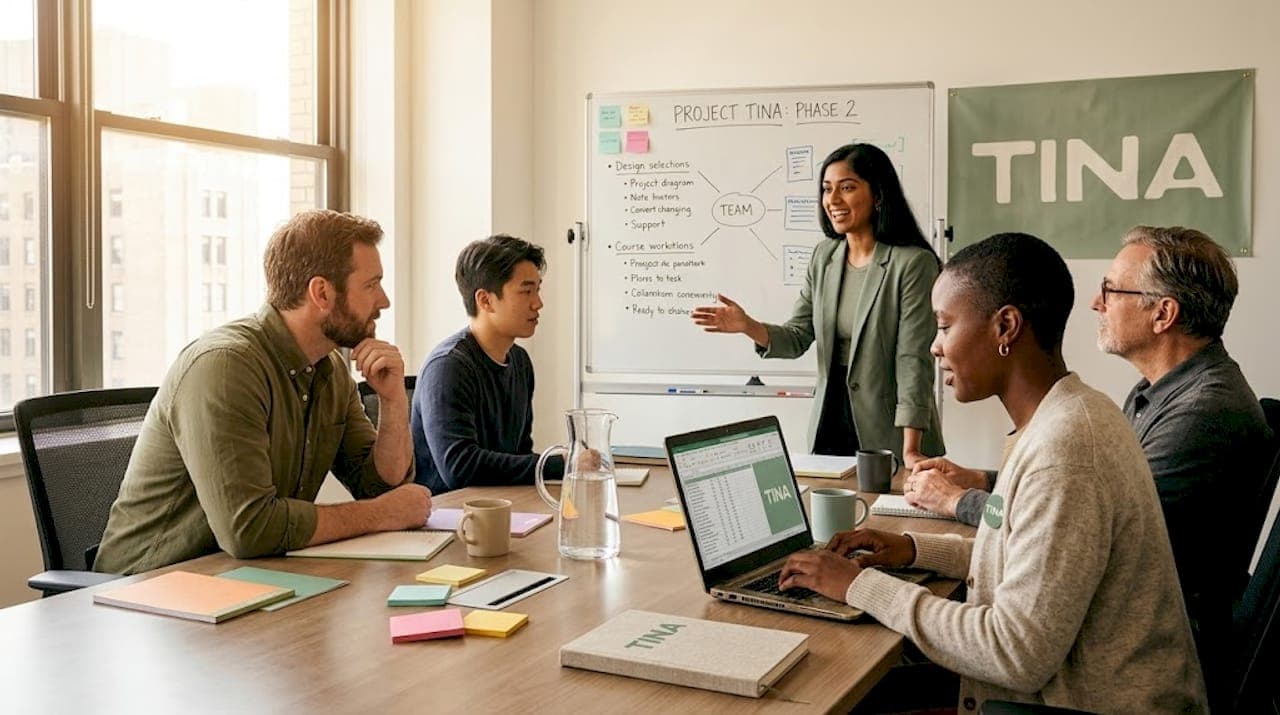
Most team leaders have sat through at least one painful round of trust falls or trivia nights where half the room checked their phones. Team building without games is not a niche request anymore. It is what forward-thinking HR managers and team leads are actively searching for in 2026 because they know that forced fun rarely builds trust. Real collaboration grows from shared effort, creative challenge, and the kind of conversation that does not happen during a board game. This article gives you a clear framework for making that happen.
Table of Contents
- Key takeaways
- 1. Why team building without games is the right call
- 2. How to set clear objectives before choosing anything
- 3. Creative artisan workshops that break down hierarchy
- 4. Operational workshops that align and improve real work
- 5. Structured conversations for remote and hybrid teams
- 6. Collaborative projects on real business challenges
- 7. Micro-rituals embedded in existing meetings
- 8. Comparing the main approaches side by side
- 9. How to match the right approach to your team's situation
- My honest take on what actually works
- Ready to try something real with your team?
- FAQ
Key takeaways
| Point | Details |
|---|---|
| Define the mission first | Always set a clear objective before choosing any activity to avoid planning an event that feels like a party instead of development. |
| Games are not required | Artisan workshops, collaborative projects, and structured conversations all outperform forced-fun formats for building genuine trust. |
| Debrief every activity | Without a structured debrief, even great activities stay social events and never translate into lasting team habits. |
| Consistency beats intensity | Regular, low-lift interactions build deeper psychological safety than infrequent large events ever will. |
| Equal footing is the secret | Activities where nobody has an advantage from day one break office hierarchy faster than any icebreaker. |
1. Why team building without games is the right call
Traditional game-based activities carry a reputation problem. Many employees see them as a performance rather than a real opportunity to connect. The skepticism is earned. When activities are designed primarily to be "fun," they often miss what teams actually need: psychological safety that makes it possible to disagree, ask for help, and be honest about problems.
Teamwork without games shifts the focus from entertainment to experience. The distinction matters. Entertainment is consumed passively. Experience is lived together, and that difference is where trust actually forms.
2. How to set clear objectives before choosing anything
Without a specific objective, team building becomes a party. That is not an exaggeration. It is the single most common mistake leaders make when planning group activities for teams.
Before you book anything, answer these questions honestly:
- What does your team struggle with right now? Communication, trust, cross-functional alignment?
- Are you building connection from scratch or strengthening an existing bond?
- Do you need an output, like a team charter or a shared artifact, or is the goal purely relational?
- What stage of development is the team at? A brand new group needs different activities than one navigating conflict.
Pro Tip: Write your objective in one sentence before you look at any activity options. If the activity does not serve that sentence, skip it.
3. Creative artisan workshops that break down hierarchy
This is one of the most underrated effective team building methods available to corporate leaders right now. When you put a group of people in front of clay, a pasta machine, or a tufting frame, something genuinely interesting happens. Nobody knows what they are doing. The CEO and the intern are equally lost, and that equal learning curve creates a social reset that no icebreaker question can replicate.
Artisan workshops break down office hierarchies precisely because the usual status markers disappear. Your title does not help you center a bowl. Your years of experience do not make your pasta any less lumpy. People laugh together, ask each other for help, and actually talk. That is the foundation of collaboration.
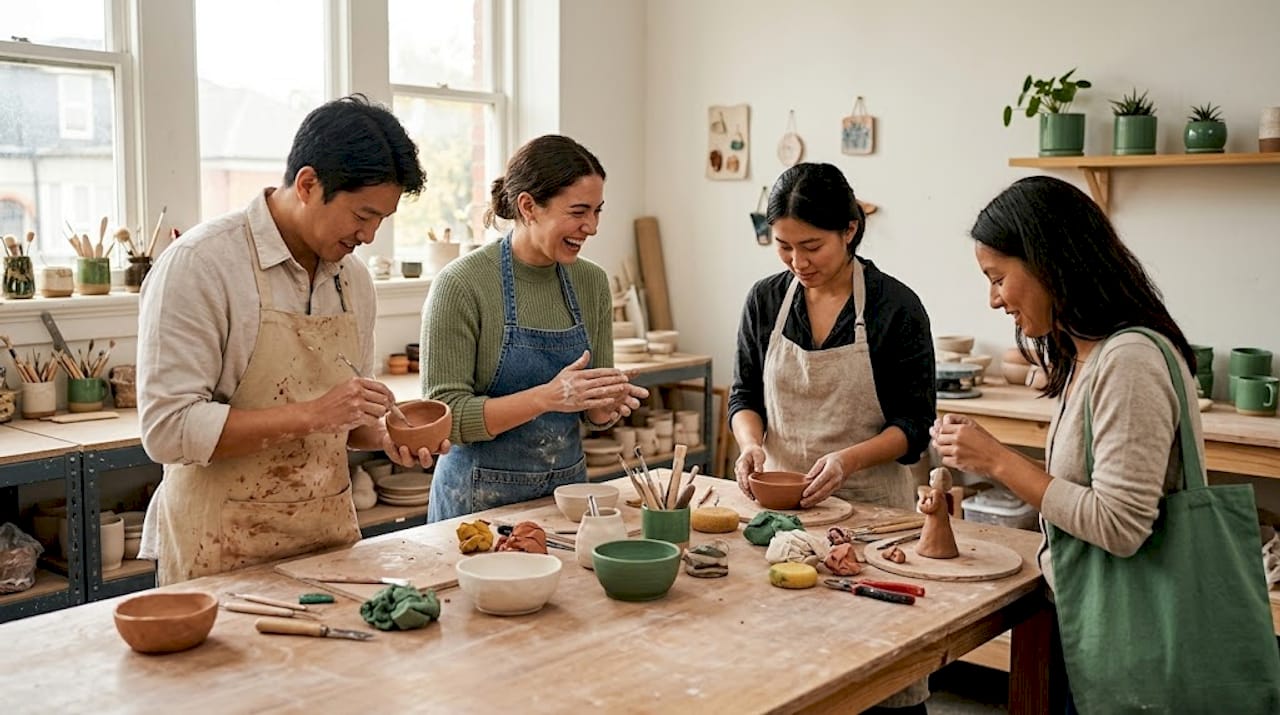
Creative team exercises like these also produce something tangible: a bowl, a rug, a pizza. That object becomes a story. Stories are how teams build identity.
4. Operational workshops that align and improve real work
Not every non-game activity needs to be creative in the traditional sense. Some of the most effective team bonding activities are purely operational and cost nothing to run.
Team Charter Workshops ask the team to agree on working norms, decision-making processes, and shared values. It sounds dry, but the conversation it generates is anything but. You surface assumptions people have been carrying silently for months.
Start/Stop/Continue retrospectives are equally powerful. In 30 to 90 minutes, these exercises require no budget and can be facilitated in-house. They generate real improvements to how the team operates, which means participants leave with something useful rather than just a memory.
Both formats work well for workplace teamwork strategies because they connect directly to the team's daily reality.
5. Structured conversations for remote and hybrid teams
Remote teams have a specific problem. The informal hallway conversations that naturally build trust simply do not exist. Rotating virtual coffee pairs solve this without requiring anyone to play a virtual game or sit through an awkward group video call.
The format is simple: pair two people from different parts of the team for a 20-minute video call each week. No agenda. No deliverable. Just conversation. The consistency is what makes it work. Regular predictable interactions build more trust over time than a single large offsite ever will.
Lunch roulette follows the same logic at a slightly larger scale. Small groups are randomly assigned to share a lunch break, either in person or virtually. It replicates the organic social mixing that open offices used to provide.
6. Collaborative projects on real business challenges
Shared effort on a real problem builds team context faster than almost anything else. When people work together on an internal innovation project, a process improvement, or a cross-functional challenge, they learn how each other thinks, communicates, and handles pressure. Collaborative problem-solving creates natural cohesion because the stakes feel real.
The key is choosing challenges that genuinely matter to the team. Simulated problems get simulated engagement. Real problems get real investment. Frame the project as practice for an actual skill the team needs, and teams shift from passive to active engagement immediately.
7. Micro-rituals embedded in existing meetings
You do not always need a separate event. Some of the best team engagement ideas fit inside meetings the team already attends. A two-minute check-in question at the start of a weekly sync. A rotating "highlight of the week" share. A 60-second reflection at the end of a project review.
These micro-rituals signal that the team is a place where people matter, not just outputs. Over time, they normalize openness and reduce the friction that comes with asking for help or raising concerns.
8. Comparing the main approaches side by side
| Activity type | Best for | Setting | Time needed | Budget |
|---|---|---|---|---|
| Artisan workshops | Breaking hierarchy, building identity | In-person | 2 to 4 hours | Moderate |
| Operational retrospectives | Alignment, process improvement | Both | 30 to 90 minutes | None |
| Virtual coffee pairs | Remote connection, distributed trust | Remote/hybrid | 20 minutes weekly | None |
| Collaborative projects | Deep trust, cross-functional clarity | Both | Ongoing | Low to none |
| Micro-rituals | Psychological safety, daily culture | Both | 5 minutes per meeting | None |
Most teams benefit from a mix. Use artisan workshops for significant moments, operational retrospectives quarterly, and micro-rituals every single week.
9. How to match the right approach to your team's situation
Context matters more than trend. Here is how to think about it:
- New teams need fast trust-building. Artisan workshops and structured conversations work best because they create shared experiences and equalize status quickly.
- Established teams in conflict benefit most from operational retrospectives. The structured format gives people permission to name problems they have been avoiding.
- Remote teams need frequency over intensity. Weekly coffee pairs beat a once-a-year virtual escape room by a wide margin.
- Skeptical teams respond best when activities connect directly to real work. Framing exercises as skills practice rather than bonding sessions reduces resistance significantly.
Pro Tip: Always close any team building activity with a structured debrief. The ORCA framework turns a good experience into lasting operational habits by connecting what happened in the activity to what the team faces tomorrow.
My honest take on what actually works
I have seen a lot of team building approaches over the years, and the ones that fail share one thing: they put "fun" at the center instead of "shared challenge." I think that is fundamentally backwards.
When I watch a group of colleagues try to make pasta together for the first time, I see something happen that no trivia night has ever produced. The senior manager cannot figure out the hand crank. The newest hire turns out to be surprisingly good at kneading dough. The usual social order disappears, and people start actually talking.
What I have learned is that the workshop format for team development works not because it is creative, but because it is equalizing. The activity does not need to be artisanal specifically. It needs to put everyone on the same unfamiliar ground.
My other conviction: one great event is not enough. Creative workshops boost long-term teamwork only when they are part of a rhythm, not a one-off. Pair your workshop with regular micro-rituals and a quarterly retrospective, and you will see a team that actually collaborates differently. Skip the follow-through, and the good feeling fades within two weeks.
— Tina
Ready to try something real with your team?
If you are done with escape rooms and generic corporate dinners, Tinaexperiences was built for exactly this moment. The platform connects Berlin-based corporate teams with real local artisans for hands-on experiences: pottery, pasta-making, tufting, pizza, foraging, and more. Every event is designed around the equal-learning-curve principle. Nobody walks in an expert. Everyone walks out with a story.
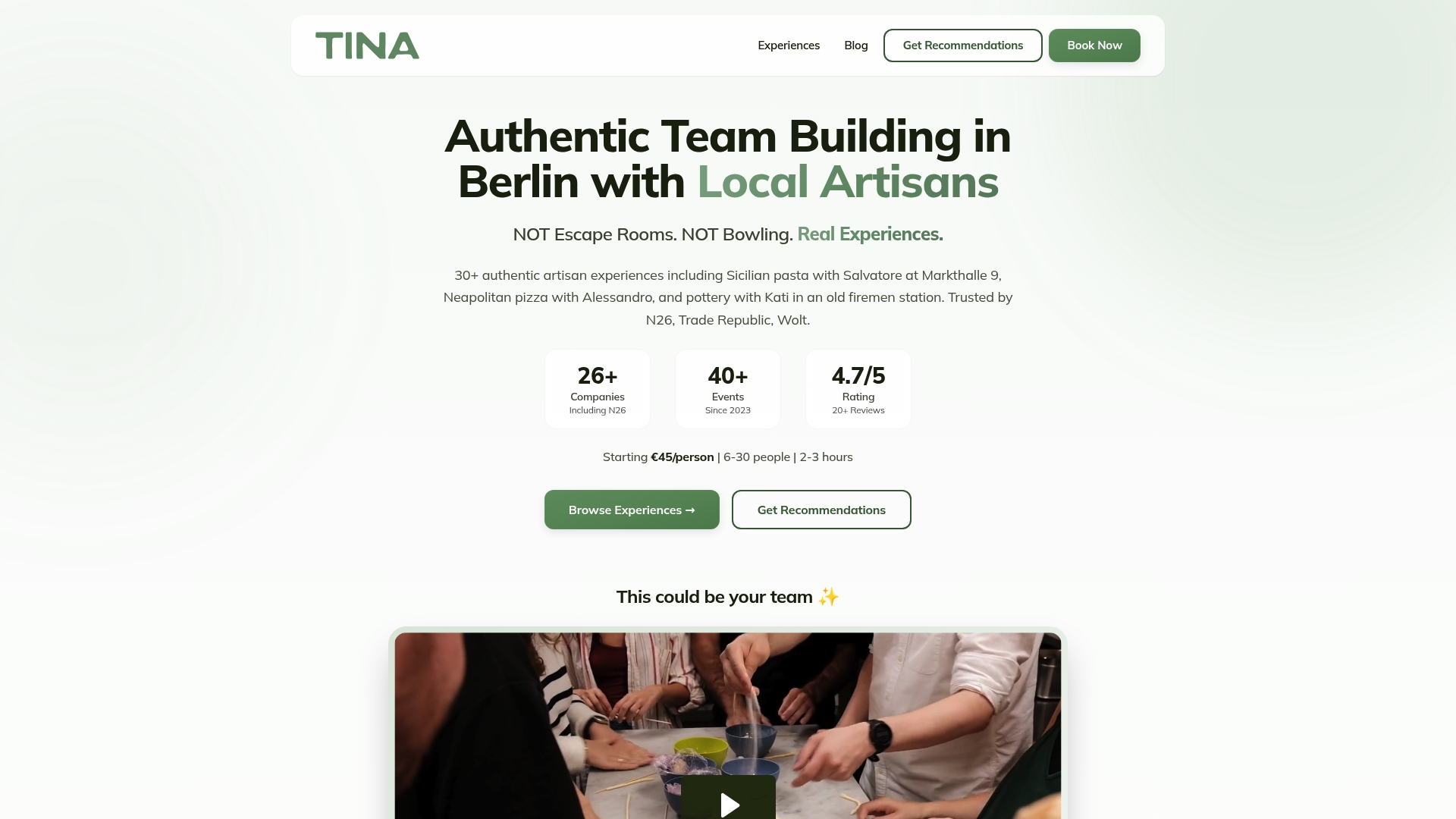
Companies like N26, Figma, and Wolt have used Tinaexperiences to build genuine connection without a single forced game. Browse artisan workshops for teams or explore how to plan your next team offsite on the platform. Transparent pricing, real artisans, and zero awkward icebreakers.
FAQ
What is team building without games?
Team building without games refers to structured activities that build trust and collaboration without relying on competitions or recreational games. Examples include artisan workshops, retrospectives, collaborative projects, and structured conversations.
Are non-game team building activities effective?
Yes. Authentic connection activities that create shared experiences and humanize coworkers are more effective at building long-term trust than forced-fun formats. The key is tying activities to clear outcomes and following up with a debrief.
How do I convince a skeptical team to participate?
Frame the activity around a real skill or work outcome rather than fun. Connection emerges as a byproduct of shared meaningful effort. Teams respond far better when they can see why an activity matters to their actual work.
How often should teams do non-game activities?
Frequency matters more than scale. Consistent low-lift habits like weekly check-ins or rotating coffee pairs build more trust over time than a single large event each year. Combine regular micro-rituals with a quarterly workshop for best results.
Do these activities work for remote teams?
Absolutely. Structured conversations like rotating virtual coffee pairs work especially well for remote and hybrid teams. The goal is regular, predictable contact that replicates the informal social moments distributed teams naturally miss.