
TL;DR:
- Effective team building for introverts involves small, structured, task-based activities that encourage reflection and shared focus. Such activities, like pottery workshops and nature walks, reduce performance pressure, promote genuine connection, and break social hierarchies. Proper preparation, clear communication, and artisan-led experiences create authentic bonds that benefit everyone.
Team building for introverts is most effective when activities are intimate, structured, and task-based, giving people room to think before they speak and connect through doing rather than performing. 40 to 50 percent of the workforce identifies as introverted, which means nearly half your team is likely dreading the next icebreaker. Traditional team events reward volume and spontaneous reactions. Introvert-friendly team bonding strategies reward depth, preparation, and shared focus. The difference is not subtle. It changes who shows up, who connects, and who actually enjoys the day.
1. What makes team building effective for introverts
Introvert-friendly team events share a few non-negotiable traits. They are small, structured, and free from the pressure to perform on the spot.

The research is specific: groups of 6 to 8 people with sessions lasting 60 to 90 minutes produce the most comfortable and engaged participation from introverted employees. Larger groups create an audience effect. Longer sessions drain energy. Both kill authentic connection.
The core principles behind activities for introverted teams include:
- Small group size. Keep subgroups at 6 to 8 people maximum. Break any larger team into parallel tables.
- Clear objectives. Tell people exactly what they will do, in what order, and for how long. Predictability lowers anxiety.
- No spotlight moments. Avoid formats that require spontaneous public speaking or surprise performance.
- Reflection time built in. Introverts provide higher-quality contributions when given 5 to 10 minutes of silent reflection before sharing.
- Task-focused collaboration. Give people something to make, solve, or discuss together. The task becomes the social bridge.
Pro Tip: Send a detailed agenda to participants at least 48 hours before the event. Introverts mentally prepare. Giving them that window turns anxiety into anticipation.
2. Guided nature walks
Guided nature walks are one of the most underrated group exercises for introverts. Side-by-side movement removes the pressure of direct eye contact and face-to-face conversation, which makes talking feel natural rather than forced. A foraging walk through a Berlin park or forest, led by a local guide, gives the group a shared focus: spotting plants, learning names, asking questions. Conversation happens organically. Nobody is put on the spot.
Guided nature walks and foraging sessions consistently rank among the most effective introvert-compatible activities because they combine calm, moderate duration, and a clear shared goal. The result is genuine connection without the social performance tax.
3. Pottery and ceramics workshops
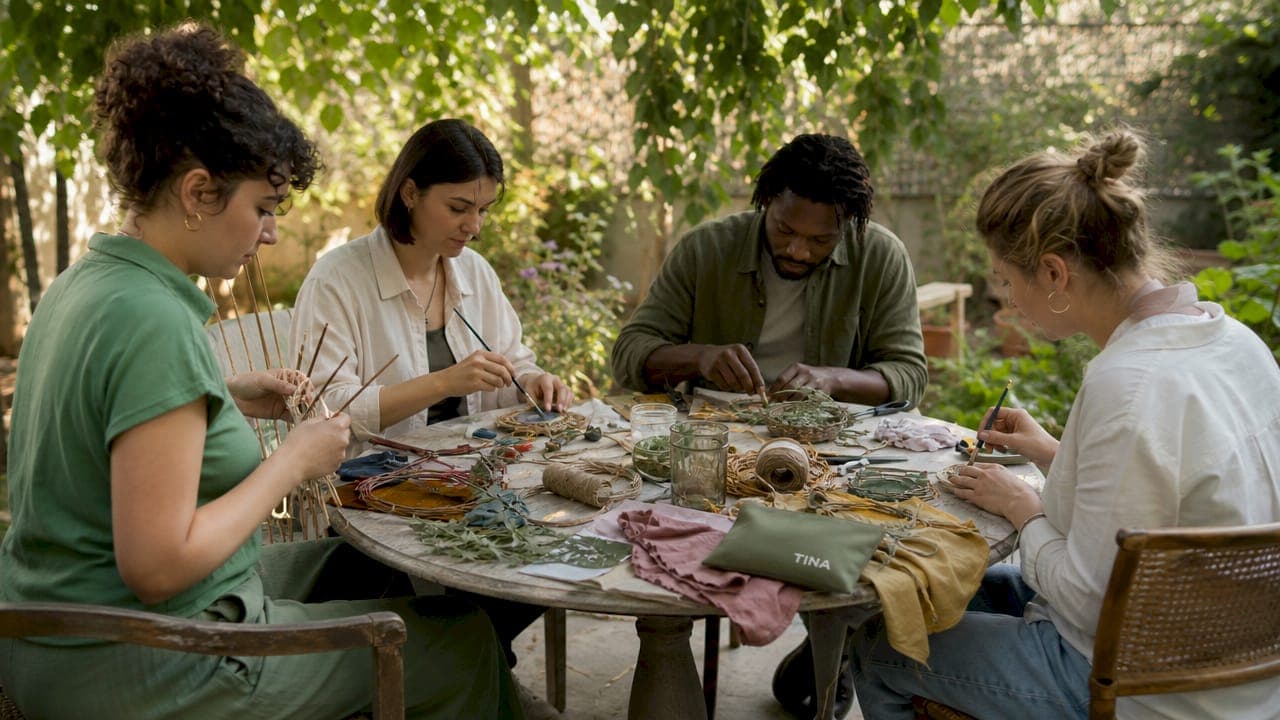
Pottery is one of the best introvert-friendly team events available. Everyone starts at zero. The CEO cannot throw a centered bowl on the first try. Neither can the intern. That equal learning curve is exactly what breaks office hierarchy and removes the social pecking order that makes many team events feel uncomfortable.
Manual tasks that provide a shared object to focus on reduce eye contact pressure and forced conversation. The clay becomes the third object in the room. People talk because they want to, not because the format demands it. Tinaexperiences partners with Berlin ceramics artisans to run exactly this kind of session, in real ateliers, with real craft.
4. Tufting and textile workshops
Tufting, the craft of creating rugs and wall art with a tufting gun, is a surprisingly powerful team bonding activity for introverted employees. It requires focus, patience, and a steady hand. All three are introvert strengths. The work is absorbing enough that silence feels comfortable, not awkward. And the finished piece, a rug for your office wall, is a story the team shares long after the event ends.
Nobody arrives knowing how to tuft. That shared incompetence is the great equalizer. It is hard to feel judged when everyone around you is equally confused by the tufting gun.
5. Pasta-making and cooking classes
Cooking classes work for introverted teams because the activity structures the social interaction for you. There is always something to do with your hands. There is always a next step. Nobody has to fill silence because the work fills it naturally.
Cooking classes and creative workshops are among the most reliably effective activities for introverted teams, combining moderate group size, clear objectives, and hands-on collaboration. Tinaexperiences runs pasta-making sessions with local Berlin artisans at venues like Markthalle Neun, where the food, the setting, and the craft all do the work of bringing people together.
6. Book club discussions
A structured book club format gives introverts the one thing they need most: time to prepare. Assign a short article, essay, or book chapter in advance. Give people a week to read and reflect. Then gather in small groups of 6 to 8 for a structured discussion with written prompts. Multiple participation formats, including written, verbal, and visual input, increase introvert engagement significantly. A book club naturally accommodates all three.
This format also rewards depth over volume, which is the environment where introverted employees genuinely thrive.
7. Photography walks
A photography walk gives every participant a personal mission and a reason to move at their own pace. Pair people in groups of two or three. Give them a theme: textures in the city, color contrasts, human moments. Reconvene after 45 minutes to share what each person captured. The debrief becomes a genuine conversation because everyone has something specific and personal to show.
Photography walks work as group exercises for introverts because they replace forced interaction with purposeful solo exploration followed by structured sharing. The photos do the talking first.
8. Mindfulness and meditation sessions
A guided mindfulness session is one of the few team building formats where silence is not just acceptable but expected. That alone makes it introvert-friendly. A 60-minute session led by a qualified facilitator, covering breathwork, body scan, and brief group reflection, gives introverted employees a rare gift: a team event that restores rather than drains energy.
Pair the session with a quiet journaling prompt and a small group debrief. The combination of internal reflection followed by structured sharing mirrors exactly the format that psychological safety research identifies as optimal for introverted participation.
9. Puzzle and craft challenges
Collaborative puzzle or craft challenges, think large-format jigsaw puzzles, model building, or mosaic art, give introverted teams a shared competence goal. The task is clear. Progress is visible. Success is collective. There is no need to perform, persuade, or present. You just build.
Introverts bond best through shared competence and task-focused collaboration rather than performative social bonding. Puzzle and craft formats are a direct application of that principle. They are also easy to run in an office, which makes them practical for teams that cannot travel.
10. Volunteer activities
Purposeful work creates purposeful bonds. Volunteer activities, whether packaging food at a local charity, building community garden beds, or creating care packages, give introverted employees a shared mission that is bigger than the team itself. The work structures the interaction. The cause provides the conversation. Nobody has to network.
Volunteer events also tend to attract the most genuine version of people. When the goal is meaningful, the social performance drops away. That is the environment where introverts connect most authentically.
11. How to structure introvert-friendly team events
The activity matters. The structure matters just as much.
Advance preparation and clear communication about expectations and participation formats reduce introvert anxiety before the event even begins. Send a detailed schedule, explain what participation looks like, and confirm that no one will be put on the spot. That single step changes the energy in the room.
Additional facilitation principles that make team bonding strategies for introverts work in practice:
- Break large groups early. Groups larger than 8 are best split into parallel tables of 4 to 6 people before any activity begins.
- Use round-robin formats. Structured turn-taking removes the pressure to compete for airtime.
- Build in quiet time. A 5-minute silent reflection before group sharing consistently improves contribution quality.
- Offer written input options. Sticky notes, shared documents, and written prompts give introverts an alternative to open-floor speaking.
- Choose calm venues. Loud, neon-lit spaces overstimulate. Ateliers, gardens, and quiet restaurants do not.
12. Why artisan-led workshops are uniquely effective for introverted teams
Artisan-led workshops solve the core problem of team building for introverted employees: they give everyone something real to do. The craft is the focus. The artisan guides the process. Nobody has to manufacture conversation because the work generates it naturally.
"Anyone is equally bad in front of a manual craft they have never done before. Suddenly, the intern and the team lead are on the same level. That breaks the classic social barriers. Finally, people can create bonds."
This is the principle behind every Tinaexperiences workshop. Pottery, tufting, pasta-making, chocolate crafting. All of them place participants in a state of shared beginner competence. Shared manual work acts as a social bridge by removing the pressure for direct social interaction and replacing it with a shared object of focus. For introverted employees, that shift is everything.
The authentic venue matters too. A real Berlin atelier, a local artisan's studio, or a table at Markthalle Neun communicates that this event is worth showing up for. It signals respect for the people attending.
Key takeaways
Team building for introverts works when it is small, structured, task-based, and free from any pressure to perform spontaneously.
| Point | Details |
|---|---|
| Optimal group size | Keep subgroups at 6 to 8 people to maintain intimacy and reduce social evaluation pressure. |
| Reflection before sharing | Give introverts 5 to 10 minutes of quiet reflection before group discussion to improve contribution quality. |
| Task-based connection | Hands-on crafts and shared manual work remove forced conversation and create natural social bonding. |
| Advance communication | Send detailed schedules and participation expectations at least 48 hours before any event. |
| Equal learning curve | Activities where everyone starts as a beginner break office hierarchy and reduce performance anxiety. |
Why I think most team building still gets introverts wrong
Most corporate team building is designed by extroverts, for extroverts, and then applied to everyone. The assumption is that if an activity is energetic and social, it must be good for the team. That assumption is wrong for roughly half the people in the room.
Introverts are not anti-social. They are not shy. They are not difficult. They think before they speak, and they connect through depth rather than volume. Leaders who equate loudness with value are actively excluding some of their best thinkers from the team building process.
The fix is not complicated. Give people a task. Keep the group small. Send the agenda in advance. Let silence be comfortable. The introverts on your team will show up fully. And honestly, the extroverts will have a better time too. Depth is more interesting than noise for everyone, once you create the conditions for it.
The artisan workshop model gets this right by accident and by design. When you are learning to throw clay or pull a tufting gun across a frame, the hierarchy disappears. The work is the great equalizer. That is not a team building gimmick. It is just what happens when you put people in front of something genuinely new together.
— Tina
Authentic team events for introverted teams in Berlin
If you are ready to move past the escape rooms and forced icebreakers, Tinaexperiences offers artisan-led team building in Berlin that works precisely because it does not feel like corporate entertainment. Real artisans. Real crafts. Real venues.
Every workshop, from pottery to pasta-making to tufting, is designed for small groups where everyone starts as a beginner. That equal footing is what makes the connection genuine. Tinaexperiences has completed 40+ events with companies including N26, Figma, and Wolt, redistributing over €75k to local Berlin artisans in the process. Browse the creative workshops in Berlin or explore options for a full team offsite with customizable formats for mixed-personality teams. Transparent pricing, easy booking, and experienced artisan facilitators handle the rest.
FAQ
What are the best team building activities for introverts?
The most effective activities for introverted teams are hands-on, task-focused, and run in small groups of 6 to 8 people. Pottery workshops, guided nature walks, cooking classes, and structured book clubs consistently rank highest because they replace performance pressure with shared competence.
How do you engage introverted team members during group events?
Send a detailed agenda in advance, break large groups into smaller tables, and offer written input options alongside verbal sharing. Providing clear objectives and a predictable setting lowers social barriers and produces more authentic participation from introverted employees.
How long should a team building event be for introverts?
Sessions of 60 to 90 minutes are optimal for introvert-friendly team events. Longer formats increase overstimulation and reduce the quality of engagement, particularly in high-social-demand environments.
Can introverts and extroverts do team building together?
Yes, and artisan-led workshops are particularly effective for mixed-personality teams because the craft equalizes everyone. When nobody has prior skill, there is no social hierarchy based on performance, which creates a comfortable environment for both introverts and extroverts to connect genuinely.
Why does traditional team building fail introverts?
Traditional team building rewards volume and spontaneous reactions, which overstimulates introverts and sidelines their strengths. Activities that require thinking before speaking, working with hands, and collaborating in small groups produce far better results for introverted employees.