

TL;DR:
- Storytelling activates multiple brain regions and triggers oxytocin, boosting trust and empathy.
- Artisan-led workshops create memorable shared narratives, increasing engagement and psychological safety.
- Using storytelling techniques in teams enhances collaboration, resilience, and long-term connection.
Stories are remembered 22 times more than facts alone. Yet most team-building programs still lean on trivia nights, escape rooms, and awkward icebreakers that everyone forgets by Monday morning. The real opportunity sits somewhere else entirely: in shared narratives, co-created experiences, and the kind of storytelling that makes people feel genuinely seen. This article gives you practical storytelling frameworks, real examples from Berlin's artisan scene, and a clear path to building teams that actually collaborate. If you're an HR professional or team leader tired of the same old playbook, keep reading.
Table of Contents
- Why storytelling is a secret catalyst for team cohesion
- Storytelling techniques that drive collaboration
- Artisan-led workshops: Storytelling in action
- When storytelling matters most: Resilience, risk, and psychological safety
- Why Berlin teams need new storytelling rituals now
- Ready to make storytelling your team's superpower?
- Frequently asked questions
Key Takeaways
| Point | Details |
|---|---|
| Stories build trust | Teams that share stories have higher trust and more psychological safety. |
| Frameworks matter | Using the right storytelling frameworks boosts engagement and collaboration by 70% or more. |
| Practical team rituals | Artisan-led workshops turn activities into memorable team narratives for lasting cohesion. |
| Not just creative teams | Storytelling drives results in resilience, safety, and performance across all industries. |
Why storytelling is a secret catalyst for team cohesion
Most people think of storytelling as something for marketers or novelists. But neuroscience tells a different story. When someone hears a compelling narrative, their brain doesn't just process language. It activates sensory, emotional, and motor regions simultaneously. Facts light up two areas. Stories light up seven or more. That's not a small difference.
One of the most powerful effects is chemical. Narratives trigger the release of oxytocin, sometimes called the "trust molecule." When oxytocin flows, people feel safer, more empathetic, and more willing to be vulnerable. For a team that needs to collaborate under pressure, that matters enormously.
"Storytelling builds team cohesion, psychological safety, and empathy in ways that conventional training rarely achieves." Harvard Business Review
Here's what that looks like in practice for teams:
- Shared narrative-building normalizes vulnerability, making it easier for people to admit mistakes or ask for help
- Story-driven activities create a common reference point that teams return to long after the event
- Co-authoring a team story flattens hierarchies, because everyone's perspective matters equally
- Narrative reflection helps teams process setbacks without blame
- Emotional resonance from stories sticks, while slide decks are forgotten within 48 hours
Teams that use storytelling as a regular practice see up to 42% higher collaboration and significantly stronger engagement scores compared to teams that rely on conventional activities. The gap is real, and it's measurable.
The problem with most team-building formats is that they're transactional. You do the activity, you go home. There's no shared story created, no narrative thread that connects people afterward. Storytelling changes that equation completely.
Pro Tip: At the end of your next team session, ask everyone to share one sentence about what they'll remember most. That single ritual starts building your team's collective story immediately.
Storytelling techniques that drive collaboration
Knowing that storytelling works is one thing. Knowing which technique to use for your specific team is what actually moves the needle. Different frameworks serve different goals, and choosing the right one makes your session far more effective.
Here's a side-by-side look at six classic storytelling techniques and what each one best supports:
| Technique | Best for | Ideal setting |
|---|---|---|
| Hero's Journey | Resilience, overcoming challenges | Workshops, offsites |
| Nested Loops | Complex idea sharing, mentoring | Leadership sessions |
| Sparklines | Inspiring change, vision-setting | Town halls, strategy days |
| Flashback and Learn | Retrospectives, failure analysis | Agile team reviews |
| Paint the Scene | Empathy, perspective-taking | Creative workshops |
| World-building | Innovation, future planning | Brainstorming sessions |
For artisan-led creative workshops in Berlin, three techniques tend to work especially well:
- Paint the Scene: Each team member describes the moment they felt most proud of the group. This builds empathy and surfaces stories that often go untold.
- The Team's Hero Journey: Map your team's last six months as a hero's story arc. Where was the challenge? Who helped? What was gained? This reframes struggle as growth.
- Flashback and Learn: Revisit a specific project or decision together. What would you change? What worked better than expected? This normalizes honest reflection without blame.
- Collaborative World-Building: Teams co-create a fictional scenario that mirrors a real challenge. The distance of fiction makes it easier to speak honestly.
- Sparklines: Alternate between "what is" and "what could be" to energize teams around a shared future vision.
The beauty of these frameworks is that they don't require a facilitator with a psychology degree. A curious team leader and a hands-on activity are often enough. When people are making something together, whether it's pasta or pottery, the story flows naturally. Their hands are busy, their guard is down, and real conversation happens.
Artisan-led workshops: Storytelling in action
Theory is useful. Watching it work in a real Berlin atelier is better. Artisan-led workshops are uniquely powerful for storytelling because the creative process itself becomes the narrative. You're not just doing an activity. You're building something together, and that shared experience becomes a story your team tells for months.
Consider what happens in a ceramic sculpting workshop. Everyone starts at zero. The intern and the director are equally clueless in front of a lump of clay. That shared vulnerability is the first story beat. Then comes the struggle, the small wins, the moments of unexpected creativity. By the end, each person holds something they made with their own hands. That object becomes a physical anchor for the team's shared narrative.
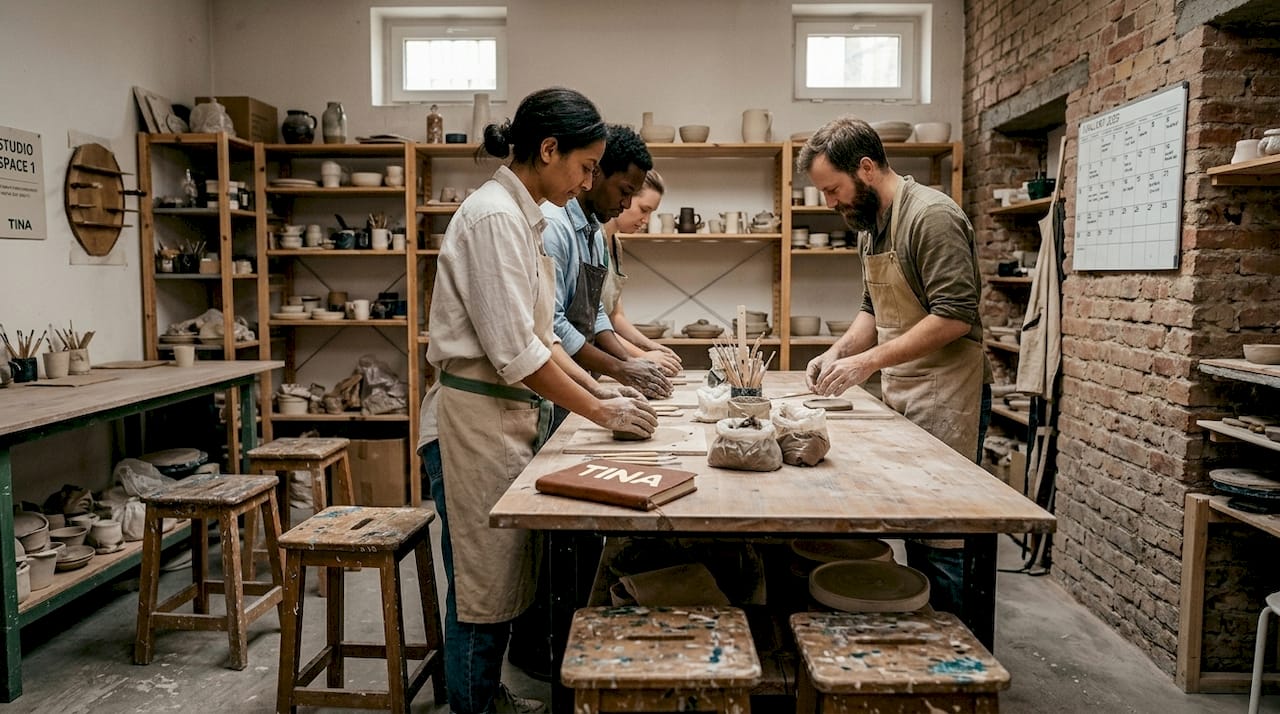
The team storytelling benchmarks are striking. Teams using shared narrative-building activities report engagement boosts of 70% or more compared to standard team-building formats. Here's how artisan workshops stack up:
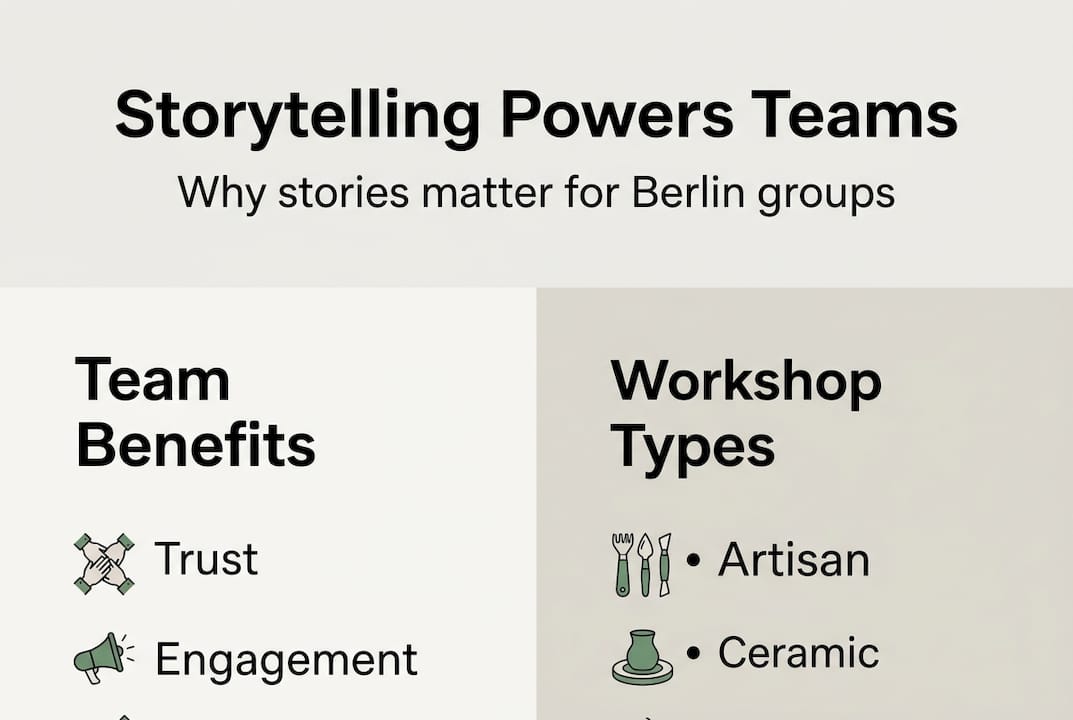
| Outcome | Standard team-building | Artisan workshop with storytelling |
|---|---|---|
| Engagement boost | ~20% | 70%+ |
| Memory retention after 1 week | Low | High (physical artifact helps) |
| Psychological safety improvement | Moderate | Strong |
| Hierarchy flattening | Minimal | Significant |
A pasta making team activity works the same way. The artisan shares the story behind the recipe, the region it comes from, the family tradition. Suddenly your team isn't just rolling dough. They're part of a longer story. That context gives the activity meaning, and meaning is what makes experiences stick.
Pro Tip: Ask your workshop artisan to share one personal story about their craft at the start of the session. It sets a storytelling tone that the whole group naturally mirrors.
Here's what to look for when turning any artisan workshop into a storytelling session:
- A clear beginning: Brief the team on the artisan's background before you start
- A shared challenge: Choose an activity where everyone struggles equally
- A reflection moment: Build in five minutes at the end for each person to share one takeaway
- A physical artifact: Something made together that lives in the office afterward
When storytelling matters most: Resilience, risk, and psychological safety
Creativity and cohesion are great reasons to use storytelling. But the real test comes when things get hard. High-pressure projects, organizational change, team conflict. These are the moments when storytelling becomes less of a nice-to-have and more of a genuine tool for survival.
Research shows that storytelling outperforms statistics when it comes to risk communication and building resilience. When people hear a story about someone navigating a difficult situation, they're far more likely to invest in prevention, preparation, and team safety than when they see a chart showing the same risk.
"Narrative framing increases willingness to act on risk and invest in resilience far more effectively than data presentation alone." Econstor/ScienceDirect
Here's how to use storytelling specifically for resilience and psychological safety:
- Normalize failure stories: Invite senior team members to share a time they got something wrong. This signals that mistakes are survivable and discussable.
- Use the Flashback and Learn technique after challenging sprints or projects to extract lessons without assigning blame
- Create space for "small story" sharing: Not every narrative needs to be dramatic. Everyday moments of collaboration build the same safety over time
- Tailor your approach to team composition: New teams need simple, low-stakes story prompts. Established teams can handle deeper, more vulnerable narratives
- Anchor resilience stories to physical experiences: A workshop where something went wrong and the team improvised is a story that gets retold
For teams navigating hybrid work or rapid change, custom workshop recommendations can help you match the right storytelling format to your team's specific context. Not every group needs the same approach, and getting that fit right makes a real difference.
The key insight here is that psychological safety isn't built through policy. It's built through repeated small moments of honest sharing. Storytelling creates those moments on purpose.
Why Berlin teams need new storytelling rituals now
Here's an uncomfortable truth: most corporate team-building in Berlin is still playing catch-up with what teams actually need. Escape rooms, bowling nights, and generic workshops generate activity but rarely generate connection. The science is clear. The gap between what companies do and what actually works is wide.
Berlin's artisan scene offers something genuinely different. Real craftspeople with real stories, working in real spaces. When your team sits with a ceramicist in a Prenzlauer Berg atelier or learns pasta technique from someone whose grandmother taught them the recipe, something shifts. The experience becomes a shared story, not just a shared afternoon.
We believe that artisan-led workshops aren't a luxury for progressive companies. They're a practical investment in the kind of team culture that retains talent, handles change, and builds genuine trust. Hybrid work has made connection harder to create accidentally. You have to design for it now. Storytelling rituals, anchored in hands-on experiences, are one of the most effective ways to do exactly that. Don't wait for your next offsite to start.
Ready to make storytelling your team's superpower?
If this has sparked something, the next step is simple. You don't need a big budget or a six-month planning cycle. You need one real experience that gives your team a story worth telling.
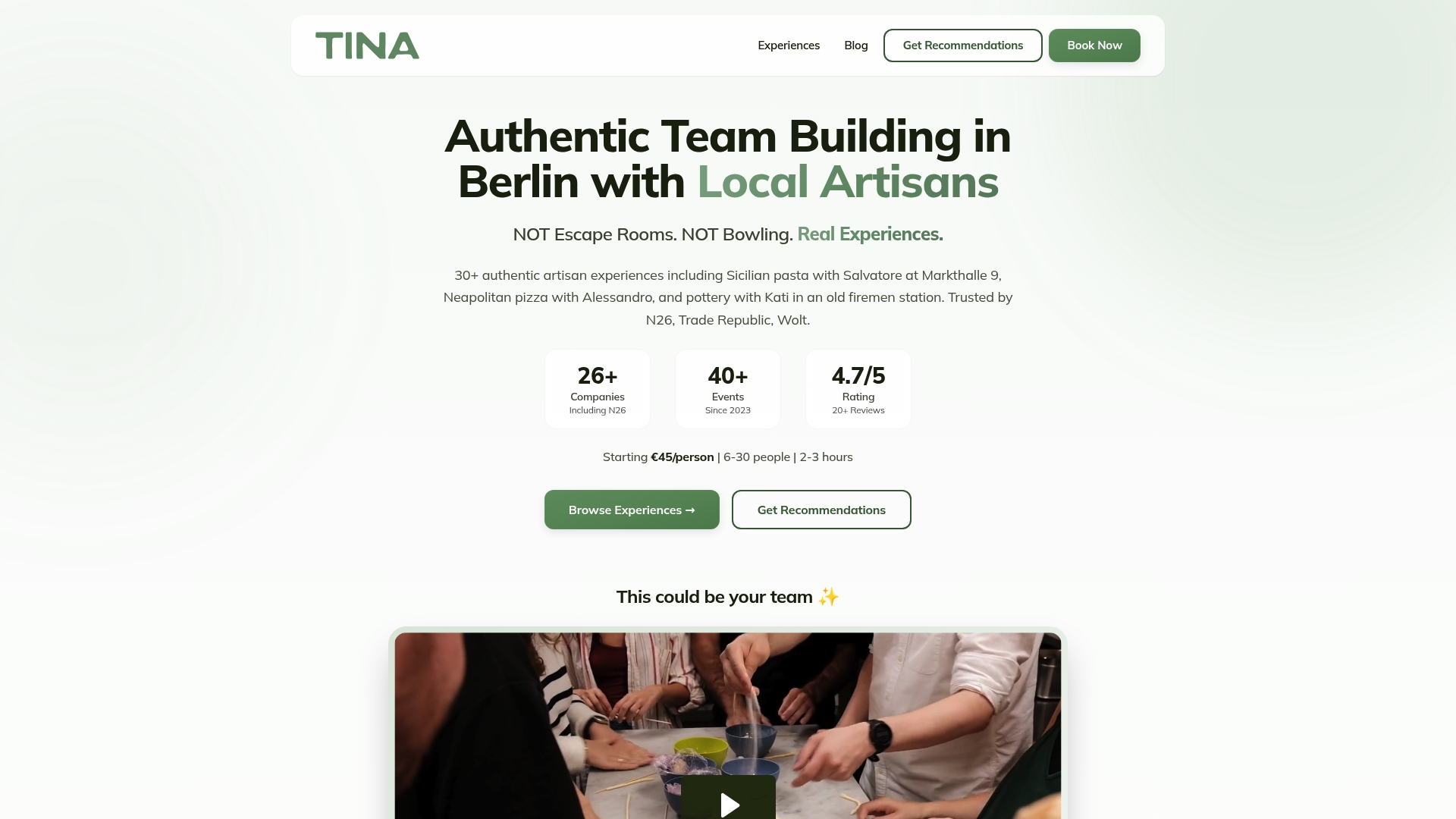
TINA Experiences connects Berlin teams with local artisans for hands-on workshops that naturally embed storytelling into every session. From a playful clay workshop to culinary adventures, every experience is designed to create the kind of shared narrative that sticks. Booking is straightforward, pricing is transparent, and the artisans are the real deal. Browse all team building Berlin options and find the one that fits your team's next chapter.
Frequently asked questions
How does storytelling boost team performance?
Storytelling increases collaboration by up to 42% and engagement by 70% by creating shared emotional understanding and a common reference point that outlasts any single event.
What are simple storytelling exercises to try in team workshops?
Try Paint the Scene or hero's journey exercises, where team members describe proud moments or map a shared challenge as a story arc to spark genuine ownership and connection.
Why is storytelling more effective than sharing data alone?
Stories activate oxytocin and multiple brain regions, making them far more memorable and persuasive. Narrative framing outperforms statistics in driving action, especially around resilience and team safety.
Are artisan-led team workshops suitable for hybrid or remote teams?
Yes. Collaborative storytelling mechanics like world-building and hero's journey adapt well to hybrid formats, and in-person artisan sessions can anchor remote teams with a shared physical experience.
Recommended
- Team Building Berlin | Unique Experiences | TINA Experiences
- Team Building Berlin | Authentic Artisan Experiences | TINA
- Creative Workshops Berlin | Ceramics, Pottery & Crafts for Teams | TINA
- Team Event Berlin | Book in 5 Minutes | TINA Experiences
- How sailing transforms team building for corporate success