
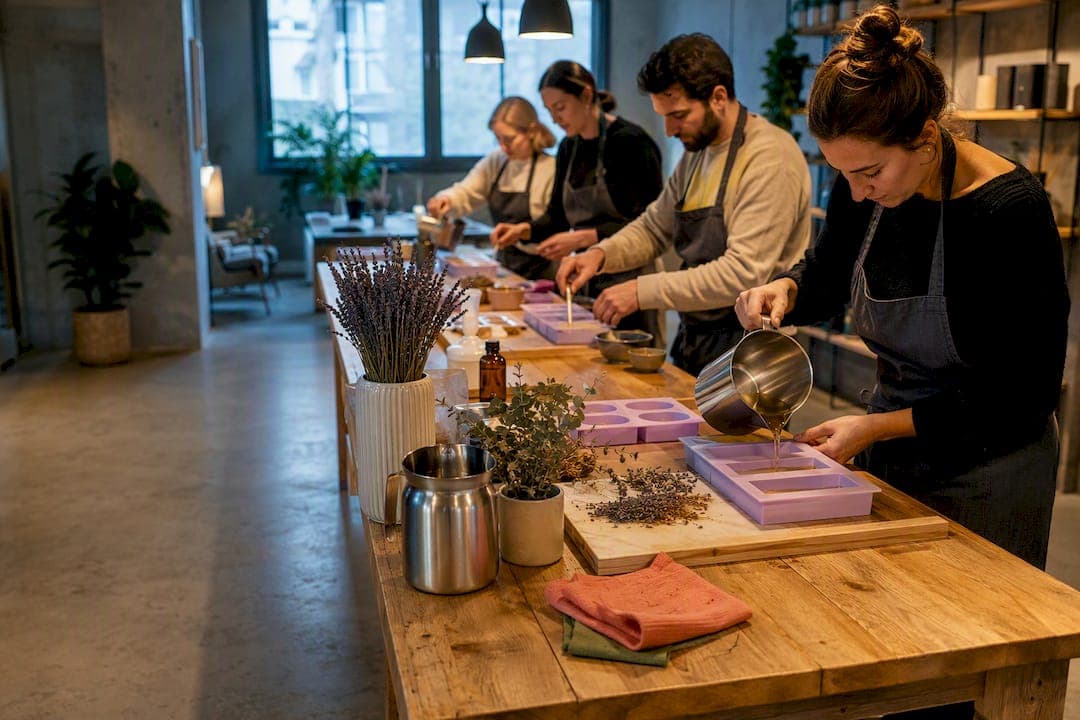
A seifen workshop for your Berlin team ranks among the lowest risk, highest payoff formats for corporate group bonding, and Tinaexperiences can arrange one with vetted local artisans. Most sessions run two to three hours with groups of minimum 6 to 8. If your team is stuck choosing between another escape room and something people will actually remember, request a quote and get a date on the calendar.
TL;DR:
- Melt and pour soap workshops are preferable for corporate groups because they require less hazard handling and allow participants to leave with a finished product the same day.
- Larger groups (up to 50 people) can be accommodated through parallel stations or rotating groups, with minimums typically starting from six to eight participants.
- Costs depend mainly on materials, instructor travel, venue hire, catering, and custom branding, with quotes requiring direct contact for specifics.
- Public sale of soap triggers EU cosmetic regulations, including safety assessments and labeling, but private team events for personal use do not require compliance.
- For bookings, provide your team size, date, preferred location, and catering needs, and expect a quote within one to two business days from Tinaexperiences.
Table of Contents
- What Happens in a Team Soap Making Workshop in Berlin
- Why Soap Making Actually Moves the Needle on Team Goals
- Planning a Team Soap Workshop: Group Size, Timing, and Cost
- Do German Cosmetics Rules Apply to Your Team Workshop?
- What TINA Sees After Dozens of These Sessions
- Ready To Book a Soap Workshop for Your Berlin Team
- Where To Verify the Details
- Sources
What Happens in a Team Soap Making Workshop in Berlin
A soap workshop splits into two production methods, and the one your artisan picks shapes the whole session. Cold process soap making involves working with lye, which means longer cure times (often weeks before the bars are usable) and an instructor who handles every hazardous step personally. Melt and pour, by contrast, uses a pre made soap base that participants melt, scent, color, and mold themselves, which cuts hazard almost to zero and lets everyone leave with a finished bar the same day. For corporate groups, melt and pour is usually the better call. It shortens setup and cleanup, and scales more easily when you've got 15 or 20 colleagues in a room rather than 6.
A typical agenda looks like this:
- Welcome and icebreaker (10 minutes): quick intros, artisan explains the day
- Safety briefing (10 to 15 minutes): what to touch, what not to touch, allergy check
- Live demo (15 minutes): the artisan walks through one full soap from melt to mold
- Hands on production (60 to 90 minutes): teams or pairs build their own bars, choosing scents, colors, and shapes
- Packaging and wrap up (15 to 20 minutes): labeling, boxing, group photo
Materials are supplied by the artisan and typically include a vegan, plant based soap base alongside natural essential oils, so dietary and allergy needs rarely become a problem if you flag them ahead of time. Every participant takes home a finished bar (or two), usually gift boxed. Venue formats vary too. Some artisans run sessions in their own studio, others bring the whole kit to your office, and mobile setups work well for teams that don't want to commute anywhere for an afternoon.
Why Soap Making Actually Moves the Needle on Team Goals
Nobody on your team has melted soap base before, and that's the entire point. Manual, tactile work strips away job titles fast. The moment your hands are covered in melted soap and you're arguing with the intern about whether lavender or eucalyptus smells better, hierarchy stops mattering. That's the same mechanic that makes pottery and tufting work at Tinaexperiences: everyone starts at zero, so nobody can lean on their usual authority.
The measurable outcomes planners actually report back to leadership: more cross team conversation than a dinner produces, a physical keepsake people keep on their desk for months, and a format that's genuinely inclusive for mixed ability groups (nobody's excluded for lacking a skill they'd have in an escape room or trivia night).
Scaling is straightforward. A 90 minute taster works for a quick afternoon offsite. A half day program with two rounds of soap making plus a shared lunch suits a bigger team retreat.
Pro Tip: Pair people who don't normally work together, not existing desk neighbors. The whole value of the format is forcing new conversations, and random pairing is what makes that happen.
Planning a Team Soap Workshop: Group Size, Timing, and Cost
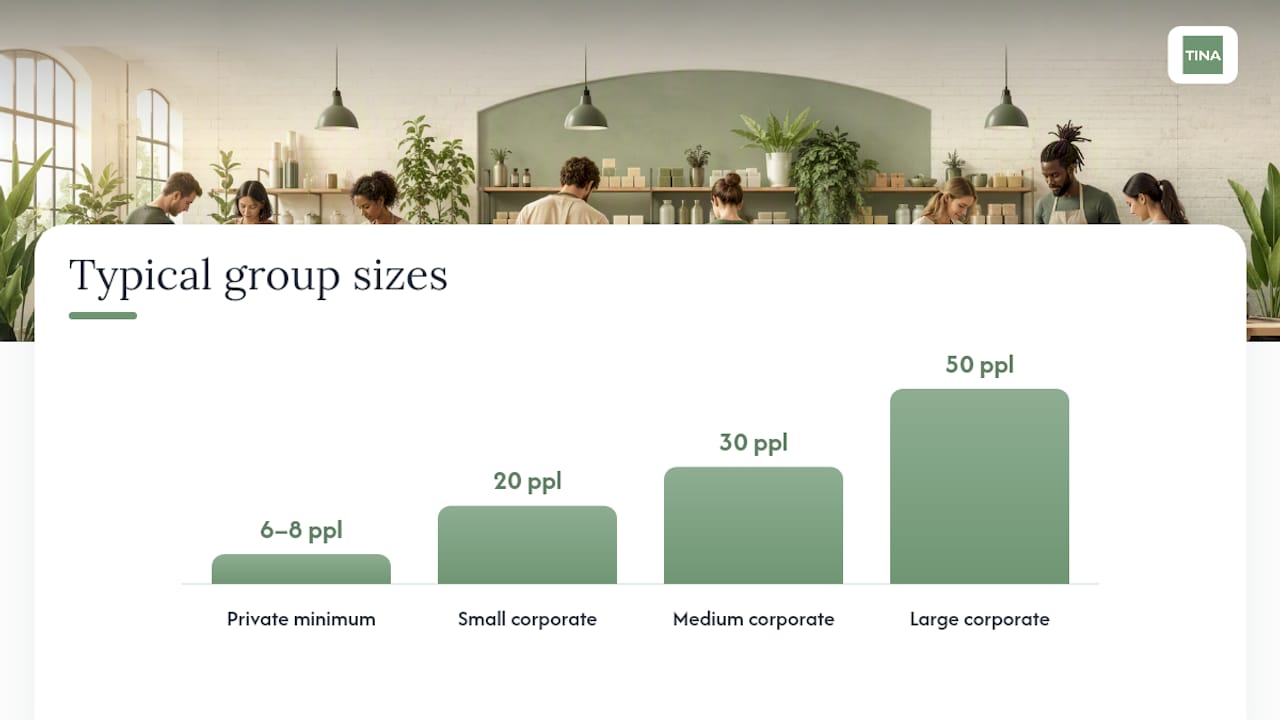
Berlin studios commonly set private booking minimums around 6 to 8 participants, with sessions running two to three hours for a standard program. Larger corporate groups (20, 30, even 50 people) are workable too, usually by running parallel stations with more than one artisan or splitting into rotating groups.
Here's what actually drives the price:
- Materials. Vegan soap bases, natural essential oils, and molds cost more per head than a basic melt and pour kit.
- Instructor travel. An in-office session usually costs more than an in-studio one because the artisan is hauling equipment across the city.
- Venue hire. If you don't have office space for it, studio rental gets added to the quote.
- Catering. Coffee and snacks, or a full lunch for half day programs, add up fast.
- Custom branding. Company logo stamps, custom scent names, or corporate gift packaging all push the price up slightly.
Nobody publishes a fixed public rate for corporate soap workshops because every one of these variables shifts the total, so the honest answer is to contact Tinaexperiences directly for a quote once you know your headcount and date.
Before you book, confirm the venue has running water, ventilation, and enough table space per pair. Book at least two to three weeks ahead for a private group, longer if you want a specific artisan or a branded package. Ask about the cancellation window up front, most Berlin artisans want 48 to 72 hours notice to avoid a fee.
Do German Cosmetics Rules Apply to Your Team Workshop?
Short answer: probably not, but it's worth understanding why. If your team makes soap purely for personal use, keeping every bar for themselves, you are in the clear. The Federal Institute for Risk Assessment (BfR) frames EU cosmetics oversight around products placed on the market, not private craft made during a one off event.
That changes the moment soap gets sold. Anything intended for sale in the EU falls under VO (EG) 1223/2009, which requires a safety assessment, a designated responsible person, a product information file, and notification to the Cosmetic Products Notification Portal. That's a real compliance lift, not something to take on for a single team event.
A few things worth flagging to whoever is organizing:
- If you're paying for a public workshop rather than a private one, the organizer running it commercially needs a Gewerbeanmeldung and should check with their local Bezirksamt about hygiene and facility requirements.
- Lye handling in cold process soap should always stay with the instructor. Confirm your artisan carries liability insurance and follows hygiene protocols before hazardous steps.
- If anyone plans to label ingredients for a gift or resale down the line, the CosIng database holds the official INCI naming conventions.
For a straightforward internal team afternoon, none of this becomes your problem. It only matters if soap leaves the building for sale.
What TINA Sees After Dozens of These Sessions
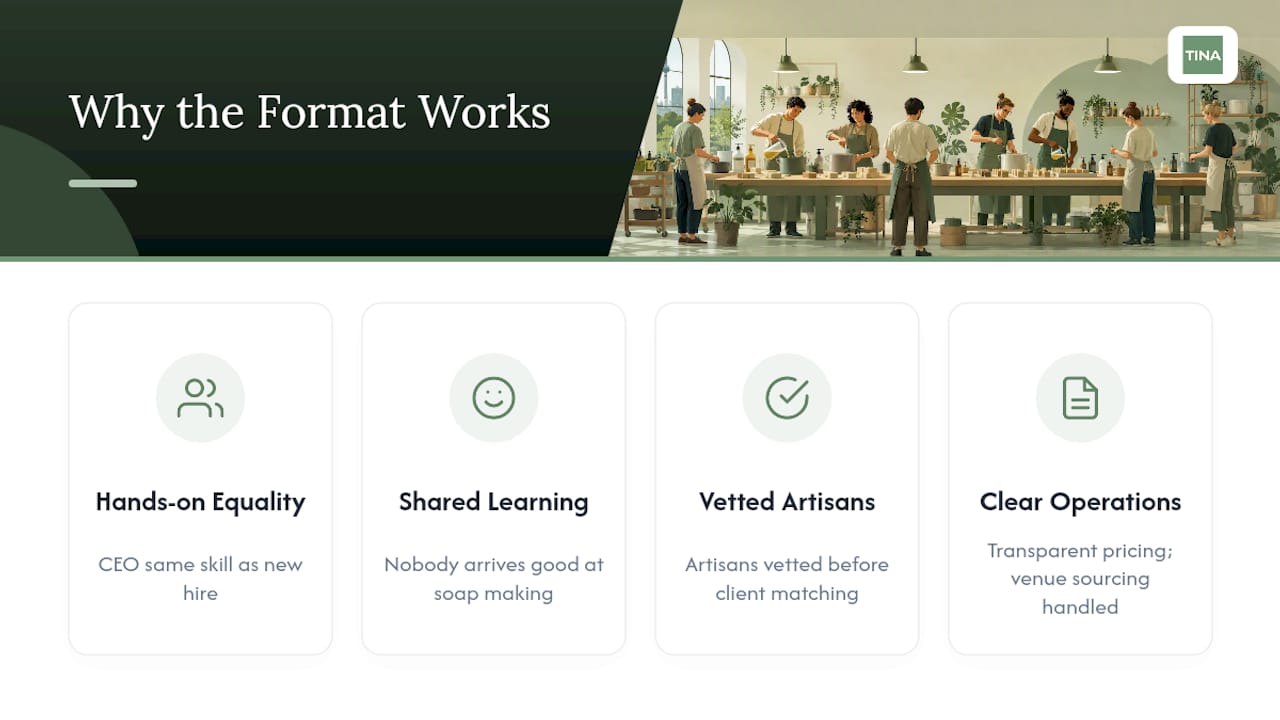
The two reasons this format works aren't complicated. Manual craft flattens hierarchy because a CEO holding a mold of melted soap base has exactly the same skill level as the newest hire on the team. And because nobody arrives good at soap making, there's no equal learning curve trap where one person dominates and everyone else disengages. That combination is why Tinaexperiences built its whole model around artisan led, hands on formats instead of generic entertainment.
Every artisan worked with gets vetted before they're matched with a client, pricing stays transparent from the first quote through invoicing, and venue sourcing is handled so planners aren't chasing down studio availability themselves. It's the same infrastructure behind the pottery and craft workshops that companies like N26 and Figma have booked, just applied to soap.
— Tina
Ready To Book a Soap Workshop for Your Berlin Team
Tinaexperiences replaces the usual scramble of emailing five studios and comparing spreadsheets with one direct line to a vetted Berlin artisan, transparent pricing, and a quote turned around fast instead of a week of back and forth.
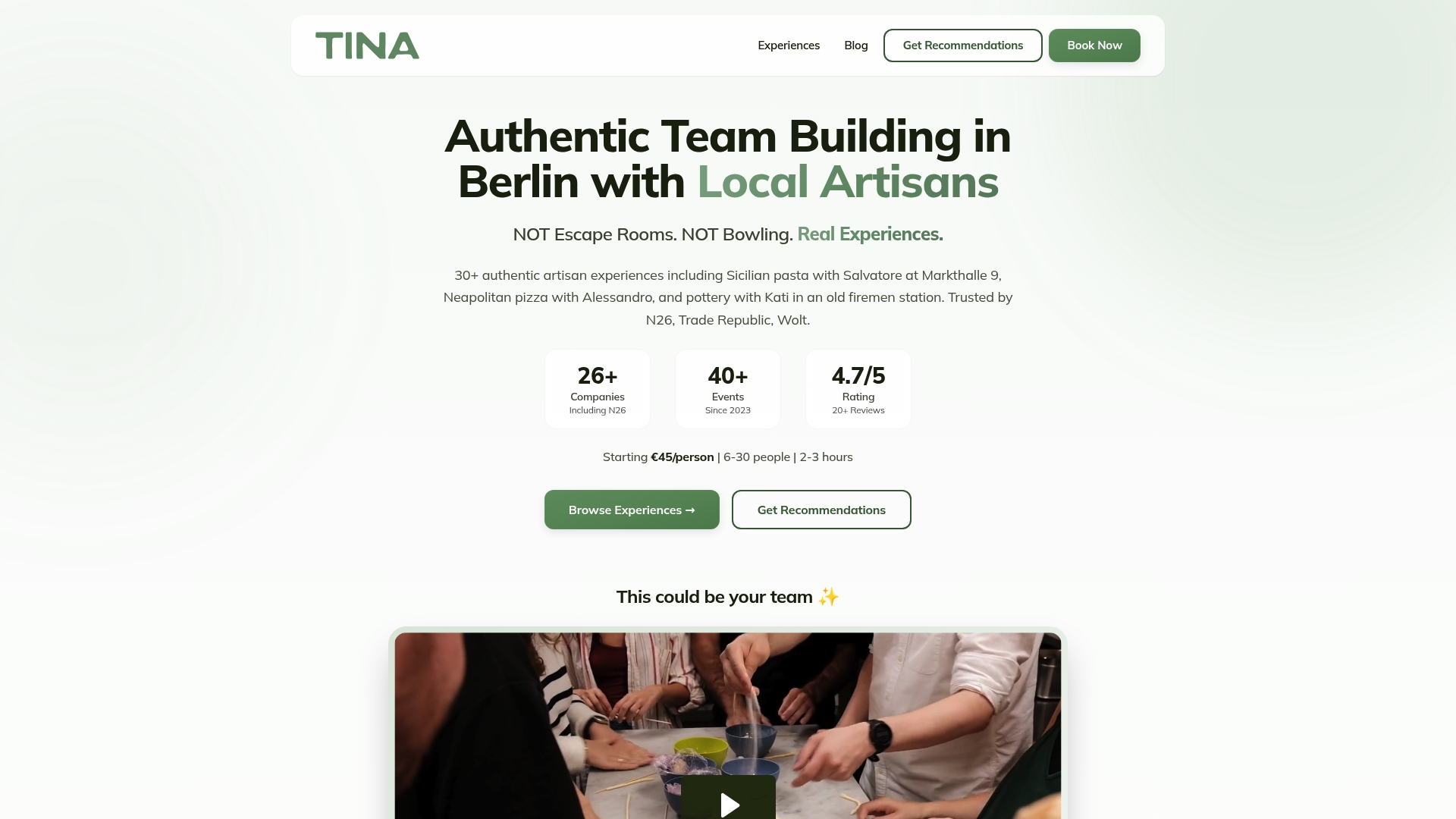
Send over your date, headcount, preferred duration, and whether you want the session in studio or at your office, plus any catering needs, and you'll typically hear back within one to two business days with a proposal. If your team is planning something bigger than a single afternoon, the offsite planning guide covers how to build a half day or full day program around a workshop like this. Otherwise, head straight to the team events page and get your soap workshop request moving today.
Where To Verify the Details
For regulatory questions beyond a single team event, check the BfR's cosmetics guidance, the Merkblatt on soap manufacturing, and the Existenzgruendungsportal's workshop guidance. To book, visit Tinaexperiences.
This article is general information, not a substitute for advice from a qualified lawyer. Consult a qualified legal professional about your own circumstances before acting on anything here.
Sources
- Federal Institute for Risk Assessment (BfR) — cosmetics guidance
- Merkblatt: legal requirements for soap manufacture and placing on the market
- Existenzgruendungsportal — workshops to make natural cosmetics: prerequisites
- Workshops in Berlin — seifenwaren (event listing and offerings)