

TL;DR:
- Effective quarterly meetings combine structured debriefs, role clarity exercises, and hands-on activities to boost team performance. Creative workshops and timely follow-up improve engagement by fostering trust and clarity, leading to measurable results. Consistent planning and environment optimization ensure team connection and ongoing progress.
Quarterly team meetings are most productive when they combine structured activities, role clarity, and real follow-through. The term "quarterly business review" often gets used interchangeably, but the most effective format goes beyond numbers on a slide. It builds the kind of team trust that makes those numbers move. Research confirms that teams with regular debriefs see measurable performance gains, and the activities you choose inside those meetings determine whether people leave energized or exhausted.

1. What are the best quarterly team meeting ideas for real engagement?
The best quarterly team meeting ideas replace passive presentations with active co-creation. Interactive formats like Lego problem modeling and the "stop, start, continue" exercise keep teams mentally present and prevent the glazed-eye effect that kills most corporate gatherings.
Here are the formats that consistently work:
- Lego problem modeling: Teams build a physical model of a current challenge. The act of building forces people to articulate problems in concrete terms.
- "Stop, start, continue": Each person shares one thing the team should stop doing, one to start, and one to keep. It surfaces real friction without blame.
- Silent brainstorming: Everyone writes ideas independently before sharing. This prevents the loudest voice from dominating.
- Cross-functional speed rounds: Pair people from different departments for 10-minute problem-solving sprints. Fresh perspectives produce better solutions.
- Hands-on workshops: Tactile activities like pottery or pasta-making shift the group dynamic entirely. More on this in section 5.
Pro Tip: Keep active workshop time to 60–90 minutes. Engagement drops sharply after that window, so front-load your highest-energy activities.
2. How role clarification exercises improve team effectiveness
Role clarification is one of the most underused tools in a quarterly meeting agenda. Goal setting and role clarity exercises improve collaboration more reliably than personality tests or icebreaker games.
The format is simple. Each team member takes five minutes to share:
- What they are responsible for this quarter
- Where they need support from others
- Where they feel unclear about ownership
This exercise surfaces overlaps, gaps, and silent frustrations that would otherwise fester for months. A project manager who thinks she owns client communication and a team lead who thinks he does will collide eventually. A role clarification round catches that before it becomes a problem.
Connect the exercise directly to your quarterly meeting agenda by mapping each person's role to a team goal. When people see how their work fits the bigger picture, they commit more fully. Teams that practice this format report fewer misunderstandings and faster decision-making across the quarter.
3. Why structured team debriefs drive measurable performance gains
Structured debriefs are the single highest-return activity you can add to a quarterly meeting. 51 controlled studies confirm that regular team debriefs produce a 20–25% improvement in team performance. That is not a soft metric. It shows up in output, speed, and quality.
The format comes from the US military's after action reviews, which have since spread across industries as a proven team-building technique. The structure is three questions:
- What did we set out to do?
- What actually happened?
- What do we do differently next time?
"The debrief works because it separates observation from judgment. Teams that practice it regularly build a habit of honest reflection without blame, which is the foundation of psychological safety."
Keep debriefs blameless. The goal is pattern recognition, not accountability theater. Assign a neutral facilitator if the team lead is also being reviewed. End every debrief with one concrete change the team commits to before the next quarter.
4. How to plan a team meeting that people actually attend
Planning is where most quarterly meetings fail before they start. Schedule 3–4 weeks in advance and share a clear agenda at least one week before the meeting. Vague invites produce low preparation and lower engagement.
A strong quarterly meeting agenda has four parts: a brief review of last quarter's commitments, a focused discussion on current priorities, a team activity or workshop, and a clear list of next steps. Each section needs a time limit. Overrunning signals disrespect for people's time and kills the energy you built in the first half.
Send action points within 48 hours of the meeting. Prompt follow-up is the difference between a meeting that changes behavior and one that people forget by Friday. Use a shared document, not a buried email thread. Assign each action point to one person with a deadline.
The environment matters more than most team leads expect. Natural light and flexible spaces measurably increase creativity and engagement. If your office has a windowless conference room, book somewhere else.
5. Creative workshop formats that break office hierarchy
Artisan workshops are the most underrated format in the corporate team-building toolkit. Tactile activities like pottery, cooking, and crafting create an egalitarian dynamic that no facilitated exercise can replicate. When everyone is equally bad at throwing clay on a wheel, the org chart disappears.
The intern and the VP are both beginners. Nobody has status. That shared vulnerability is where real connection happens, and it carries back into the office.
| Format | Engagement style | Approximate cost per person |
|---|---|---|
| Digital or interactive workshop | Cognitive, screen-based | €25–45 |
| Artisan creative workshop | Tactile, hands-on | €55–95 |
Well-structured creative workshops cost between €55 and €95 per person. That range delivers higher engagement than traditional gatherings at a fraction of the cost of generic corporate events. The ROI shows up in team cohesion, not just satisfaction scores.
Tinaexperiences connects Berlin-based teams with real artisans for workshop-based team events in pottery, pasta-making, tufting, pizza, and more. These sessions work because the learning curve is equal for everyone. Companies like N26, Figma, and Wolt have used this format to build genuine team bonds.
Pro Tip: Pair an artisan workshop with your role clarification exercise. Do the workshop first to lower social barriers, then move into the structured discussion. People speak more honestly after they have laughed together over a lopsided bowl.
6. Keeping the quarterly rhythm consistent
Teams that maintain a consistent quarterly rhythm report greater clarity, focus, and calm throughout the year. The meeting itself is not the point. The rhythm is. When people know a structured check-in is coming every 90 days, they track their work differently.
Quarterly meetings also work best when they include applied learning with real next steps, not just socializing or status updates. The activity you choose should connect directly to a team challenge or goal. A pottery session is not just fun. It is a deliberate choice to reset the group dynamic before a hard strategic conversation.
Check out team building activities that don't suck for more formats that combine genuine engagement with practical outcomes.
Key takeaways
The most effective quarterly team meetings combine structured debriefs, role clarity exercises, and hands-on activities to produce measurable gains in collaboration and performance.
| Point | Details |
|---|---|
| Debriefs drive performance | 51 studies link regular team debriefs to a 20–25% improvement in team output. |
| Role clarity reduces friction | Quarterly role-sharing exercises surface overlaps and gaps before they become conflicts. |
| Active formats beat passive ones | Interactive workshops like "stop, start, continue" prevent presentation fatigue. |
| Creative workshops break hierarchy | Tactile activities place everyone on an equal footing, regardless of seniority. |
| Follow-up within 48 hours | Sharing action points promptly is what turns meeting decisions into real change. |
What I have learned from watching teams meet every quarter
The meetings that stick are never the ones with the best slide decks. They are the ones where something unexpected happened. Someone laughed at themselves. Someone admitted they did not understand their own role. Someone made a terrible clay bowl and could not stop smiling about it.
I have seen teams spend three hours in a glass-walled conference room reviewing KPIs and leave more disconnected than when they arrived. I have also seen a team of 12 spend 90 minutes making pasta with a Berlin artisan and walk out with a shared language they used for the rest of the year.
The uncomfortable truth is that most quarterly meetings are designed for the presenter, not the team. The agenda protects the person at the front of the room. A good quarterly meeting is designed for the people in the chairs.
End on time. Every time. Ending meetings exactly on time signals that you respect the people in the room. Overrunning is the fastest way to guarantee low attendance next quarter.
Plan the environment as carefully as you plan the agenda. A room with natural light and space to move changes how people think. A basement conference room with fluorescent lights does not.
And build in a follow-up ritual. Not a follow-up email. A ritual. The same format, the same shared document, the same 48-hour window, every single time. That consistency is what makes the quarterly rhythm feel safe enough to be honest in.
— Tina
Your next quarterly meeting, made real
Quarterly meetings work best when the activity matches the goal. If your team needs to reconnect, a hands-on artisan workshop does more in 90 minutes than a full day of presentations.
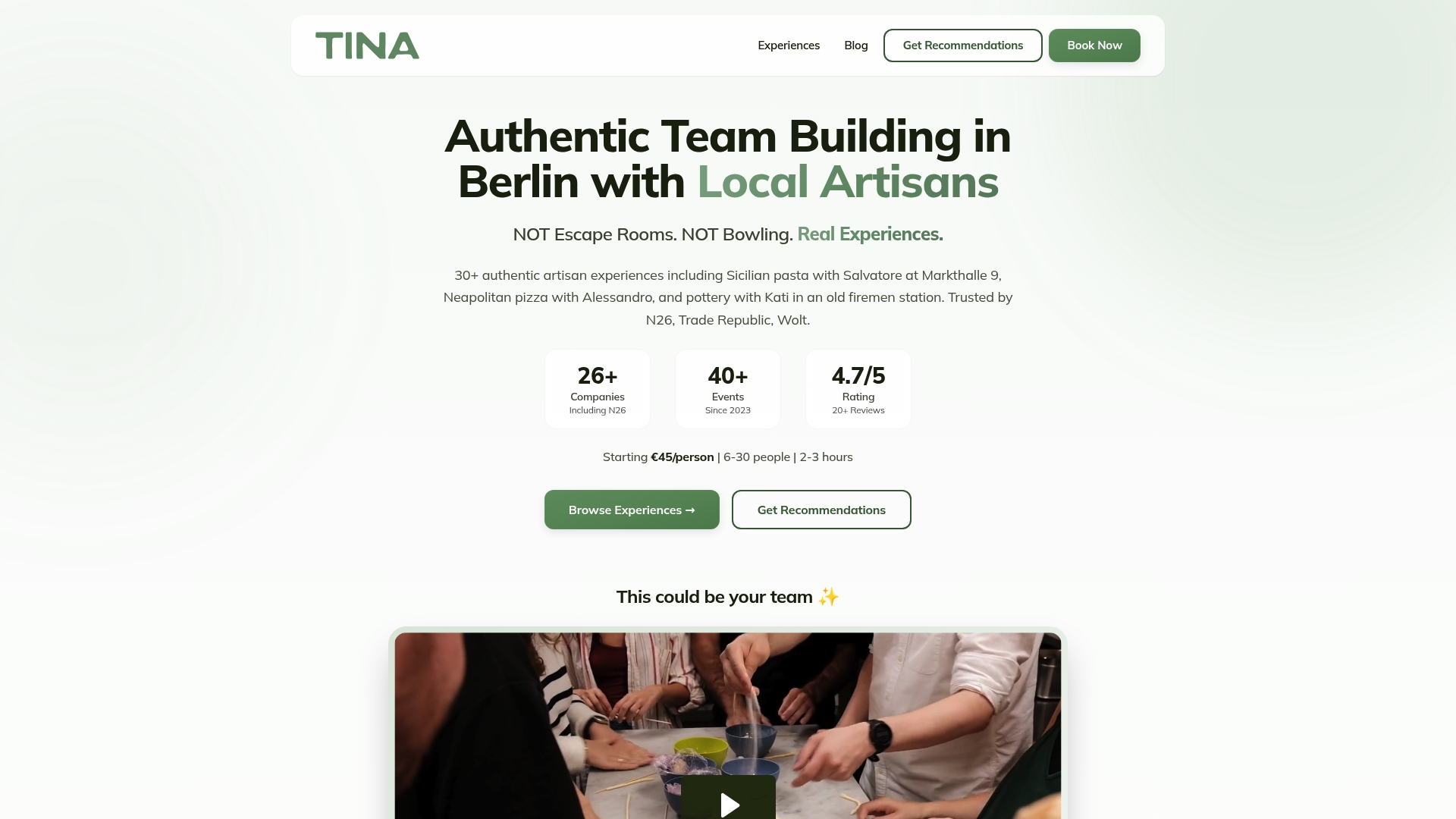
Tinaexperiences curates authentic team events in Berlin with real local artisans. Pottery, pasta-making, tufting, pizza, and more — all in genuine venues like Markthalle Neun and working ateliers. Every session is designed so that no one has an advantage on day one. That is the point. Browse artisan workshops for teams or plan a full team offsite in Berlin with Tinaexperiences. Transparent pricing, simple booking, and a story your team will actually tell.
FAQ
How long should a quarterly team meeting last?
The active workshop or activity portion works best at 60–90 minutes. A combined strategic meeting should not exceed 3–4 hours to maintain focus and energy.
What makes quarterly team meeting ideas effective?
Effective ideas include applied learning with clear next steps, not just socializing. Role clarification, structured debriefs, and hands-on activities consistently outperform passive presentations.
How far in advance should I plan a quarterly meeting?
Plan 3–4 weeks ahead and share the agenda at least one week before the meeting. Send action points within 48 hours after the session to keep decisions moving.
Are artisan workshops worth the cost for team meetings?
Creative artisan workshops cost approximately €55–95 per person and deliver higher engagement than traditional formats. The ROI comes from improved team cohesion and the egalitarian dynamic that tactile work creates.
What is the "stop, start, continue" format?
It is a structured team activity where each person shares one thing the team should stop doing, one to start, and one to keep. It surfaces real friction quickly and works well as part of a quarterly meeting agenda.