

TL;DR:
- Immersive team building places participants in real scenarios that foster genuine engagement, decision-making, and collaboration. It significantly enhances team dynamics and trust compared to traditional, surface-level activities like trivia or trust falls. Berlin offers diverse, culturally rich options such as artisan workshops and creative crafts that strengthen team bonds through authentic experiences.
Think team building means awkward icebreakers and trust falls that nobody asked for? You're not alone. Most corporate teams in Berlin have sat through at least one forgettable afternoon that left them feeling more disconnected than before. But there's a genuinely different approach gaining serious traction: immersive team building. It places people inside real experiences, real challenges, and real creativity, producing something that a catered lunch and a trivia game simply cannot. This article breaks down what immersive team building actually is, how it works, and how your Berlin team can put it into practice right now.
Table of Contents
- What is immersive team building?
- How does immersive team building work?
- Immersive team building vs. traditional methods
- Applying immersive team building: Examples for Berlin teams
- The uncomfortable truth: Why most team building falls flat (and how immersion changes this)
- Ready to transform your Berlin team's next event?
- Frequently asked questions
Key Takeaways
| Point | Details |
|---|---|
| True immersion matters | Immersive team building creates authentic engagement and deeper collaboration by simulating real-world challenges. |
| Various methods work | Both technology-driven and hands-on cultural activities can foster immersive experiences for teams. |
| Outperforms tradition | Empirical studies show greater team dynamics and engagement versus standard team-building formats. |
| Tailor to your team | Choose activities that reflect your team’s culture and context for best results. |
| Debrief drives impact | Post-activity reflection ensures immersive experiences boost real workplace performance. |
What is immersive team building?
Immersive team building is not a buzzword. It's a specific approach rooted in experiential learning, one where participants are placed in rich, realistic scenarios that require genuine engagement, decision-making, and collaboration to succeed.
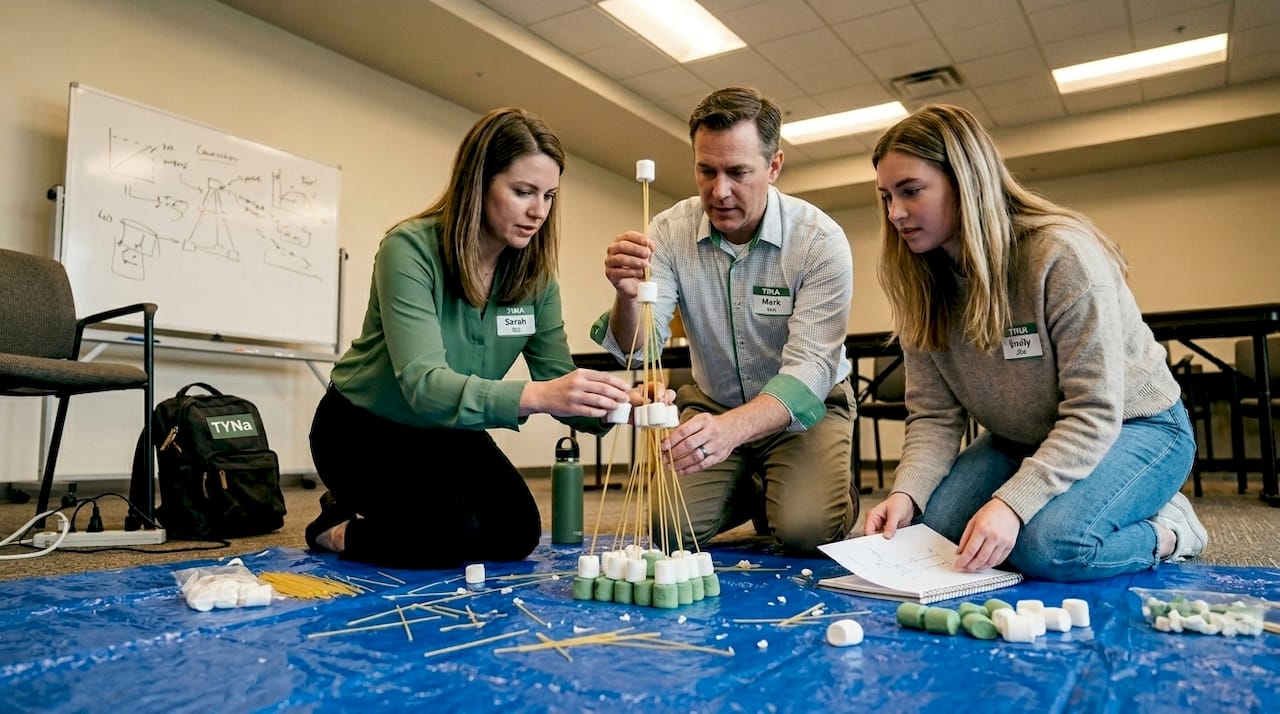
Immersive learning in corporate training is broadly understood as placing learners inside contexts that mirror real-world demands, rather than just talking about them in a meeting room. Applied to team building, this means your team isn't watching a slideshow about communication. They're throwing clay on a wheel together, kneading dough side by side, or navigating a problem-solving scenario where every person's input genuinely matters.
Contrast this with traditional team building. Classic formats tend to focus on surface-level interaction:
- 🎲 Trivia games that reward who knows the most random facts
- 🤝 Trust falls that feel forced and fade from memory within a week
- 🏆 Generic competitions that reward individual performance, not collective creativity
- 📋 Workshop lectures that feel suspiciously like a work meeting
Immersive team building flips this entirely. Its defining characteristics include:
- Experiential learning: People learn by doing, not by listening
- Context-rich settings: Activities mirror real challenges or culturally meaningful situations
- Problem-based design: Teams face actual obstacles they must resolve together
- Hands-on participation: Everyone is equally involved, from the intern to the team lead
- Authentic storytelling: Activities often connect to real craft, culture, or community
Before you plan your next event, a solid Berlin team-building checklist helps ensure you cover all the right bases. And if you want a deeper look at the foundations, exploring corporate team bonding principles will sharpen your thinking before you commit to a format.
"The best team-building experiences don't feel like work at all. They feel like moments worth remembering."
Pro Tip: Always align your immersive activity with something real your team faces, whether that's cross-functional communication, creative problem-solving, or building trust across seniority levels. The closer the activity maps to actual work dynamics, the stronger the transfer of learning back to the office.
How does immersive team building work?
With a solid definition in place, let's explore exactly how immersive team building works in practice.
Immersive team building places participants in realistic contexts where they must make decisions and collaborate under genuine conditions. There are three main approaches teams use today:
| Approach | Format | Best for |
|---|---|---|
| VR/tech-driven | Virtual reality simulations | Remote or hybrid teams, tech companies |
| Hands-on arts and culture | Pottery, cooking, crafts with local artisans | In-person connection, creativity, inclusion |
| Scenario-based simulations | Role play, crisis management exercises | Leadership development, strategic thinking |
Research backs this up. VR team simulations show that immersive virtual settings can improve perceived team dynamics and engagement compared to non-VR conditions. That's meaningful data, especially for hybrid teams who don't always share the same physical space.
But here's the thing. VR is just one tool. Some of the most powerful immersive experiences require no headset at all. A group of colleagues making pasta from scratch with a real Italian chef in a Berlin atelier is just as immersive, and arguably more emotionally resonant.
A typical immersive activity follows this kind of flow:
- Set the context. Participants understand the scenario, the goal, and why it matters.
- Enter the experience. Everyone gets hands-on. There's no passenger seat.
- Navigate real challenges. Problems arise naturally that require communication and teamwork to solve.
- Debrief and reflect. The group discusses what happened, what they learned, and what surprised them.
- Connect to real work. Facilitators draw direct links between the experience and everyday team dynamics.
Exploring hands-on team events gives you a strong feel for what this looks like in practice. And if you want to understand the structural benefits, workshop-based team events offer a useful breakdown of outcomes by format.
Pro Tip: The debrief is where the real magic happens. Don't skip it. A 20-minute guided reflection after the activity is what separates a fun afternoon from an experience that actually changes how your team works together.
Immersive team building vs. traditional methods
To deepen that understanding, let's see how immersive team building stacks up against traditional formats.
| Category | Traditional team building | Immersive team building |
|---|---|---|
| Engagement level | Passive, often low | Active, consistently high |
| Skill transfer to work | Weak, abstract | Strong, context-relevant |
| Collaboration quality | Surface-level | Deep, authentic |
| Memory retention | Fades quickly | Lasting, emotionally anchored |
| Inclusion across seniority | Reinforces hierarchy | Levels the playing field |
| ROI for HR teams | Hard to measure | Clearer behavioral change |
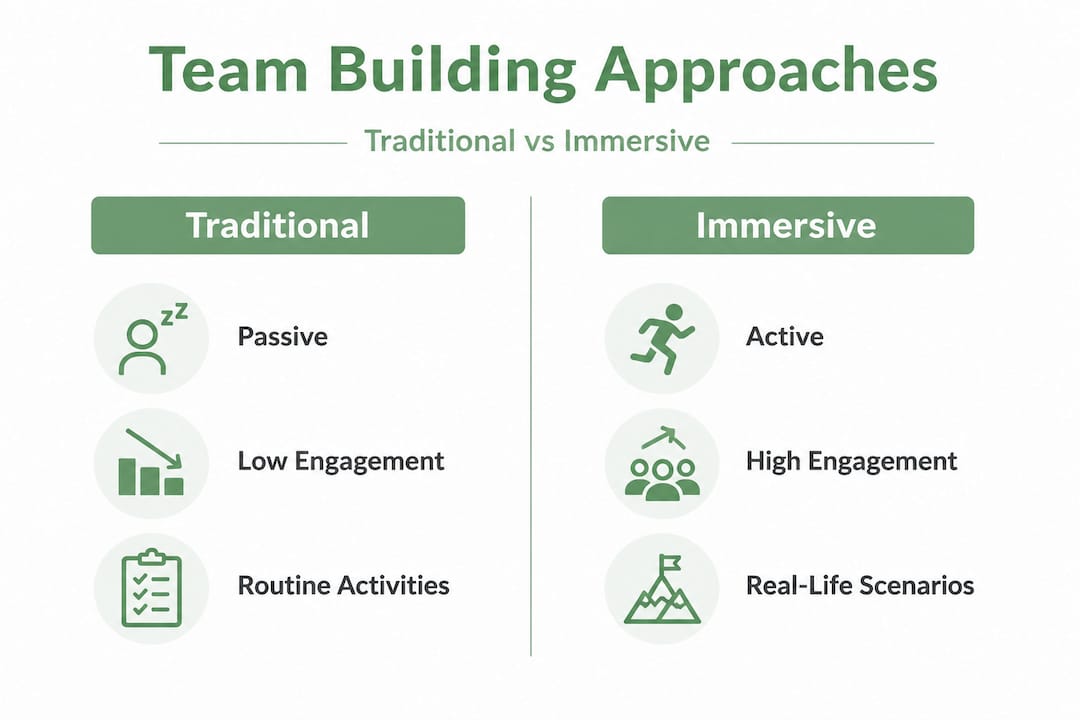
The numbers support this picture. VR-based immersive team building consistently reports higher perceived engagement and improved team dynamics compared to traditional in-person formats. But the principle extends well beyond VR into any experience that puts people in an equal, active, and genuinely challenging situation.
The real difference? Traditional team building happens to people. Immersive team building happens with them.
When everyone in the room is equally unsure how to shape a piece of clay or roll a perfect croissant, hierarchy disappears. The team lead is just as lost as the newest hire. That shared vulnerability is where authentic bonds actually form, and it connects directly to why memorable team events produce lasting collaboration shifts. You can also browse authentic team-building activities to see what "authentic" actually looks like when it's done well.
Applying immersive team building: Examples for Berlin teams
Ready to make it real? Let's explore how immersive team building comes to life for Berlin teams.
Berlin is a uniquely rich city for immersive experiences. Its culture, craft scene, and diverse food traditions make it a fantastic backdrop for team events that go well beyond the usual. Immersive team building works best when it reflects the cultural environment your team actually lives in, and Berlin delivers on that in spades.
Here are five approaches that work especially well for Berlin-based corporate teams:
- 🍝 Artisan food workshops: Pasta making, pizza crafting, or chocolate workshops led by real local artisans. Food drives genuine team bonding in ways that generic activities simply cannot.
- 🏺 Pottery and ceramics: Everyone starts at zero. Nobody knows how to center clay on a wheel. That shared beginner status is incredibly equalizing and genuinely fun.
- 🎨 Creative craft workshops: Sustainable merchandise creation, weaving, or printing with local makers. Explore artisanal workshops to see what's possible across different crafts.
- 🥂 Immersive cultural tastings: Wine, beer, or local food heritage sessions that combine sensory experience with storytelling and group discussion.
- 💡 Problem-solving simulations: Scenario-based challenges tied to real business contexts, where teams must navigate fictional crises or design challenges together.
To integrate these into your existing event planning, creative workshops for teamwork offers a practical framework for matching activity types to your team's specific needs.
Pro Tip: Choose activities that resonate with your team's identity. A tech-forward team might love a VR challenge. A design team might thrive in a ceramics studio. The best immersive experience is one where people can see themselves in it before they even arrive.
The uncomfortable truth: Why most team building falls flat (and how immersion changes this)
Stepping back, why does immersion work where so many other approaches struggle? Here's a candid perspective.
Most corporate team building fails not because of bad intentions, but because it's designed for optics rather than outcomes. It's the event you organize so you can say you did something. A box ticked. A quarterly calendar entry.
The deeper issue is that surface-level activities don't create psychological safety. And without psychological safety, people don't actually open up, take creative risks, or reveal the parts of themselves that make real collaboration possible. You can't build trust through a trivia game if people are still performing their professional persona the whole time.
Immersion breaks that performance. When your hands are covered in dough or spinning a lump of clay that refuses to cooperate, the professional mask comes off naturally. People laugh. They ask for help. They support each other. Those moments are not manufactured. They're real, and that's exactly why they stick.
The hard-won lesson we've seen play out repeatedly is this: novelty alone isn't enough. An escape room is novel. A paintball day is novel. But novelty without genuine participation, without everyone being equally invested and equally vulnerable, doesn't produce lasting change. Experiential team building insights dig into why this distinction matters so much for teams that want more than a fun afternoon.
The best HR teams in Berlin are shifting their thinking. They're not asking "What can we book?" They're asking "What experience will make our people feel genuinely connected?" That's the right question. And the answer almost always involves real craft, real culture, and real people doing something together they've never done before.
Ready to transform your Berlin team's next event?
Immersive team building isn't a trend. It's a smarter, more human way to help your team connect, create, and collaborate. Berlin gives you an incredible set of options to make that happen, from ceramics and pasta to creative cultural workshops led by genuine local artisans.
At TINA, we've curated a full range of hands-on, authentic experiences designed specifically for corporate teams in Berlin. Whether you want to explore creative workshops for teams, book something specific like a team ceramic sculpting workshop, or just want help figuring out what fits your group best, we're here for it. Get personalized team event recommendations and find the experience your team will actually talk about on Monday morning.
Frequently asked questions
How is immersive team building different from traditional team-building activities?
Immersive team building uses realistic scenarios and active participation, producing higher engagement and stronger collaboration than conventional icebreakers or games. VR settings alone show measurably better team dynamics than standard in-person formats.
What are some examples of immersive team-building activities for Berlin teams?
Examples include hands-on creative workshops, VR-based simulations, local food tastings, and artisan-led crafting events. Immersive activities work best when they reflect the cultural environment your team actually inhabits.
Does immersive team building improve real workplace performance?
Yes. Immersive learning places people in realistic contexts that closely mirror actual job demands, which means skills and behaviors practiced during the activity transfer more directly back to daily work.
Is technology required for immersive team building?
Not at all. While VR adds clear value in specific contexts, some of the most powerful immersive experiences use nothing more than flour, a pottery wheel, or a set of craft tools and a skilled local artisan to guide the way.
Recommended
- Top team building tips for Berlin leaders: boost culture & collaboration
- The ultimate team-building checklist for Berlin teams
- How to create memorable team events that build real collaboration
- Collaborative workshops: the key to team bonding in Berlin
- Why Try Surf Retreats? Community, Growth & Real Benefits