

TL;DR:
- High-performing teams that focus on skill development learn more from failures and recover faster than average teams. Skill-based activities foster psychological safety, deepen trust, and improve collaboration beyond superficial interactions. Consistent, purposefully designed team-building yields measurable ROI and lasting behavioral change, especially when paired with structural clarity.
Most people assume team-building is just a fun break from real work. It isn't. High-performing teams that use skill development learn from failures without fault-finding at more than double the rate of average teams (50% vs. 21%) and bounce back from setbacks at more than twice the rate (58% vs. 25%). That gap isn't accidental. It's the direct result of how those teams practice working together. This article walks you through the psychology behind that gap, the real numbers that justify the investment, and the practical steps you can take right now in Berlin.
Table of Contents
- Why skill-based activities matter for collaboration
- Quantifying the benefits: ROI and outcomes
- Structural design vs. skill training: What really moves the needle
- Edge cases and successful implementation in Berlin
- The uncomfortable truth: Skill-based activities without purpose fall flat
- Ready to transform your team with authentic skill-based experiences?
- Frequently asked questions
Key Takeaways
| Point | Details |
|---|---|
| Psychological safety matters | Skill-based activities drive trust, communication, and team resilience. |
| ROI is measurable | Top teams achieve dramatic gains in productivity, turnover, and profitability with skill-building. |
| Structure and skills must align | Effective outcomes depend on balancing structural design with coordination training. |
| Cultural context enhances impact | Purposeful, culturally-aligned experiences (like Berlin artisan workshops) foster lasting change. |
| Debrief and regularity are essential | Follow up every activity with structured reflection and repeat regularly for sustained gains. |
Why skill-based activities matter for collaboration
Effective collaboration doesn't happen just because people sit near each other. It happens when people feel safe enough to speak up, try something new, and fail without fear. That's what researchers call psychological safety, the shared belief that the team won't punish risk-taking or honest mistakes.
Google's Project Aristotle found that psychological safety was the single most important factor in team effectiveness. Skill-based activities like problem-solving games, creative challenges, and hands-on crafts consistently strengthen it. Why? Because when everyone struggles equally at something unfamiliar, the usual social hierarchy softens. The intern and the team lead are both terrible at shaping clay on a pottery wheel. That shared vulnerability builds real trust.
Here's what hands-on workshops for collaboration specifically address that typical corporate events miss:
- Communication breakdowns caused by rigid hierarchy and fear of judgment
- Low trust between people who only interact in transactional work contexts
- Siloed thinking that prevents creative problem-solving across departments
- Disengagement from colleagues who feel like strangers despite sharing office space
- Lack of shared experience to reference when working through future conflicts
These are real operational problems. And team events that boost collaboration designed around skill-building give teams a genuine shared reference point, something to laugh about, learn from, and build on.
"Psychological safety is the number one predictor of team effectiveness. It's not talent, it's not process, it's whether people feel safe to contribute." — Google Project Aristotle
Quantifying the benefits: ROI and outcomes
Understanding the psychology is one thing. Justifying the budget to leadership is another. Let's look at the numbers.
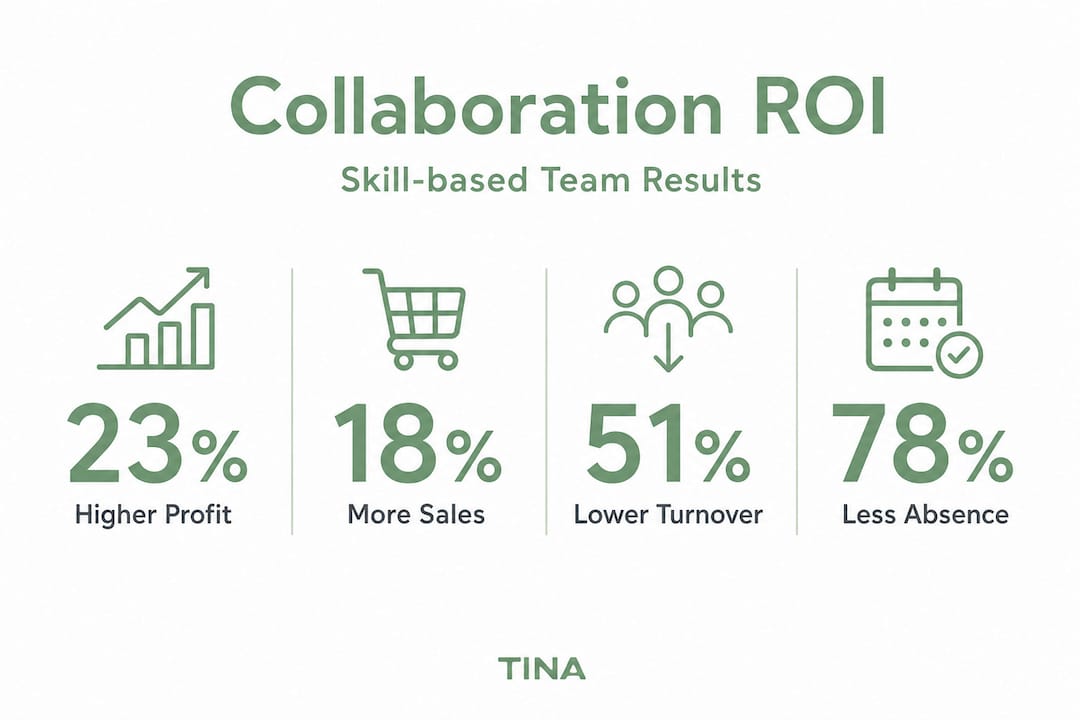
Top-quartile teams achieve 23% higher profitability, 18% higher sales productivity, 51% lower turnover, and 78% less absenteeism compared to bottom-quartile teams. Documented team-building programs regularly deliver ROI between 4:1 and 7.5:1 when activities are purposeful and spaced over time. That's not a soft benefit. That's a business case.
Here's a quick comparison of what you actually get:
| Outcome | Skill-based team development | One-off social events |
|---|---|---|
| Psychological safety | High, built through shared challenge | Low, surface-level interaction |
| Trust between peers | Deep, earned through vulnerability | Temporary, fades quickly |
| Performance impact | Measurable, linked to real metrics | Hard to track or attribute |
| Long-term retention | Improved by stronger team culture | Minimal lasting effect |
| Engagement levels | Sustained through practice | Spikes briefly, then drops |
The benefits of workshop-based events are clearest when you track them intentionally. Here's how to do that:
- Set a baseline before the activity. Use a short team survey on trust, communication comfort, and willingness to take risks.
- Define 2 to 3 measurable outcomes tied to your current team challenge. Think: faster decision-making, reduced escalations, fewer miscommunications.
- Debrief immediately after the activity while it's fresh. Ask people what they noticed about how they worked together.
- Check back in 30 and 60 days. Run the same survey. Compare scores. Track whether those 2 to 3 outcomes improved.
- Report to leadership using the before and after data alongside productivity or retention figures.
This isn't complicated. It's just intentional. And intentional team-building is what separates real results from a pleasant afternoon that doesn't move the needle.
Structural design vs. skill training: What really moves the needle
Here's something that surprises a lot of HR managers: skill training alone doesn't always work. If your team's structure is broken, no amount of creative workshops will fix it.
Recent research shows that team structure vs. training produce different effect sizes. Good structural design scores between d=0.20 and d=0.45, while coordination training scores between d=0.60 and d=0.65 but only when structural basics are already in place. Structure is the foundation. Skill-building is what you layer on top.
| Intervention | Effect size (d) | Best used when |
|---|---|---|
| Structural redesign | 0.20 to 0.45 | Roles, processes, or accountability are unclear |
| Coordination training | 0.60 to 0.65 | Structure is solid, team needs practice working together |
| Both combined | Highest | Starting a new team or post-restructuring |
When should you fix structure before booking skill activities? Watch for these signals:
- People don't know who owns which decisions
- Recurring conflicts about roles and responsibilities
- New hires struggle to understand how work flows through the team
- Leadership changes left accountability gaps
Pro Tip: Before booking a skill-based workshop, ask your team two questions anonymously: "Do you know who to go to when you're stuck?" and "Do you feel your work role is clear?" If more than 30% of responses are uncertain, start with a clarity session before the creative activity. Then use building real collaboration activities as the reinforcing layer.
For Berlin teams navigating fast growth or post-restructuring, creative workshops for teamwork work exceptionally well once the structural house is in order. Think of it this way: you wouldn't practice advanced coordination training best practices without making sure everyone understands the playbook first.
Edge cases and successful implementation in Berlin
Real teams don't live in ideal conditions. You'll hit obstacles. Here's how to handle the most common ones.
Common edge cases that teams face, according to team-building best practices:
- Remote or hybrid teams where not everyone can attend in person
- Time constraints that force activities into too-short windows to have real impact
- Inclusivity gaps where activities favor certain physical abilities, languages, or cultural backgrounds
- Low buy-in from skeptical employees who see team-building as a waste of time
- No follow-through after a great event, so the energy dies within a week
For remote or hybrid situations, look into remote engagement ideas that still build real connection. Virtual craft kits sent to team members' homes, for example, recreate the shared experience even across time zones.
Pro Tip: The single highest-impact thing you can do after any team activity is run a structured 20-minute debrief. Ask three questions: What did you notice about how we worked together? What would you do differently next time? How does that apply to a real project we're running right now? This is the moment where the activity becomes authentic group activities that change actual behavior, not just create a fun memory.
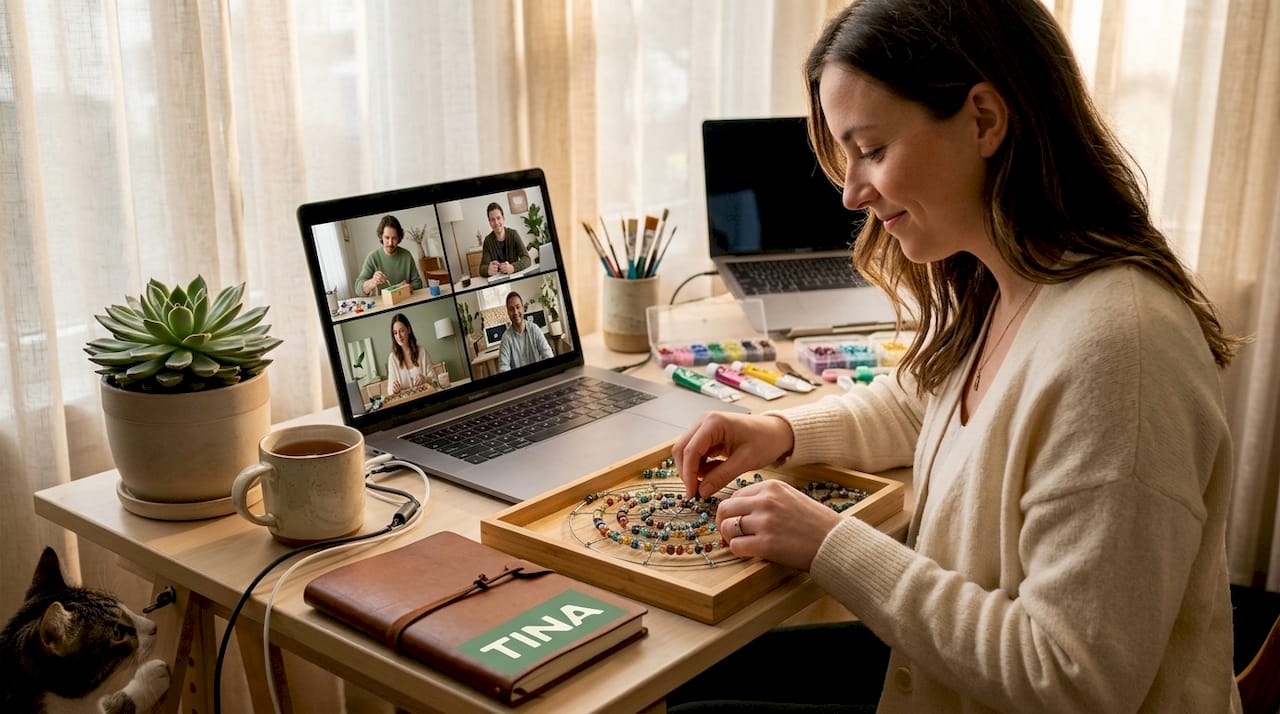
Berlin has a remarkable advantage here. The city's culture of craft, creativity, and local artisanship means you have access to genuinely hands-on, culturally rich experiences that most cities simply can't offer. Artisan workshops in Berlin like pasta making, pottery, chocolate crafting, and sustainable merchandise creation put every team member on equal footing instantly. Nobody has a head start. That's the point. And you can bring all of this to your team events in Berlin with local experts who know how to facilitate real connection, not just fill a calendar slot.
The uncomfortable truth: Skill-based activities without purpose fall flat
Here's something we've seen repeatedly. A team has a brilliant workshop. Everyone laughs, bonds, makes something with their hands. Then Monday comes, and nothing changes. The report still gets siloed. The meeting still runs over. The collaboration problem is still there.
One-off events, however well-designed, rarely create lasting behavior change on their own. Empirical benchmarks confirm that the strongest ROI (4:1 to 7.5:1) comes from programs that are spaced, repeated, and tied to psychological safety over time. Not from a single afternoon.
This is Berlin's real advantage. The city is full of artisans who return again and again to practice and refine their craft. That's the mindset your team development deserves too. A pottery session followed by a debrief. A pasta workshop followed by a team challenge tied to a real project. Then another session three months later. Progress. Iteration. Growth.
The purposeful team activities that deliver lasting results are the ones where the experience is designed around your team's actual friction points, not around what's cheapest to book or easiest to schedule. Cultural appreciation, genuine craft, and real shared vulnerability are not extras. They are the mechanism.
Ready to transform your team with authentic skill-based experiences?
You now have the framework. Psychological safety, clear structure, purposeful skill-building, and consistent practice. The next step is finding the right experiences to bring it to life.
TINA connects Berlin corporate teams with local artisans for hands-on workshops that actually work. From pottery to chocolate crafting, every artisan team-building experience is designed to level the playing field and create real bonds. Want to plan something bigger? Plan a team offsite with a curated mix of activities. Or kick things off with a custom merchandise workshop your team will talk about for months. Booking is simple, pricing is transparent, and every experience is led by a real artisan. Not an actor. Not a facilitator with a script. The real thing.
Frequently asked questions
What is a skill-based team-building activity?
A skill-based team-building activity is a hands-on experience designed to build collaboration by developing practical abilities such as problem-solving, creativity, or communication. According to Project Aristotle, these activities directly enhance psychological safety within teams.
How do skill-based activities improve team performance?
They create psychological safety, help teams learn from mistakes, and improve real metrics like productivity, turnover, and profitability. High-performing teams learn from failure without blame at 50% vs. 21%, while top-quartile teams show 23% higher profitability and 51% lower turnover.
What are best practices for implementing skill-based activities?
Use purposeful design, debrief afterward, ensure inclusivity, and schedule activities regularly rather than relying on one-off events. Best practices emphasize connecting activity behaviors directly to real workplace scenarios.
Can remote or hybrid teams benefit from skill-based activities?
Yes, remote-adapted activities and virtual debriefs support inclusivity and maintain engagement across distributed teams. Structured methodologies confirm that remote adaptation is a solvable challenge with the right design.
What is the typical ROI of skill-based team-building programs?
Documented programs deliver ROI between 4:1 and 7.5:1, especially when activities are spaced over time and grounded in psychological safety rather than isolated single-day events.