
TL;DR:
- Clear goals, cultural relevance, and structured activities are key to memorable Berlin team events.
- Engaging, immersive experiences like workshops and scavenger hunts foster genuine connection and creativity.
- Regular evaluation and feedback help ensure events create lasting positive impact on team dynamics.
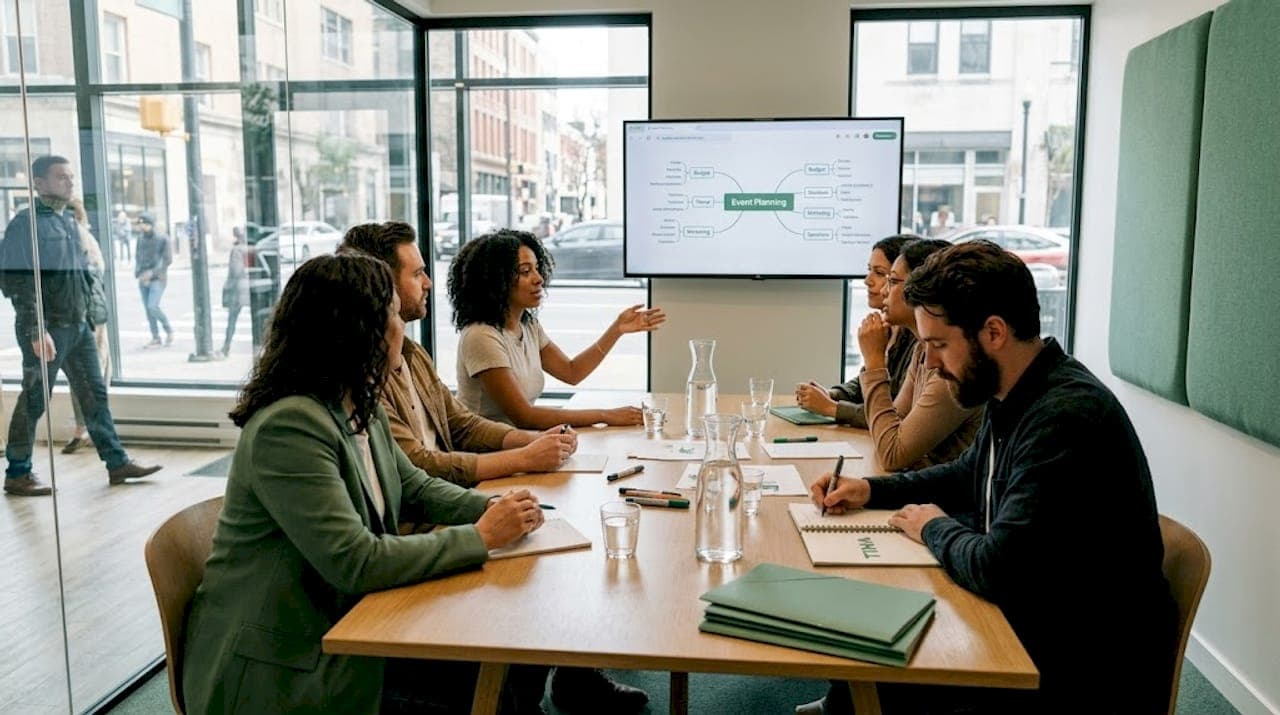
Most Berlin teams hold events regularly, yet walk away feeling like nothing really changed. The usual suspects: a group dinner, an escape room, or a generic workshop that everyone forgets by Monday morning. This guide gives you a proven, step-by-step approach to planning team experiences that actually spark connection, inspire creativity, and build the kind of culture where people genuinely want to show up. Whether you're an HR manager, a team lead, or an event planner, you'll find actionable tools and ideas that go far beyond the typical playbook.
Table of Contents
- Understand your team's goals and needs
- Plan immersive and culturally relevant activities
- Structure your event for real collaboration and growth
- Evaluate impact and gather feedback
- Why memorable team events in Berlin require more than just fun
- Bring your vision to life with authentic Berlin team experiences
- Frequently asked questions
Key Takeaways
| Point | Details |
|---|---|
| Goals shape success | Start with clear objectives tailored to your team’s needs. |
| Culture amplifies impact | Leveraging Berlin’s culture creates deeper, more memorable experiences. |
| Structure drives results | A well-paced, skill-building agenda leads to greater trust and collaboration. |
| Feedback fuels growth | Gather and apply feedback to refine every future team event. |
Understand your team's goals and needs
Before jumping into logistics, it's essential to pinpoint why you're hosting the event and what your specific outcomes are. A team event without a clear purpose is just a party with a budget.
Start by aligning your leadership on the core objective. Are you trying to rebuild trust after a rough quarter? Spark creative energy before a big product launch? Or simply help newer employees feel like they belong? The answer shapes everything else, from venue choice to activity type.
Here's a quick checklist of questions to work through before you plan anything:
- 🎯 What is the primary goal? Bonding, creativity, trust, or alignment?
- 👥 Who is attending? Mix of seniority levels, departments, or remote staff?
- 🌍 What cultural backgrounds are represented? Berlin teams are often diverse and international.
- 💬 What are people actually struggling with right now? Communication gaps, silos, low morale?
- 📅 What does success look like one month after the event?
Plan offsites by asking 5 key questions about goals, logistics, and team dynamics, especially for leadership teams navigating post-hybrid shifts where rebuilding alignment is the top priority.
Pro Tip: Send a short anonymous survey to your team before you plan anything. You'll be surprised what surfaces. People often have specific needs or interests they'd never mention in a meeting. This also signals that their voice matters, which itself builds trust.
"The best team events don't happen by accident. They start with honest conversations about where the team actually is, not where leadership hopes it to be."
Exploring team building Berlin options early in your planning process helps you match real team needs to real experiences, rather than defaulting to whatever's easiest to book.
Plan immersive and culturally relevant activities
Once goals are clear, choosing truly unique Berlin-based activities ensures your event is both relevant and meaningful.
Berlin is unlike any other city in Europe. It carries layers of history, radical creativity, and a genuine spirit of reinvention. That context is powerful when you bring a team into it. A scavenger hunt through Mitte isn't just fun; it's a shared adventure through one of the world's most storied urban landscapes. A pasta-making workshop at a local atelier isn't just cooking; it's two hours where the intern and the VP are equally terrible at rolling dough, and that levels the playing field in the best possible way.
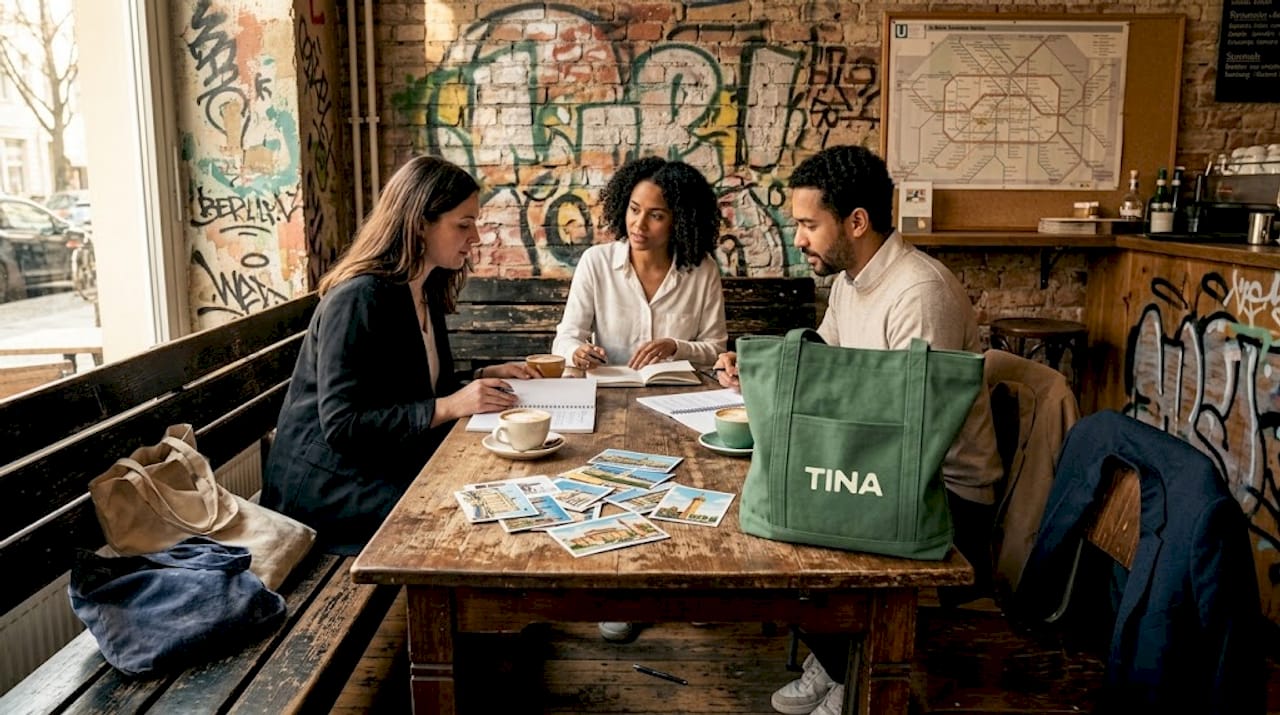
In-person events generate 15 to 20% more ideas than virtual sessions, according to Stanford research, which means the case for getting your Berlin team into a room together, or better yet into an atelier or a historic venue, is backed by real data.
Here are some activity types that work especially well in Berlin:
- 🏺 Craft workshops: Pottery, chocolate making, and pasta making put everyone on equal footing. No one is an expert, and that's exactly the point.
- 🗺️ Cultural scavenger hunts: Teams navigate Berlin's neighborhoods, solving challenges tied to local history and landmarks.
- 🍕 Culinary workshops: Pizza or pasta making at a real kitchen creates a relaxed environment where conversations flow naturally.
- 🎨 Creative arts sessions: Weaving, ceramics, or sustainable merchandise creation give teams something tangible to take home.
For blending history and culture with modern innovation, Berlin's landmark venues offer a backdrop that no conference room can match. Experiential team building that taps into this city's energy consistently outperforms generic activity options.
| Activity type | Best team size | Primary objective | Cultural depth |
|---|---|---|---|
| Craft workshop | 8 to 40 | Bonding, creativity | High |
| Culinary session | 10 to 50 | Icebreaking, fun | Medium |
| Scavenger hunt | 15 to 60 | Collaboration, agility | High |
| Offsite + creative | 6 to 20 | Strategy, alignment | Medium |
Pro Tip: If part of your team is remote or based internationally, design a hybrid version of your event. Stream key moments, send activity kits in advance, and create digital breakout groups. This keeps everyone included and amplifies the overall impact.
Structure your event for real collaboration and growth
With a standout activity chosen, the next challenge is to structure it for the greatest impact.
Even the most engaging activity can fall flat if the pacing is off or people don't know what they're supposed to get out of it. Structure is what turns a fun afternoon into a genuine turning point for your team.
High-performing teams show connected teaming, with 72% of members reporting mutual respect compared to just 31% in average teams. They also demonstrate emotional intelligence, with 65% reporting high trust versus 28% elsewhere, and they are 2.5 times more adaptable. Events designed around these skills, not just entertainment, create measurable change.
Here's a simple structure that works for most team events:
- Open with intention (15 min): Briefly share the event's purpose. Don't be vague. Tell people why they're here and what you hope they'll take away.
- Warm-up or icebreaker (20 min): Something low-stakes and playful that gets people moving and talking. Avoid anything that puts people on the spot.
- Core activity (90 to 120 min): The heart of the event. This is where the real bonding happens. Immersive, hands-on, and ideally guided by a real expert.
- Group debrief (20 min): Ask two or three open questions: What surprised you? What would you do differently? What does this remind you of at work?
- Social close (30 min): Food, drinks, and unstructured time. This is often when the most genuine conversations happen.
Structured interventions like Collaboration Planning 2.0 show that 91% of participants find structured teambuilding frameworks valuable, with significant increases in both clarity and confidence among participants.
| Time block | Activity | Intended outcome |
|---|---|---|
| 0 to 15 min | Welcome and intentions | Shared purpose |
| 15 to 35 min | Icebreaker | Comfort and openness |
| 35 to 135 min | Core workshop | Bonding, skill building |
| 135 to 155 min | Group debrief | Reflection and insight |
| 155 to 185 min | Social close | Natural connection |
A ceramic sculpting workshop is a great example of an activity that naturally builds these stages into its own flow. Everyone's focused, the pressure is low, and the creative challenge opens up real conversation.
Pro Tip: Brief your facilitator thoroughly before the event. Share your team's specific goals, any known tensions, and what success looks like. A skilled facilitator adjusts in real time when they know what they're working toward.
Evaluate impact and gather feedback
To ensure your event creates lasting value, it's important to track what worked and what didn't.
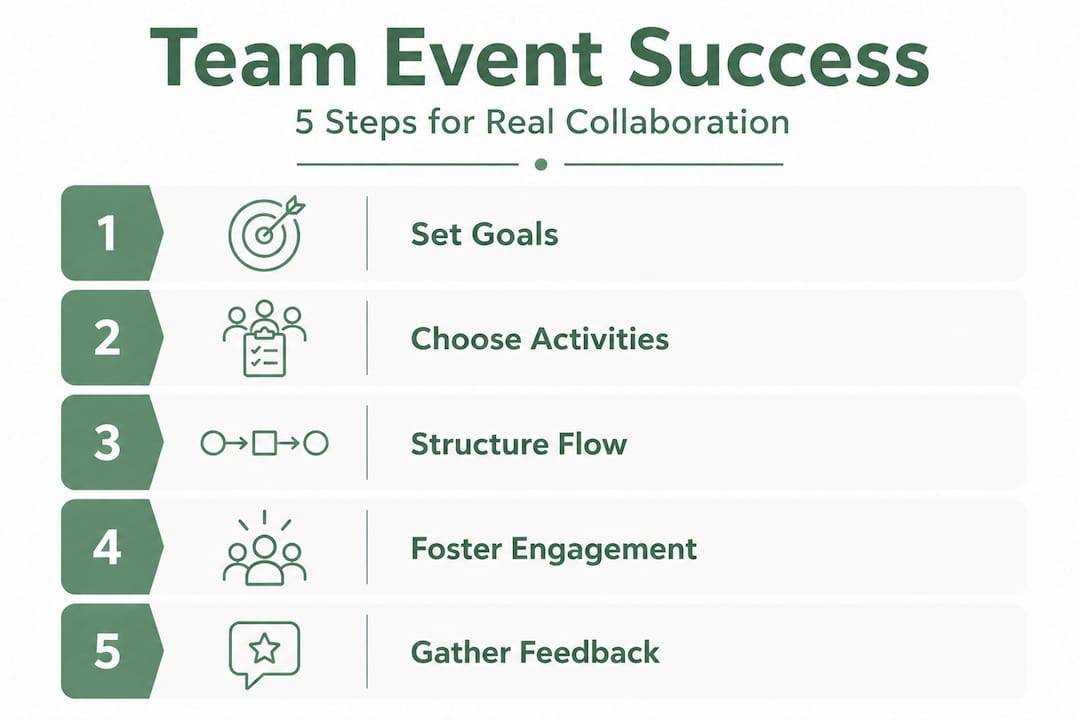
Measuring a team event isn't about counting smiles. It's about looking for real changes in how people interact, communicate, and collaborate in the weeks that follow.
Here's how to gather meaningful feedback:
- Send a short post-event survey within 48 hours. Ask about energy, connection, and specific takeaways. Keep it to five questions maximum.
- Run a peer debrief one week later. Have team members share one thing they're doing differently as a result of the event.
- Gather leadership input two to four weeks out. Has communication improved? Are cross-team collaborations happening more naturally?
- Track KPIs tied to your original goals: idea generation, participation in optional meetings, retention signals, or engagement scores.
Signs your event actually worked:
- ✅ People reference it in later conversations
- ✅ New informal connections formed between colleagues who rarely interacted
- ✅ Willingness to sign up for the next event increases
- ✅ Team lead notices smoother collaboration in everyday work
- ✅ Post-event survey scores show stronger trust and energy
High performers are 2.5 times quicker to change direction and three times more empowered to reshape their roles. Events that build these traits show up in day-to-day team behavior, not just post-event surveys.
Looking at artisanal workshops for feedback patterns shows that hands-on creative experiences consistently generate stronger qualitative feedback than passive or purely social events.
Pro Tip: Build a review cycle into your event planning calendar. Treat team experiences as a recurring culture investment, not a one-off checkbox. Schedule your next event during the debrief of the current one. Momentum matters.
Why memorable team events in Berlin require more than just fun
Here's what most event planning guides won't tell you: fun alone doesn't build culture. It just fills an afternoon.
The events that teams talk about months later share something specific. They created a moment of shared vulnerability or shared discovery. In Berlin, you have a city that practically teaches this lesson on every corner. The city was divided, rebuilt, and reinvented. Its culture rewards creativity and authenticity. When you bring your team into that environment through leveraging Berlin's historic venues or working with real local artisans, you're not just doing something different. You're tapping into a deeper story.
The most impactful team events blend three things: clear structure, genuine cultural context, and a shared challenge. Remove any one of those, and you're left with either a planning exercise, a tourism trip, or just another party. Together, they create something people actually carry with them back to work.
Bring your vision to life with authentic Berlin team experiences
If you want expert help taking your vision from plan to reality, Berlin-based platforms simplify the process.
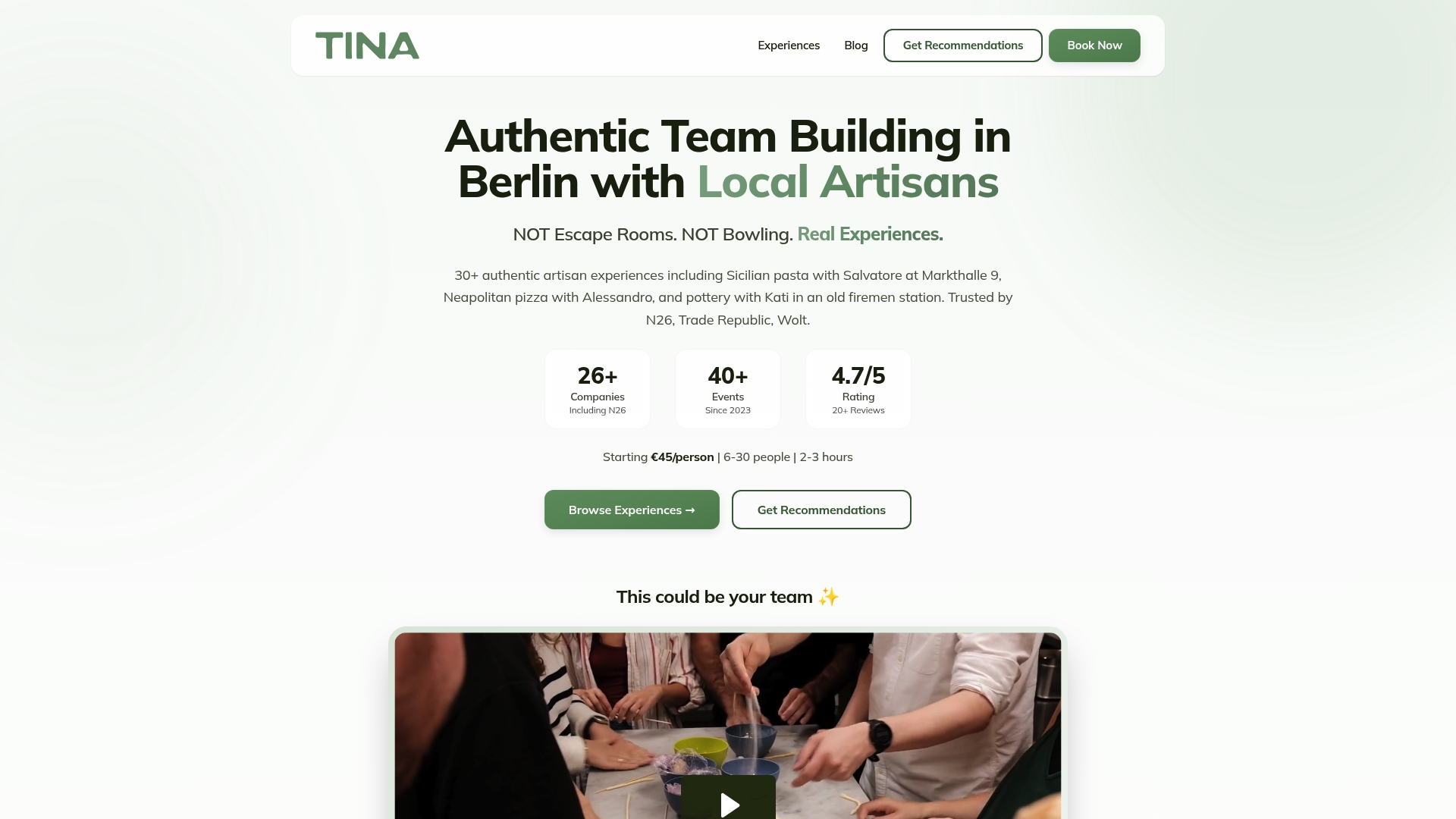
TINA connects Berlin teams with real local artisans for hands-on workshops that actually mean something. From pottery and pasta making to chocolate crafting and sustainable merchandise, every experience is designed to level the playing field, spark genuine conversation, and send your team home with something they made together. You can plan your offsite or browse creative workshops for teams directly on the platform. Booking is simple, pricing is transparent, and the artisans are the real deal.
Frequently asked questions
What makes a team event truly memorable?
Events stick when they create genuine human connection through shared challenge and cultural meaning. High-performing teams report 72% mutual respect and 65% trust, both of which are exactly what immersive, well-structured events are built to foster.
How far in advance should I plan a Berlin team event?
For best results, start planning 6 to 8 weeks in advance to secure top venues and tailor activities to your team's specific needs and size.
How can I include remote employees in an in-person Berlin event?
Hybrid formats with digital collaboration tools let remote staff join key activities and share the experience in real time. In-person events generate significantly more ideas than virtual ones, so even partial in-person participation is worth designing for.
What are some cost-effective ideas for team events in Berlin?
Local parks, historic neighborhoods, and hands-on artisan workshops offer high-impact experiences at a fraction of the cost of large corporate events, without sacrificing authenticity or connection.