
TL;DR:
- Planning a successful Berlin team offsite requires selecting authentic venues and engaging artisan activities that foster genuine connection. These experiences, from pottery to graffiti workshops, break down hierarchies and create lasting memories through hands-on participation. Working with a single local coordinator and defining clear goals ensures a smooth and memorable retreat focused on meaningful team bonding.
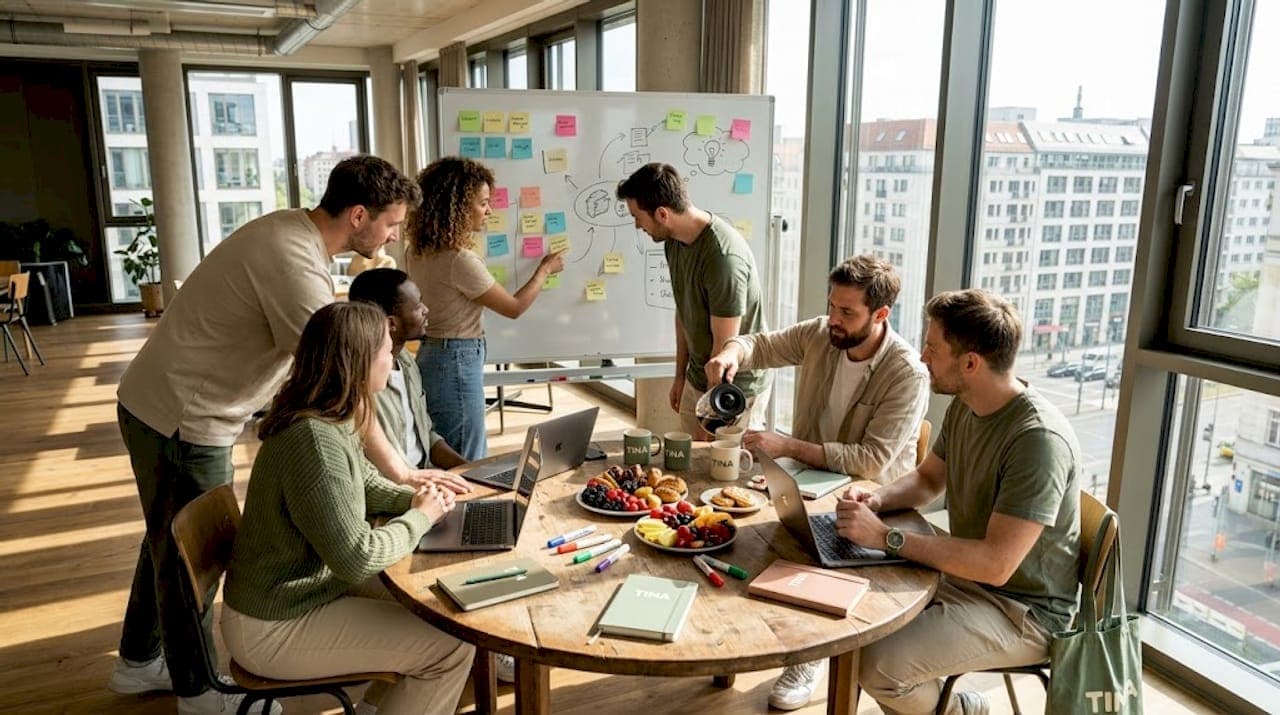
Planning a company offsite Berlin teams actually look forward to takes more than booking a seminar room and ordering lunch platters. Most offsites feel the same: a projector, a flip chart, and activities that everyone forgets by Monday. Berlin is a city built on creativity, craft, and counterculture. So why are so many corporate retreats here still playing it safe? This guide breaks down the real options, from artisan workshops and cultural experiences to practical planning steps, so your next Berlin team retreat becomes something people genuinely talk about.
Table of Contents
- Key takeaways
- Company offsite Berlin: choosing the right venue
- Artisan-led activities that actually bond teams
- Artisan offsites vs. traditional formats
- How to plan your Berlin offsite step by step
- My honest take on what actually works
- Plan your next offsite with Tinaexperiences
- FAQ
Key takeaways
| Point | Details |
|---|---|
| Venues vary widely | Berlin offers seminar rooms, creative ateliers, private estates, and lakeside settings outside the city. |
| Artisan activities level hierarchies | Hands-on crafts like pottery and tufting create equal learning curves that remove social barriers between teammates. |
| Authenticity beats flash | Berlin teams consistently prefer real, substance-driven experiences over polished but generic event packages. |
| Planning starts with your goal | Define what your team actually needs, alignment, bonding, or creativity, before choosing a venue or activity. |
| One coordinator saves everything | Working with a single local provider reduces planning complexity and keeps timing coherent across the event. |
Company offsite Berlin: choosing the right venue
Berlin gives you real variety. The choice is not just about square footage. It is about what kind of thinking and connecting you want your team to do.
Seminar and conference spaces are the most straightforward option. Central Berlin seminar rooms offer modular configurations for groups of 10 to 60 people, with hourly rates starting around 71€ for smaller rooms and up to 151€ for larger setups. Locations near Ostbahnhof combine a calm atmosphere with strong transport links, making them practical for strategy days or product launches.
Creative ateliers and workshop spaces are where Berlin truly shines for offsites. These are working studios run by real artisans, not corporate event dressing. They feel alive. Your team shows up somewhere that already has texture and story.
Private estates and castles work well for multi-day retreats where confidentiality matters. Corporate groups favor private estates for the sense of ownership they create, with uninterrupted sessions and shared meals that become part of the experience rather than just fuel stops.
Outside the city, offsite locations near Berlin offer lake access and forest surroundings reachable within 45 minutes. These environments genuinely shift how teams think and relate to each other. If you want more nature-focused retreat options, TRIBYOU specializes in community and nature settings ideal for multi-day team retreats outside Berlin's urban core.
| Venue type | Best for | Typical capacity | Price range |
|---|---|---|---|
| Seminar room (central Berlin) | Strategy days, workshops | 10 to 60 people | From 71€/hour |
| Creative atelier | Artisan activities, bonding | 8 to 30 people | Varies by artisan |
| Private estate | Multi-day, confidential retreats | 10 to 50+ people | Daily rate |
| Lakeside location (near Berlin) | Multi-day creative retreats | 10 to 40 people | Daily rate |
Pro Tip: Book your venue and activity in the same location whenever possible. Splitting the group between venues mid-day kills momentum and adds logistical friction you do not need.
Artisan-led activities that actually bond teams
This is where a Berlin team retreat can go from fine to genuinely memorable. The city has a thriving artisan culture, and the best team building activities in Berlin connect your team directly to that culture through hands-on work.
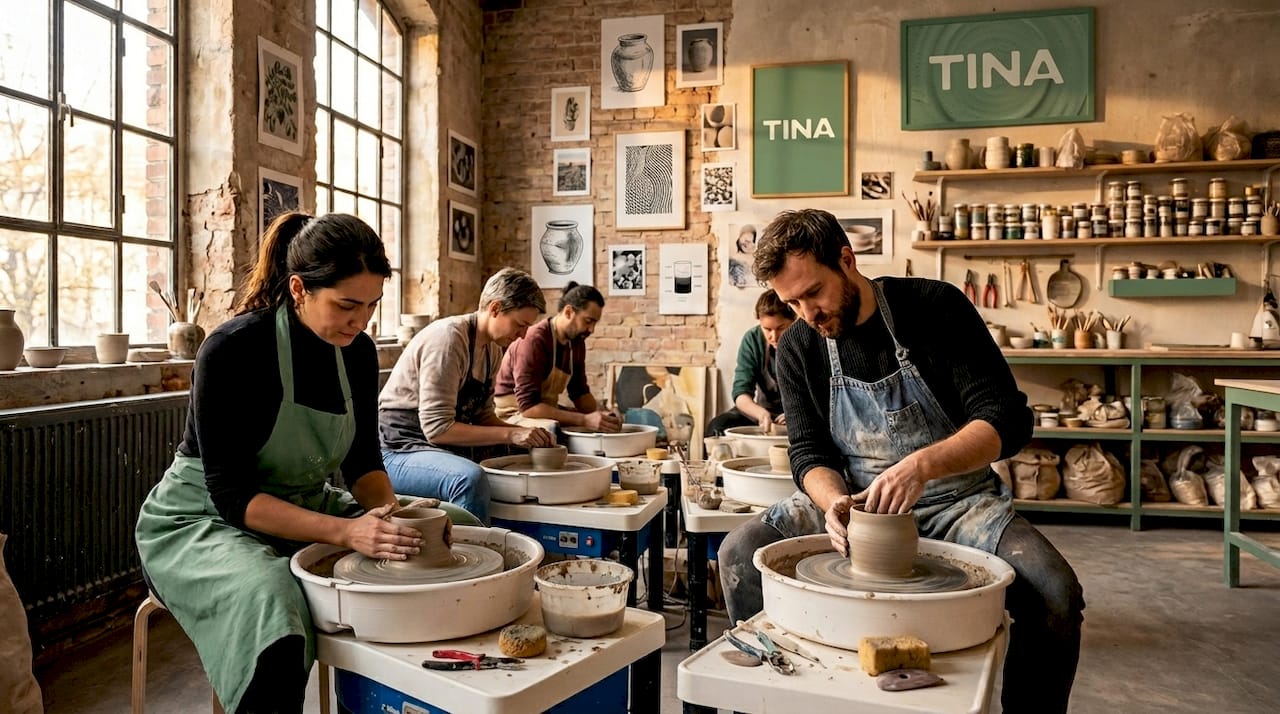
Here is what makes artisan experiences different from standard team activities. Pottery, tufting, and craft workshops create an equal learning curve where everyone is a beginner. The CEO cannot leverage seniority when they are trying to center clay on a wheel for the first time. The intern is not at a disadvantage. Both of them are equally, slightly frustrated, laughing at the same moment. That shared experience is what breaks down hierarchical barriers and opens up real conversation.
Popular artisan activities for a corporate retreat Berlin include:
- 🏺 Pottery workshops with local ceramic artists, where your team makes something real they can take home
- 🧶 Tufting sessions that result in a rug or wall piece your office can actually display
- 🍝 Pasta-making classes led by Italian artisans in Berlin, combining food, craft, and conversation
- 🎨 Graffiti workshops on the Berlin Wall, offering authentic cultural engagement ranging from 2-hour sessions to half-day programs
- 💛 CSR activities like charity cooking or community projects that connect teams to local values and generate genuine team alignment
The key insight here: nobody performs in an artisan workshop. There is no way to look impressive when you are learning to hand-pull tagliatelle. That absence of performance is exactly what lets people connect. Immersive activities like these foster the kind of real collaboration that a ropes course or an escape room cannot replicate.
Pro Tip: Choose activities where the output is physical and tangible. When your team leaves with something they made together, the memory of the experience lasts far longer.
Artisan offsites vs. traditional formats
Not every offsite needs to be a workshop. But it is worth being honest about what conventional formats deliver versus what artisan experiences produce.
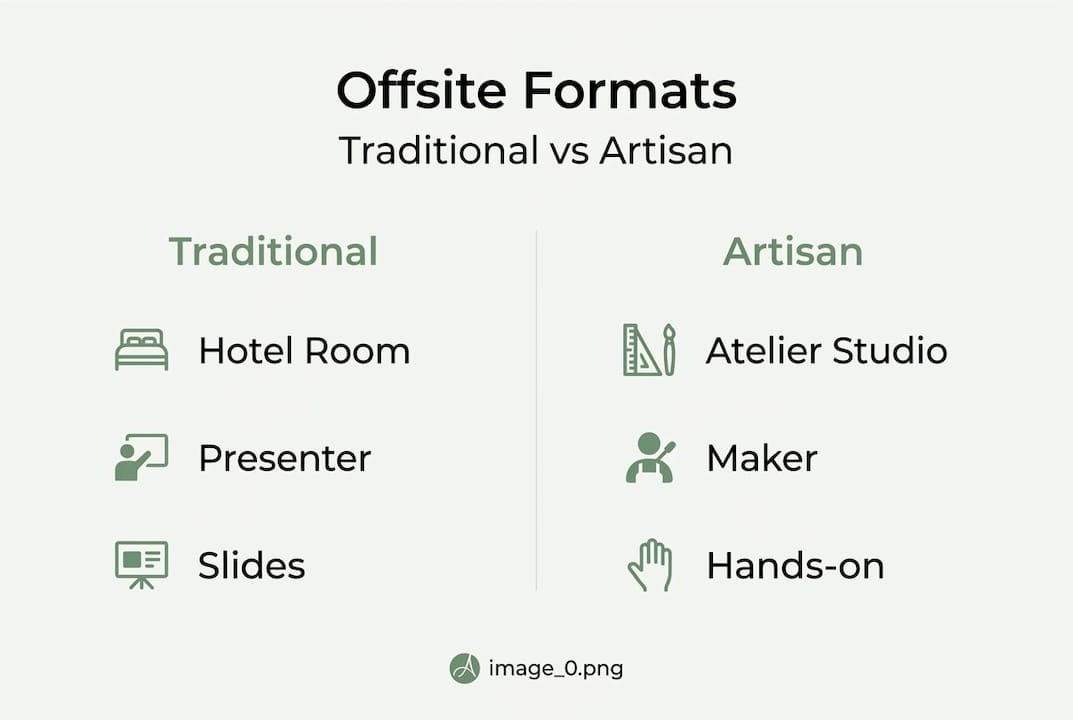
| Factor | Traditional offsite | Artisan experience |
|---|---|---|
| Hierarchy impact | Seniority still visible | Everyone starts as a beginner |
| Engagement level | Often passive | Fully hands-on |
| Memorability | Moderate | High, people talk about it |
| Cultural connection to Berlin | Minimal | Genuine and local |
| Flexibility | High, easy to scale | Requires coordination |
| Cost predictability | Easy to budget | Varies by artisan and format |
Authenticity and substance outperform flashy venues when it comes to what Berlin teams remember and what actually moves the needle on collaboration. A polished event space with generic icebreakers will feel forgotten by Wednesday. A session where your head of engineering nervously rolled gnocchi next to your newest hire? That becomes a story.
The trade-off is real though. Artisan offsites require more upfront coordination, and the quality depends heavily on the artisan you work with. This is why working with a curated platform rather than cold-calling studios is worth your time.
How to plan your Berlin offsite step by step
Getting the logistics right is what separates a smooth offsite from a chaotic one. Here is a practical sequence that works for most teams.
- Define your goal first. Are you trying to align on strategy, rebuild trust after a rough quarter, welcome new team members, or just recharge? The goal dictates everything else.
- Decide on duration and format. A half-day artisan workshop works well for teams of 8 to 25. Multi-day retreats require accommodation and a fuller program.
- Set your budget early. Include venue, activity, food, and travel. Artisan workshops in Berlin typically run between 50€ and 120€ per person depending on the craft and duration.
- Match the activity to your team culture. A software engineering team who finds physical craft genuinely novel will respond differently than a design team who works with their hands already.
- Coordinate through one local point of contact. Single-contact coordination dramatically reduces planning overhead and keeps timing coherent across the event. Multiple vendors managed separately is where offsites fall apart.
- Brief your artisan or facilitator on your team. Share context about group size, any physical considerations, and what outcome you are hoping for. A good artisan will tailor the session.
- Build in unstructured time. Some of the best offsite conversations happen during a shared meal or a walk between sessions. Do not over-program the day.
Use the team-building checklist for Berlin teams to make sure nothing slips through the gaps.
Pro Tip: Send a short pre-event note to your team explaining what they will be doing. Anticipation matters. People show up more open when they know something interesting is coming.
My honest take on what actually works
I have seen teams leave standard offsites and immediately drift back to their usual silos. The slides fade. The "key learnings" get buried in an email nobody rereads. What I have found actually stays with people is a moment of genuine shared awkwardness, the kind you only get when everyone in the room is equally new to something.
When a team lead and their newest colleague are both struggling to center clay on a wheel, something shifts. The team lead does not have the answer. They cannot defer to experience or title. That moment of shared beginner status is where real empathy starts. In my experience, one session of honest craft does more for collaboration than three hours of a facilitated "trust exercise."
I also think teams underestimate how much venue atmosphere shapes the quality of thinking. A private estate where meals are cooked together changes how people talk to each other. A working atelier with sawdust on the floor and tools on the wall signals immediately that this is not another corporate box. The environment tells your brain something different is happening. And your brain responds.
The teams who get the most from their Berlin offsites are the ones who go in looking for connection, not just completion.
— Tina
Plan your next offsite with Tinaexperiences
Ready to move past the generic and plan something your team will genuinely remember? Tinaexperiences connects Berlin corporate teams with real local artisans for hands-on workshops that create lasting bonds. Think pasta-making with an Italian chef, tufting with a Berlin textile artist, or crafting your own company merchandise workshop that your team keeps long after the day ends.
Companies like N26, Figma, and Wolt have already used Tinaexperiences to run offsites that people actually look forward to. With 40+ events completed, 20+ artisan partners, and over €75k redistributed to local Berlin creators, the platform makes planning easy. Transparent pricing, automated invoicing, and detailed artisan profiles mean you spend less time coordinating and more time showing up. Plan your team offsite and see what a real Berlin experience looks like.
FAQ
What makes a good company offsite in Berlin?
The best Berlin offsites combine a clear goal with an activity that genuinely engages your team. Artisan-led workshops work particularly well because they create equal participation regardless of seniority.
How much does a team offsite in Berlin cost?
Artisan workshop activities typically run between 50€ and 120€ per person. Seminar rooms in central Berlin start at around 71€ per hour, and private estates are priced by the day.
What are the best activities for a corporate retreat in Berlin?
Pottery, tufting, pasta-making, graffiti workshops, and CSR cooking programs are among the most popular choices. They share a common quality: everyone participates equally, which is what drives real bonding.
How far in advance should I book a Berlin offsite?
For artisan workshops with groups of 10 to 30 people, booking four to six weeks ahead is usually sufficient. Larger multi-day retreats or private estate bookings benefit from two to three months of lead time.
Can artisan workshops be held at our own office?
Yes. Tinaexperiences sends artisans directly to your office, which removes venue logistics entirely and makes the experience accessible for teams who prefer to stay on-site.